
Zambia Reaps The Rewards As Kwacha, Reforms And Yields Showcase Strength
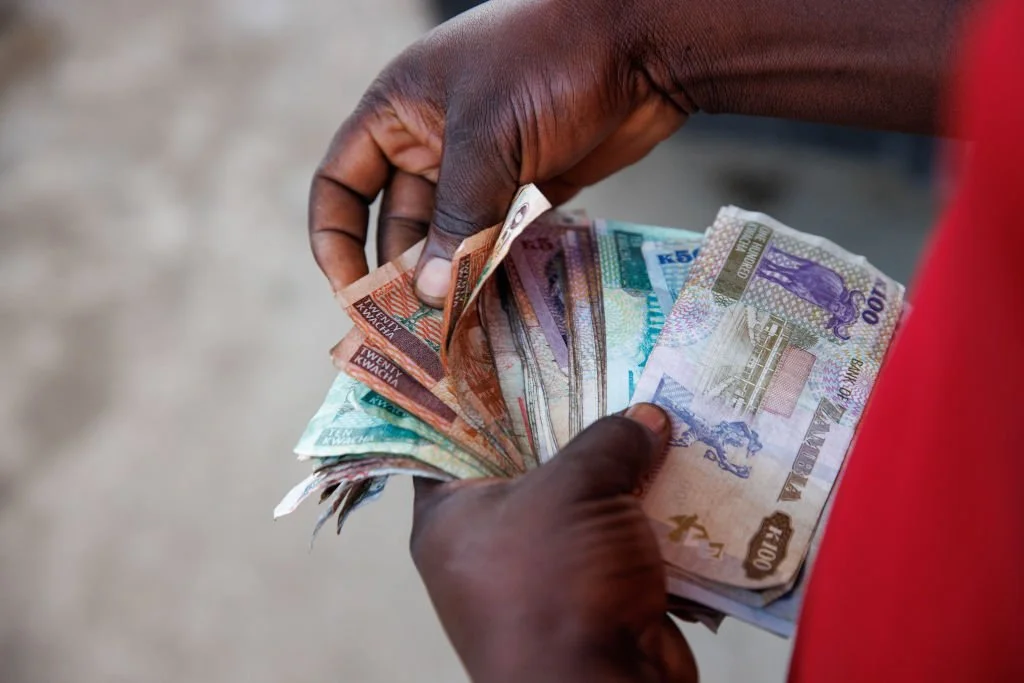
The southern African nation is bouncing to the beat of recovery as the currency finds its footing in the global market.
While disruptive fluctuations have become a common reality for Zambia, a steady economic climb has ensued since the country’s current administration took office in August 2021.
And yet, it wasn’t long ago that the copper-abundant nation faced debt distress and exchange rate instability, with international reserves falling to $1.15 billion in 2021 after exceeding $3 billion in 2014.
More recently, international reserves reached a record $6.5 billion, up from around $5.7 billion in 2025, driven by rising export revenues, agricultural highs, and a de-dollarization reform that has, simultaneously, diversified its foreign liquidity and boosted the value of the kwacha (ZMW).
Data from the Bank of Zambia shows the local currency strengthened by 31.45% against the United States (US) dollar between December 2024 and February 2026—appreciating from ZMW 27.58 per US dollar to ZMW 18.90—making it one of the fastest-growing currencies in the world.
Reinforcing its emerging profile is a 36.88% Real Effective Exchange Rate (REER) decline, says Robinson Nakambo, lead researcher for Public Finance and Economic Management at the Center for Trade Policy and Development (CTPD) in Zambia, to FORBES AFRICA, adding it to be an effective indicator as to “whether the currency has genuinely gained after adjusting for inflation and movements against major trading partners”.
Alongside its performance against the dollar, the REER rate “provides strong evidence that the Zambian kwacha appreciated sharply, both in nominal terms and in broader real effective terms”, he adds.
This momentum occurs in the backdrop of an expanding economy. Rising copper prices, a globally sought-after metal that accounted for over 65% of Zambian exports in 2025, supported the nation’s export rise to $4.4 billion in the first quarter of 2026, up from the previous quarter’s $3.9 billion.
Meanwhile, a historic maize harvest is expected to yield, forecasted to reach nearly five million metric tons this year, significantly higher than the previous record of 3.9 million metric tons.
“Higher domestic food production from maize reduces the need for imports, eases demand for foreign currency, and supports exchange rate stability,” Nakambo explains.
Establishing control over such variables improves investor confidence, which will also likely be piqued by Zambia’s de-dollarization reform, a change of tone that led to its acceptance of the Chinese Yuan, at the beginning of 2026, for mining taxes and royalty payments, thereby reducing reliance on USD.
Another feather in the Zambian cap is its recent buyback of Eurobonds—worth $1.36 billion—leveraging a cost-effective $600 million loan from the African Development Bank (AfDB) to do so.
While the nation has every right to feel delighted by its administration’s efforts, Zambia’s reliance on copper suggests that price swings could easily alter its economic trajectory, similar to that of Botswana, which saw diamond prices fall in recent times.
Unlocking such economic growth marks a defining moment, but history also shows that establishing consistency derives from a nation’s ability to foster a diversified ecosystem, one that offers stability, contingency, and innovation.
Read the full article on Forbes Africa here.