
Investors Bet on Zambia’s Hichilema, Brushing Off Poll Tensions
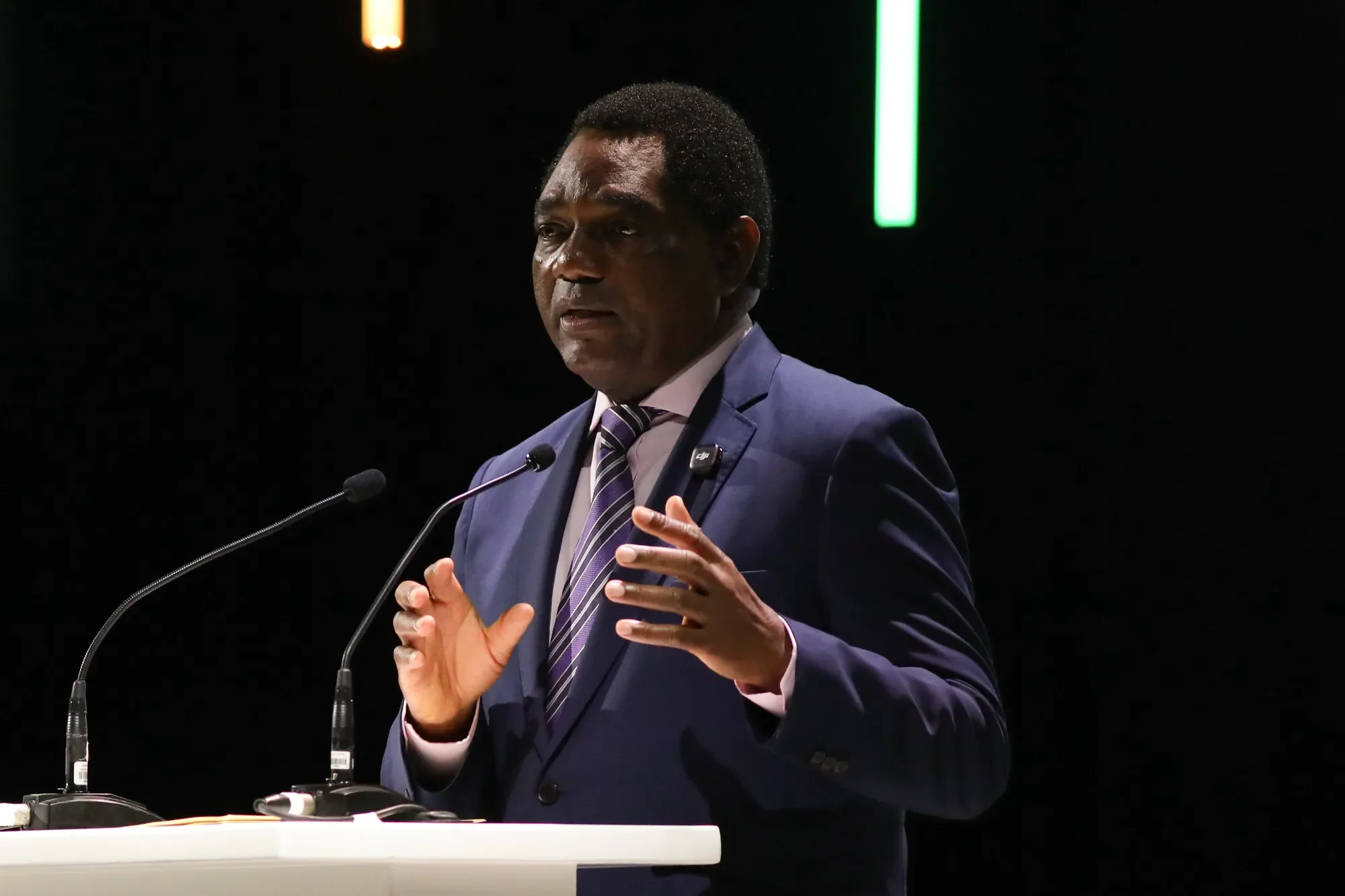
Zambia's post-election tensions have failed to dent investor appetite for the nation's stocks, bonds and currency, as a copper rally helps position it as key player in the artificial intelligence infrastructure build-out.
Some of the world's biggest money managers and lenders, including William Blair Investment Management, Bank of America Corp., AllianceBernstein Holding LP and Citigroup Inc. are bullish on Zambia, betting on policy continuity after President Hakainde Hichilema was reelected in the Aug. 13 poll.
Zambia's government has shuttered the Constitutional Court and arrested opposition figures who now face treason charges, ratcheting up political tensions in the aftermath of the disputed election.
Investors have largely looked past the turmoil, focusing instead on an improving fiscal trajectory and expectations that Hichilema's administration will secure a new deal with the International Monetary Fund.
"The more durable story here will be policy continuity followed relatively soon by a new IMF anchor arrangement," said Adriaan du Toit, head of emerging-market research at AllianceBernstein.
Copper Buoys Zambia's Kwacha
Hichilema, 64, will be sworn in for a second five-year term on Tuesday. A civil rights group has petitioned the courts to invalidate the election, while the pro-democracy Mo Ibrahim Foundation expressed "deep concern" over developments, in an Aug. 26 statement on its website.
Despite the benefit of likely policy continuity, fiscal and macroeconomic challenges in 2026 could undermine future improvements in Zambia's creditworthiness, Moody's Ratings said in a note last week. It sees an 8% budget deficit this year, as government's suspension of fuel taxes hits revenues and election pressures boost spending.
Even so, the election outcome has not materially changed expectations for the broader policy framework, Yvette Babb, portfolio manager at William Blair, said. Hichilema's victory "reinforces continuity around fiscal consolidation, engagement with the IMF," as well as the efforts to attract private investment into the mining and energy sectors, she said.
The kwacha has strengthened 16% against the dollar this year, buoyed by copper's 15% rally and demand for local government debt following a successful restructuring that has improved the fiscal outlook. To position itself as a key global copper supplier to the semi-conductor industry and AI infrastructure build-out, Zambia has laid out ambitious plans to ramp up output to more than three times current capacity.
The latest jump in the copper price gives investors "more confidence that the current exchange rate can be maintained in the near-term," according to Mark Bohlund, a senior credit analyst at REDD Intelligence.
That optimism is translating into bets on further kwacha gains. Citigroup last week recommended shorting the dollar against the kwacha via three-month non-deliverable forwards. Citi's view is that the macro backdrop "remain supportive for the currency," according to Katie Kironde, a strategist at the US-based lender.
The Wall Street lender has recently made other bullish calls on the southern African nation's assets, including going long on Zambia's seven-year government bond and turning overweight on its credit market.
Signs of investor ease with Zambian assets is showing up on its sovereign risk premium over US Treasuries, with the spreads compressing. On July 30, they were trading at 216 basis points, but have since narrowed to 177 basis points, according to a JPMorgan Chase & Co. index.
Zambia Sovereign Risk Spread Tracks Below Africa Average
Attractive yields, an improving foreign-debt ratio, market-friendly policy framework and the favorable commodities backdrop are making Zambia's local-currency bonds a buy, according to Babb. The latest debt auction on Aug. 21 was 1.4 times subscribed, with borrowing costs falling to 15-year lows.
The country is increasingly being evaluated as a "reform story" by investors which are looking at its improving credit metrics overall, Babb said. "That distinction helps explain why both hard-currency and local-currency assets have remained relatively resilient despite bouts of political noise."
Zambia's local-currency debt has returned almost 37% this year, trailing only Colombia and far outpacing the 3.9% gain in an emerging-market local-currency index. Equities are also benefiting, with Lusaka's benchmark index climbing more than 2% in August after languishing in the run-up to the vote.
Zambia Tops Africa Bond Market Returns
The bonds have handed investors the highest returns in Africa so far this year
Source: Bloomberg
The next signpost of foreign investor appetite will be when the country returns to global debt markets after an absence of two years. "A substantial share will prefer to wait for a Zambia return to the eurobond market, which I think could occur as early as in the next six months," Bohlund said.
Read the full article here on Bloomberg.