
Foreigners Pile Into Zambian Bonds After Auction Rules Eased
Foreigners have piled into Zambia’s local bond market following the government’s move to lift a cap on non-resident participation in debt auctions, as money shifts from dollar-denominated assets into higher-yielding investments.
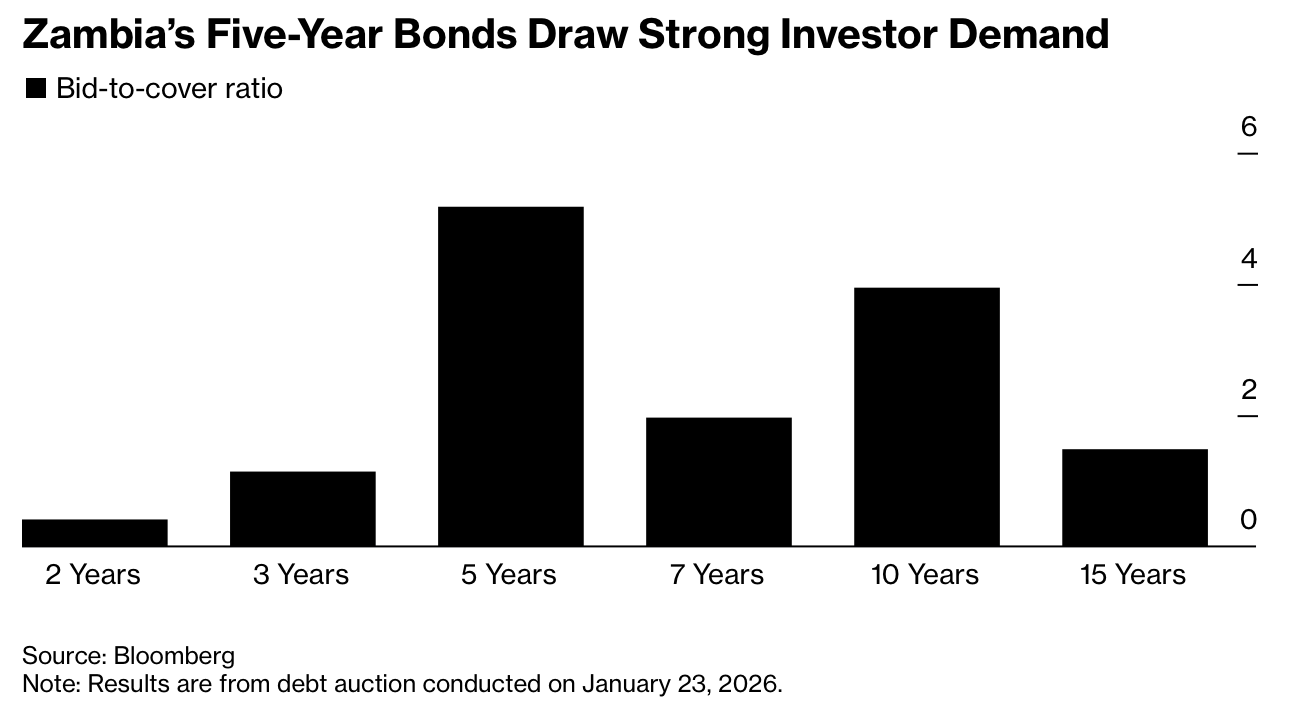
Foreign investors accounted for 49% of purchases since Zambian authorities increased the limit on non-resident participation to 23% last month from 5%, according to Bank of Zambia Governor Denny Kalyalya. The government sold 9.3 billion kwacha ($486 million) of bonds on Jan. 23, with investors placing orders for more than twice the initial amount of 4.2 billion kwacha on offer, according to the central bank.
“There was a big inflow of non-residents with that adjustment,” Kalyalya said on Wednesday after a monetary policy meeting in the capital, Lusaka. The next government debt auction is on Friday.
The higher participation limit gives foreign investors room to roll over holdings maturing this year by reinvesting in government securities, easing refinancing pressures for the government. It may also limit currency risks by reducing the need for investors to exit and convert proceeds into dollars.
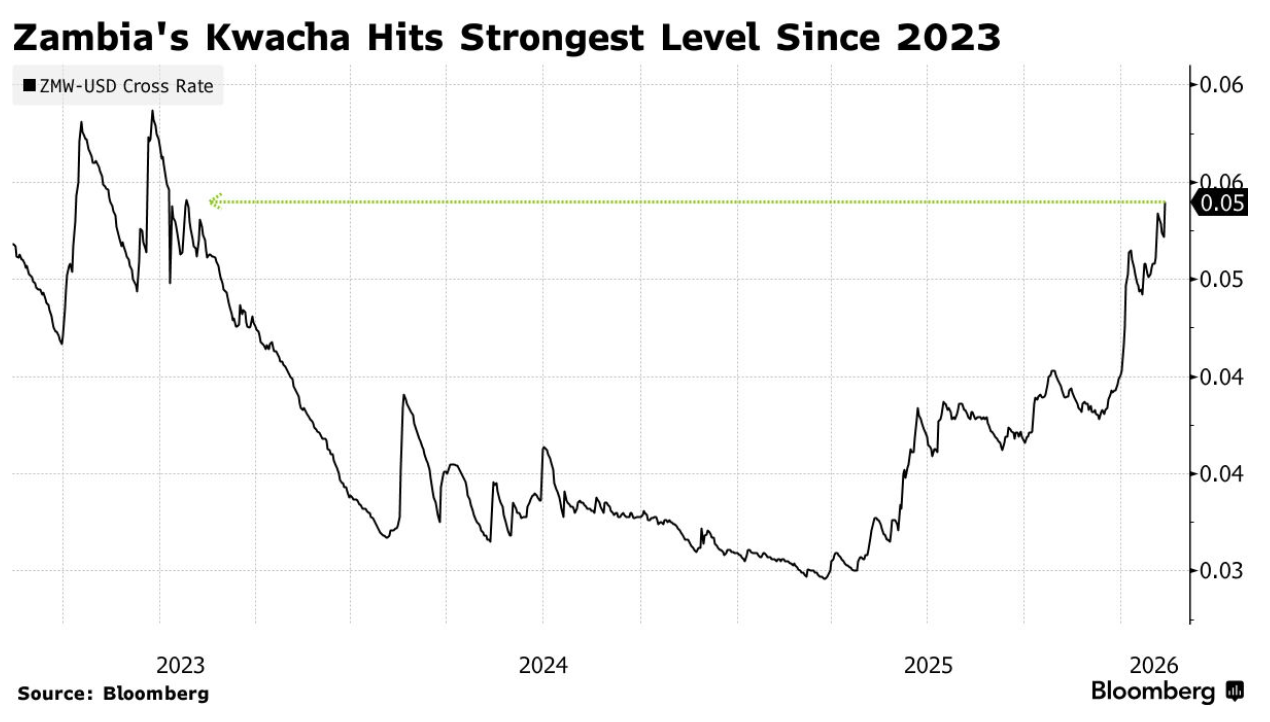
Africa’s second-largest copper producer is enjoying a broad rally of its assets amid a surge in metal prices over the past 12 months. Its stock index is up almost 21% in dollar terms since the start of 2026, while the kwacha has gained more than 15% against the dollar, making it the world’s best-performing currency this year.
Read More: Citi Takes Profit on Zambia’s Kwacha as Copper Prices Stumble
Lenders are seeing high demand for local bonds across the curve, particularly in the five- and seven-year segment, as well as treasury bills, said Chipo Shimoomba, a treasury dealer at First Alliance Bank Zambia Ltd. The demand is driven by a confidence in pro-growth policies and stabilizing macro-economic indicators, he said.
“This targeted interest reflects a strategic positioning where investors anticipate policy continuity through the 2026 election cycle,” Shimoomba said.
Yields on the nation’s debt remain in double digits across the curve, according to central bank data, ranging from 14.9% on two-year local-currency notes to 18.79% on 15-year securities.
The easing of foreign-participation limits has been an “accelerant” for the kwacha, amplifying broader macroeconomic fundamentals underpinning the local unit’s rally, said Tomi Einesalo, a portfolio manager at LGT Capital Partners.
“Zambian markets are likely to continue benefiting from heightened international investor interest, supported by improving fundamentals,” he said.
This article originally appeared in Bloomberg.