
Zambia’s Critical Minerals Strategy: Open to All, Aligned to None
President Hichilema tells the Financial Times that policy stability and non-alignment have repositioned Zambia as a partner of choice in the global race for copper and critical minerals.
In a wide-ranging interview with the Financial Times published this week, President Hakainde Hichilema outlined the strategy that has driven more than $12 billion in mining investment into Zambia since 2021 — and signalled that the country intends to maintain its non-aligned, open-door approach to international capital as competition for critical minerals intensifies.
The core message for investors is one of continuity and predictability. Zambia will not pick sides in the geopolitical contest for mineral resources. “When I’m in Beijing, I’m not against Washington. When I’m in Washington, we’re not against Beijing,” the President told the FT. “We want to make sure that we do business with anyone — in a manner that will deliver mutual benefits.”
That positioning is deliberate. While other resource-rich African nations have entered exclusive or preferential mineral access arrangements — most notably the DRC’s deal offering US buyers preferential treatment — Zambia has kept its market open, allowing investors from multiple jurisdictions to compete on commercial terms. The result has been a diversified capital base spanning Western majors, Chinese operators, and Gulf sovereign-backed entities.
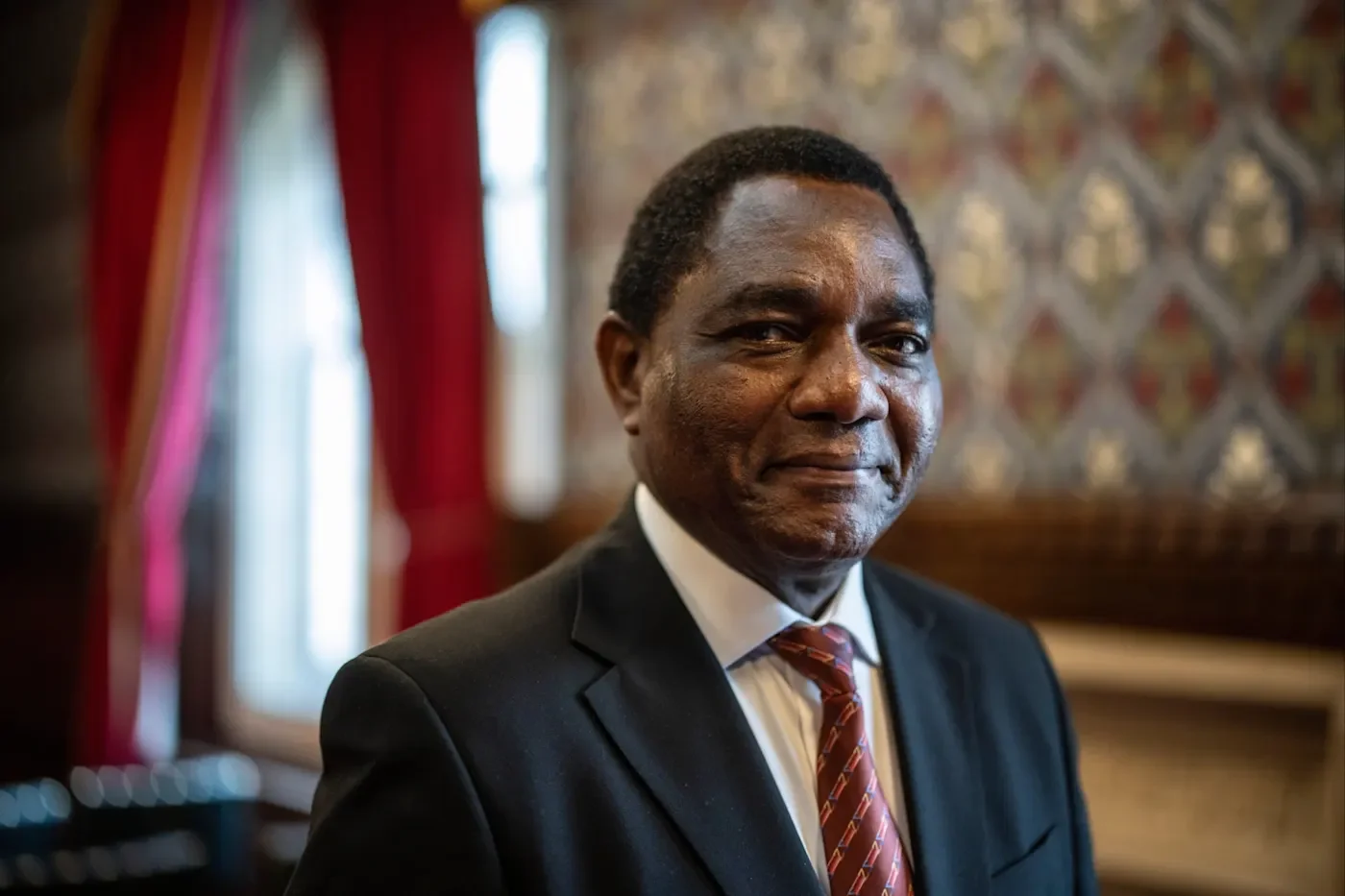
“It was [previously] a one-way traffic. Now we are talking of working together as partners,” President Hichilema told the FT.
The investment pipeline reflects this breadth. Barrick Mining is funding a $2 billion expansion at Lumwana. The UAE’s International Resources has committed $1.1 billion to Mopani Copper Mines. Vedanta Resources has returned to Konkola with a $1 billion investment commitment following the reversal of a previous expropriation. Copper output is on track to reach one million metric tonnes this year, up from approximately 890,000 tonnes at the end of 2025, with a stated target of three million tonnes annually by 2031.
The President described a “sea change” in the negotiating position of resource-rich African governments. With copper prices near record highs and demand driven by the energy transition, defence and grid infrastructure, Zambia is engaging investors as partners rather than supplicants. For international capital, this shift carries both opportunity and implication: Zambia is open, but it expects investment to align with its broader economic vision.
The macroeconomic backdrop supports the case. Inflation fell to 7.5 per cent in February, returning to the Bank of Zambia’s 6–8 per cent target band for the first time since 2019. The central bank cut its policy rate by 75 basis points to 13.5 per cent — the largest reduction since 2020. The Kwacha has strengthened 17 per cent year-to-date. Foreign exchange reserves stand at $5.5 billion, providing 4.8 months of import cover. The IMF projects GDP growth of 5.8 per cent this year, while the World Bank’s support portfolio has surpassed $3 billion.
The tax and regulatory environment has been central to the strategy. The government lowered certain mining taxes and royalties to attract investment, while reforming the regime that saw constant changes under the previous administration. The President acknowledged the political sensitivity of the approach in a country where more than half the population lives in extreme poverty, but argued the logic is sound: grow the sector first, and government revenue grows with it.
For investors assessing African mineral opportunities, the FT interview reinforces a consistent signal. Zambia is offering policy stability, competitive fiscal terms, diversified geopolitical positioning, and a government that has demonstrated willingness to reverse previous policy missteps — including the Konkola expropriation — to restore investor confidence. The question for capital allocators is increasingly not whether Zambia is investable, but whether they can afford to be absent from a market moving this quickly.
Read the full Financial Times interview here.