
Zambia Investor Briefing - September 2026
In this month's briefing: President Hichilema opened his second term by unveiling the Grow Zambia Agenda, a programme to move the economy from stabilisation to accelerated growth, and witnessed the signing of US$2.14 billion in investment agreements in Abu Dhabi. The economy grew 7.2% in the second quarter, inflation eased to 6.1%, its lowest since February 2018, and the Bank of Zambia delivered its deepest rate cut since at least 2012, to 10.75%. An IMF mission arrived in Lusaka to begin talks on a successor programme. Zambia joined J.P. Morgan's new frontier bond index, global investors stayed bullish on Zambian assets and the Lusaka Securities Exchange lined up its first gold ETF and a US$1 billion listings pipeline. Elsewhere in the economy, BII anchored Zanaco's debut US$100 million sustainability bond, Exergy and Mercuria signed a US$250 million power deal, ZESCO agreed a 500MW solar PPA and Maamba Solar fed its first power into the grid, while KCM awarded the contract for Africa's largest tailings-leach plant and ZCCM-IH approved its eleventh consecutive dividend.
🔢 SEPTEMBER IN NUMBERS
→ 7.2% - Q2 2026 GDP growth, above the 6.4% annual target
→ 6.1% - September inflation, the lowest since February 2018
→ 37% - 2026 return on Zambian local-currency debt, the highest in Africa
→ 10.75% - Interest rate after 250 basis point cut, the largest since at least 2012
→ US$1bn - Expected raise from five LuSE listings in the pipeline
→ US$2.14bn - Memoranda of understanding signed at the Zambia–UAE Business Forum
→ US$498m - KCM tailings-leach plant, the largest in Africa
→ US$250m - Exergy–Mercuria power financing agreement
→ US$90m - 100MW Maamba Solar Project, now feeding the national grid
→ 500MW - ZESCO–EnerSynk solar Power Purchase Agreement
→ K183m - ZCCM-IH final dividend, its eleventh in a row
→ 93.6% - Completion of the national mineral survey
→ K2bn+ - Paid digitally to over 113,000 farmers
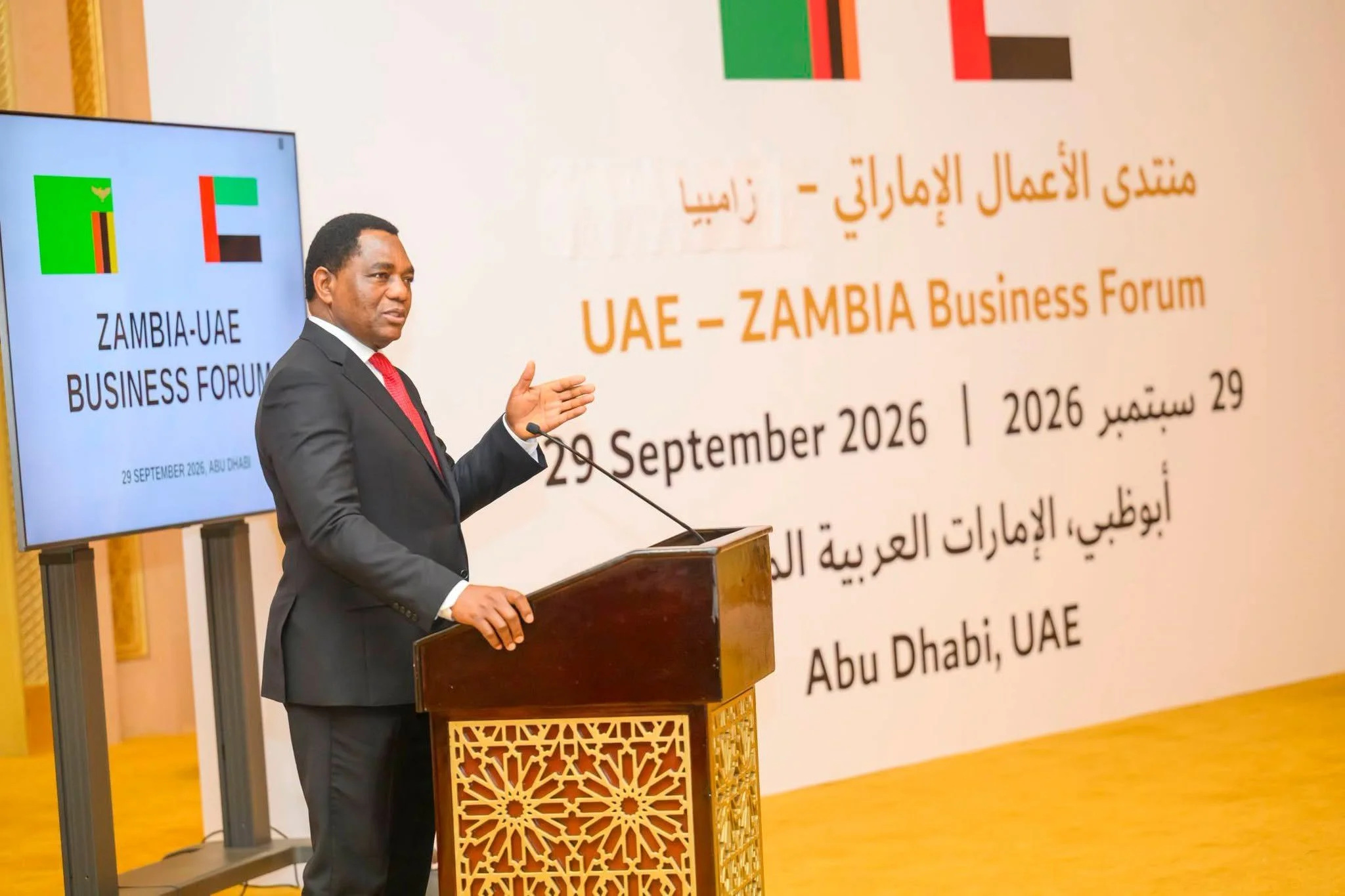
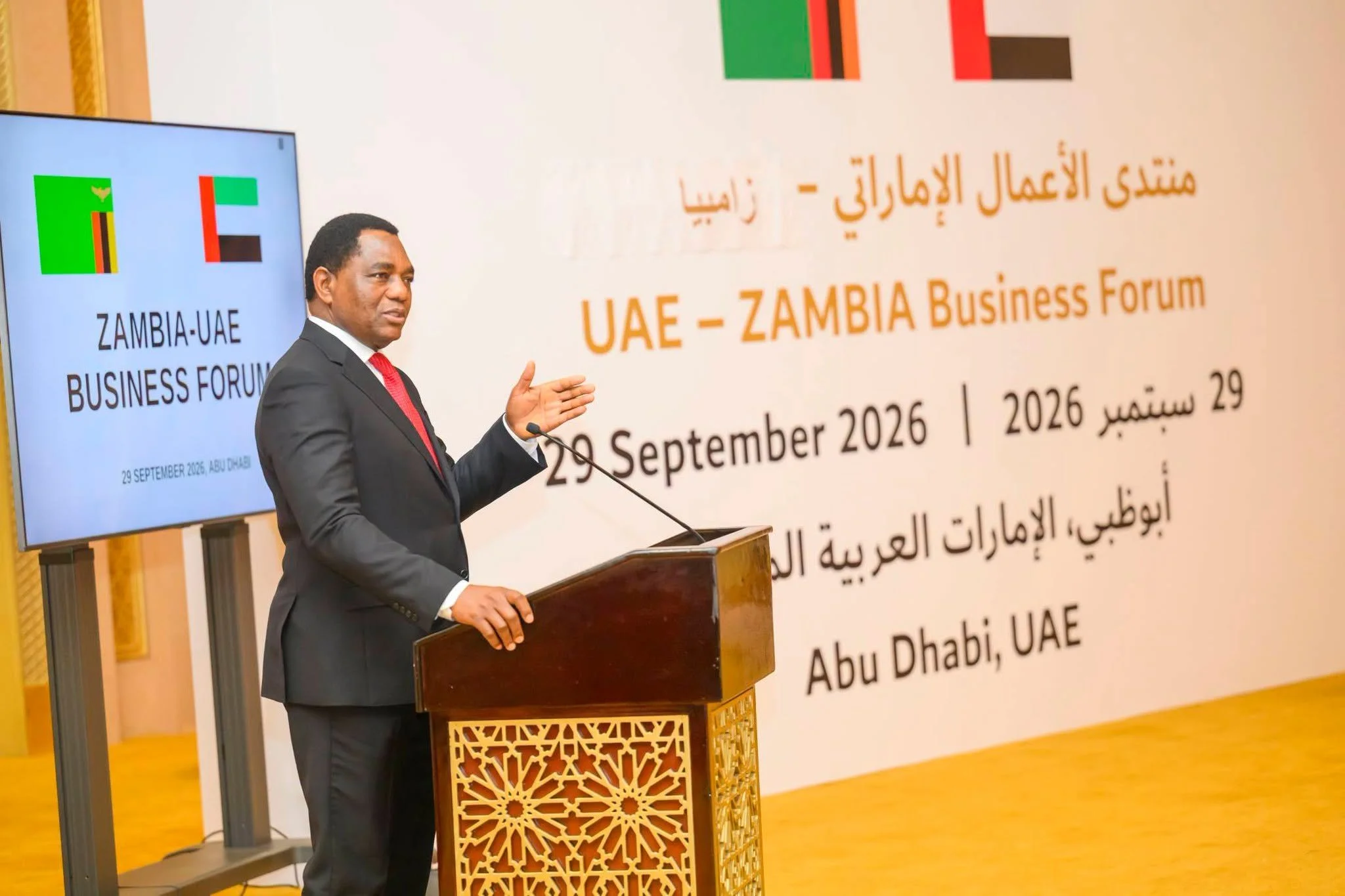
President Hakainde Hichilema attends the Zambia–UAE Business Forum in Abu Dhabi
📈 ECONOMY & MONETARY POLICY
Grow Zambia Agenda Sets Second-Term Targets
President Hakainde Hichilema unveiled the Grow Zambia Agenda in his inauguration speech, a programme to shift Zambia from economic stabilisation to accelerated growth and triple the size of the economy over the next five years. Its 10-10-5-3-3-1-1-1 targets for 2031 include 10 million tonnes of maize, 10,000MW of electricity, five million tourist arrivals a year, three million tonnes each of copper and soya beans, one million tonnes each of wheat and sugar, and a US$1 billion beef industry.
Economy Grows 7.2% as Inflation Eases to 6.1%
Zambia's economy grew 7.2% in the second quarter, ahead of the Government's 2026 growth target of 6.4%, according to the Zambia Statistics Agency. Information and communication led growth, followed by agriculture, construction, mining and manufacturing, with agriculture expanding 26.5% at industry level. Annual inflation eased to 6.1% in September from 6.2% in August, its lowest since February 2018, helped by slower food-price rises and a stronger kwacha.
Bank of Zambia Delivers Deepest Rate Cut Since 2012
The Bank of Zambia lowered its policy rate to 10.75% from 13.25%, its fourth successive cut and the largest since at least 2012. Governor Denny Kalyalya said inflation is projected to stay within the 6-8% target band into 2028, averaging 6.7% this year and 6% in 2027, supported by stable grain prices and a stronger kwacha. International reserves rose to US$6 billion at the end of July, equivalent to 4.5 months of import cover, and the central bank forecasts growth of 5.3% this year. Zambia joins a small group of economies cutting rates while most central banks hold or tighten.
IMF Mission Opens Talks On New Programme
An IMF staff mission is in Lusaka for talks on a new support programme, with the Government now targeting average growth of 7% over the next three years. The previous US$1.7bn arrangement expired in January, and the Government aims to agree a successor before year-end. The Ministry of Finance said it wants the new programme to preserve macroeconomic stability and debt sustainability while placing greater emphasis on private sector-led growth, exports, diversification, investment and job creation. An IMF spokesperson said discussions were focused on safeguarding fiscal and debt sustainability, strengthening reserve accumulation and supporting more inclusive, private sector-led growth. The mission runs until 10 October.
Government Targets 7% Average Growth
The Ministry of Finance aims to lift economic growth to an average of 7% over the next three years, with its medium-term framework projecting 6% in 2027, the fastest pace since 2021, followed by 7.5% in 2028 and 7.1% in 2029. Finance Minister Situmbeko Musokotwane said the Government wants to move beyond stabilisation to securing more investment, stronger exports and job creation through mining, energy and agriculture. Copper output is forecast to pass one million tonnes next year and reach 1.4 million tonnes by 2029, while the fiscal deficit narrows to 1.4% of GDP. The Government also plans to introduce a 20-year bond to extend the yield curve.
💵 CAPITAL MARKETS
Global Investors Bullish on Zambia
Some of the world's largest money managers and lenders, including William Blair, Bank of America, AllianceBernstein and Citigroup, are bullish on Zambian stocks, bonds and currency, betting on policy continuity after President Hichilema's re-election. The kwacha has strengthened 16% against the dollar this year and local-currency debt has returned almost 37%, the highest in Africa. Citigroup has turned overweight on Zambian credit, with analysts increasingly viewing Zambia as a reform story.
Zambia Joins J.P. Morgan Frontier Bond Index
Zambia has been included in the GBI-EM Edge, a new J.P. Morgan government bond index tracking frontier markets. The index is expected to cover up to US$330 billion of debt across 26 countries, with African issuers accounting for at least 45%. Inclusion followed the Bank of Zambia's decision to increase bond auction sizes, lifting Zambian issues above the index threshold.
LuSE to Launch First Gold ETF
The Lusaka Securities Exchange will list its first exchange-traded fund before the end of October, a gold ETF sponsored by Absa Group. Chief Executive Nicholas Kabaso said five company listings in manufacturing, mining and telecommunications are lined up, with initial public offerings expected to raise about US$1 billion. He said foreign demand for Zambian bonds and equities has recovered since the Electoral Commission of Zambia declared President Hakainde Hichilema winner of the August election.
BII Anchors Zanaco's Debut Sustainability Bond
British International Investment committed US$65 million across Zambia and Zimbabwe as it launched its new five-year strategy in Zambia, including a US$15 million anchor commitment to Zanaco's debut US$100 million Sustainability Bond Programme. The Lusaka Securities Exchange described the deal as the first sustainability bond issued by a Zambian bank. Proceeds will fund climate-resilient agriculture, renewable energy, SMEs and social infrastructure. BII also launched Horizon Zambia to help local businesses become investment-ready.
ZCCM-IH Extends Dividend Run
ZCCM Investments Holdings shareholders approved a K183 million final dividend, the company's eleventh consecutive annual payout. Net asset value per share has risen more than 235% since 2021 to K267.44. Chief Executive Kakenenwa Muyangwa said the company is weighing a share sale to meet the LuSE's 25% free-float requirement, as part of a ten-year strategy to grow its market capitalisation from about US$1 billion to US$7 billion. The new strategy launches in November.
⛏️ MINING AND COPPER
KCM Awards US$498m Tailings Plant Contract
Konkola Copper Mines awarded the engineering, procurement and construction contract for a US$498 million tailings-leach plant in Chingola to China NERIN Engineering. The plant will recover around 70,000 tonnes of copper a year from existing mine tailings and will be the largest facility of its kind in Africa. It forms part of Vedanta's plan to lift KCM's output to 300,000 tonnes a year by 2030.
National Mineral Survey Nears Completion
Zambia's nationwide high-resolution geophysical survey has reached 93.6% completion, with the Government targeting December 2026 to finish the first major mineral mapping exercise since 1972. Acting Permanent Secretary at the Ministry of Mines and Minerals Development Anthony Chilengi said the data would open up areas that have seen little systematic exploration. The survey runs alongside regulatory reforms, including a new Minerals Regulation Commission and a Mining Appeals Tribunal.
Koryx Launches Maiden Zambian Drilling
TSX-listed Koryx Copper announced a 2,500-metre drill programme at its Luanshya West project on the Copperbelt, testing up to four targets through to mid-December. The company is also completing around 3,000 soil samples at its Mpongwe project and has increased its stake in Koryx Copper Zambia from 51% to 80%.
⚡ENERGY
Maamba Solar Feeds First Power to Grid
The 100-megawatt Maamba Solar Project fed electricity into the national grid for the first time on 24 September and has entered its commissioning phase. The plant, worth around US$90 million, is a joint venture between ZCCM-IH (35%) and Nava Global (65%), and sells its full output to ZESCO under a 20-year Power Purchase Agreement. ZCCM-IH Chief Executive Kakenenwa Muyangwa called it a timely response to Zambia's energy security needs.
Exergy and Mercuria Sign US$250m Power Deal
Exergy and global commodities group Mercuria signed a US$250 million financing agreement in Lusaka to support power generation and transmission projects across Southern and Eastern Africa, one of the largest private capital commitments to Zambia's power sector to date. The deal, subject to regulatory approvals, marks Mercuria's entry into the region's power market and will support projects including a transmission highway linking Zambia to the East African power market.
ZESCO Signs 500MW Solar PPA
ZESCO signed a 25-year Power Purchase Agreement with Hungarian climate infrastructure company EnerSynk Group for a 500MW solar project, around 5% of Zambia's 10,000MW generation target. Acting Managing Director Fitzpatrick Kapepe said broadening the energy mix reduces climate-related economic risks. Feasibility, grid impact and environmental studies will follow.
Sturdee Enters Zambia with 200MW Wind Project
South African independent power producer Sturdee Energy acquired the 200MW Masaiti Wind Project in Mpongwe District, its fifth market in the SADC region. The late-stage project, backed by more than six years of on-site wind data, will connect to an adjacent ZESCO 330kV line and be paired with solar and battery storage for round-the-clock supply.
ERB Approves K1bn in Energy Licences
The Energy Regulation Board approved 33 licence applications and three construction permits across the petroleum, renewable energy and electricity sub-sectors, representing combined investment commitments of K1 billion (about US$50.9 million). The regulator said the approvals reflected investor confidence in the energy sector.
Tazama Pipeline to Reopen to Multiple Suppliers
Zambia expects to restore open access to the Tazama fuel pipeline by January, Ministry of Energy Permanent Secretary Ephraim Munshifwa said. The pipeline, which carries fuel from Dar es Salaam to the Copperbelt, has operated under a temporary exclusive supply arrangement with Vitol since global energy disruptions earlier this year. Pipeline operator Tazama is already pre-qualifying suppliers for the return to competition.
🏗 INFRASTRUCTURE AND TRADE ROUTES
Rail Investment to Match Production Targets
Finance and National Planning Minister Situmbeko Musokotwane said Zambia is investing in the TAZARA and Lobito railways to carry rising mineral and agricultural output. TAZARA's concession with China Civil Engineering Construction Corporation provides for more than US$1.4 billion of investment, including an inland port at Kapiri Mposhi, while Zambia Railways aims to more than triple annual freight to 2.6 million tonnes by the end of 2028.
Chirundu Border Upgrade Secures Funding
Zimbabwe secured financing for the modernisation of the Chirundu Border Post with Zambia, a key gateway for copper, cobalt, fuel and agricultural goods moving between the Copperbelt and southern African ports. The project, estimated at US$66.8 million, has reached financial close under a public-private partnership led by Safaga International, which delivered the Beitbridge upgrade. Construction is due to begin in October and take around 18 months.
US Backs Lobito Corridor Power Study
The US Trade and Development Agency signed an agreement with Anzana Electric Group to fund a feasibility study for new hydropower capacity and upgraded distribution networks in Zambia's North-Western Province and Congo's Lualaba province. The wider electrification initiative, valued at around US$300 million, would supply mines feeding the Lobito Corridor and serve more than three million people.
🤝 INTERNATIONAL PARTNERSHIPS
US$2.14bn in Agreements Signed with the UAE
President Hakainde Hichilema made a working visit to the United Arab Emirates at the invitation of UAE President Sheikh Mohamed bin Zayed Al Nahyan, his first trip abroad since the election. At the Zambia–UAE Business Forum in Abu Dhabi, the two sides signed memoranda of understanding across various sectors worth a total of US$2.14 billion, with a focus on mining and mineral value addition, agriculture, energy, infrastructure, logistics, tourism and healthcare. The President said Zambia looks forward to signing a Comprehensive Economic Partnership Agreement with the UAE to increase trade between the two countries.
India Revives Critical Minerals Talks
India has resumed talks with Zambia on investing in copper and other critical minerals, Reuters reported, citing two sources, with officials from India's Ministry of Mines holding preliminary discussions with Zambian officials on 26 August. India is the world's second-biggest buyer of refined copper.
Zambia Courts British Investment in Carbon Markets
Green Economy and Environment Minister Gabriel Siame called on British investors to expand their participation in Zambia's carbon credit markets during a meeting with British High Commissioner Rebecca Terzeon. Terzeon reaffirmed the UK's commitment to long-term, responsible investment, citing the Climate Finance Unit established under the Green Growth Compact. Siame also invited greater Chinese investment in renewables, electric mobility and forestry, with Chinese Ambassador Han Jing pledging deeper green cooperation.
📊 SECTOR DEVELOPMENTS
Tourism Passes Two Million Arrivals
Zambia has surpassed two million international tourist arrivals and is working towards its target of 2.5 million by the end of 2026, Ministry of Tourism Permanent Secretary Evans Muhanga said. The Government is targeting five million arrivals by 2031.
National Digital Trust Infrastructure Launched
Zambia launched its National Public Key Infrastructure on 7 September, a national framework for verifying digital identities, authenticating electronic signatures and securing online transactions. ZICTA now acts as the National Root Certification Authority, supporting wider use of e-government services, digital banking and paperless approvals.
Over K2bn Paid to Farmers Digitally
Access Bank Zambia has disbursed more than K2 billion to over 113,000 farmers through its digital payment platform for maize supplied to the Food Reserve Agency, with payments now reaching farmers within 24 hours. Managing Director Iheanyi Nwogu described it as an example of public-private collaboration improving service delivery.
SEPTEMBER MILESTONE ⛰️
September brought one of the clearest signals yet of how far Zambia's recovery has travelled. J.P. Morgan included the country in GBI-EM Edge, a new frontier-market bond index expected to cover up to US$330 billion of government debt across 26 countries. Inclusion matters because many global funds track such indices directly, bringing in buyers who were not previously looking at Zambian debt. The decisive factor was the Bank of Zambia's move to increase bond auction sizes, which lifted Zambian issues above J.P. Morgan's minimum threshold. Wider participation should give the Treasury a steadier and cheaper source of funding, while lower government yields tend to ease borrowing costs for the private sector. With yields already falling sharply across the curve, the Government now plans a 20-year bond to extend its borrowing horizon further.
👀 WHAT WE’RE WATCHING IN OCTOBER
→ Listing of LuSE's first gold ETF
→ Start of construction on the US$66.8 million Chirundu Border Post upgrade
→ Maamba Solar testing ahead of full commercial operation
→ Koryx Copper's Luanshya West drilling programme
→ Talks with the IMF staff mission in Lusaka, which runs until 10 October
→ Progress on the USTDA-funded Lobito Corridor power feasibility study
→ Progress towards signing the Zambia–UAE Comprehensive Economic Partnership Agreement and implementing the US$2.14 billion in memoranda signed in Abu Dhabi
QUOTE OF THE MONTH
"We will continue to prioritise increased trade and domestic reforms to attract the investment needed to grow our economy."
— President Hakainde Hichilema at the Zambia–UAE Business Forum in Abu Dhabi
Zambia Investor Briefing - August 2026
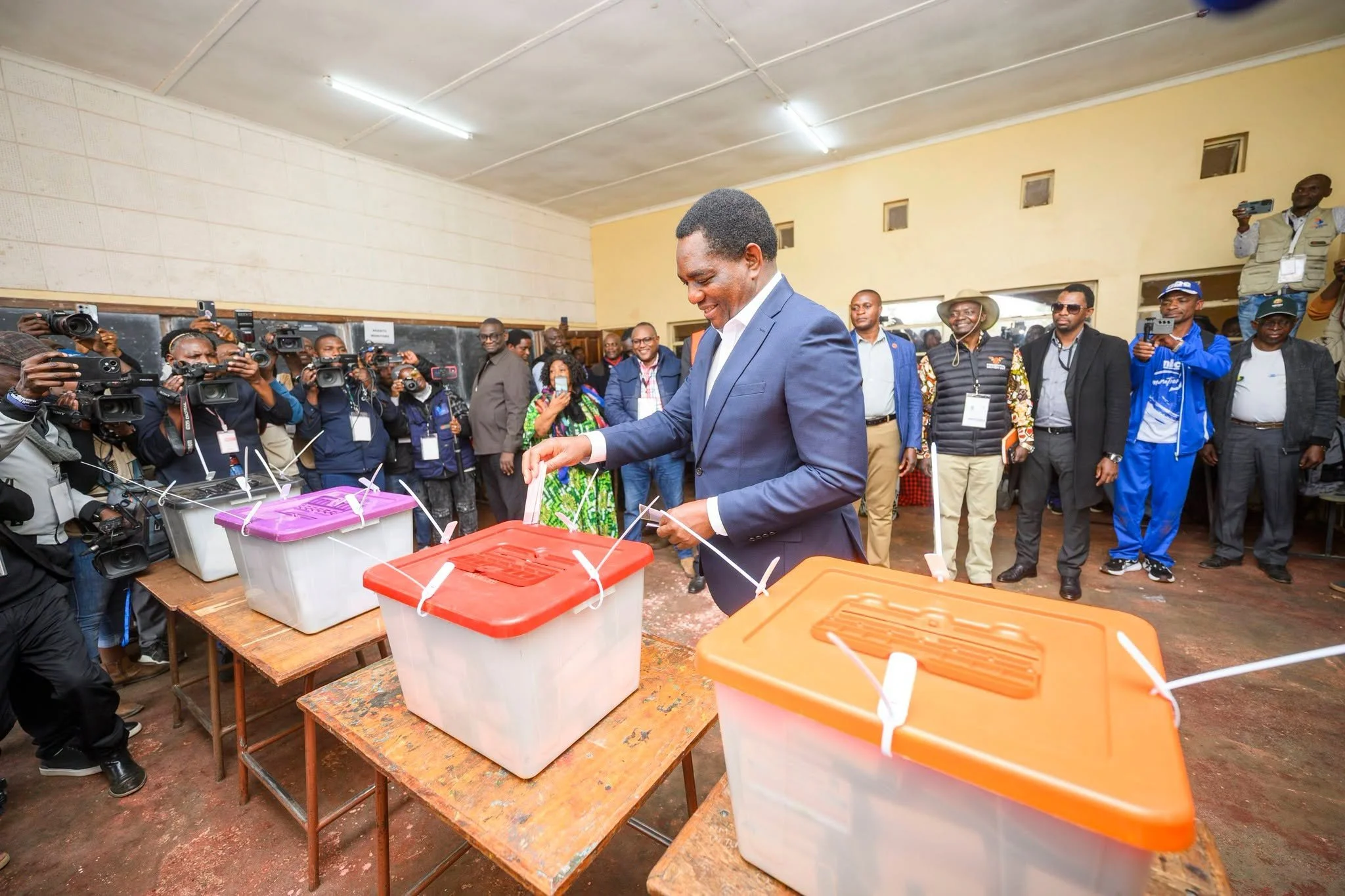
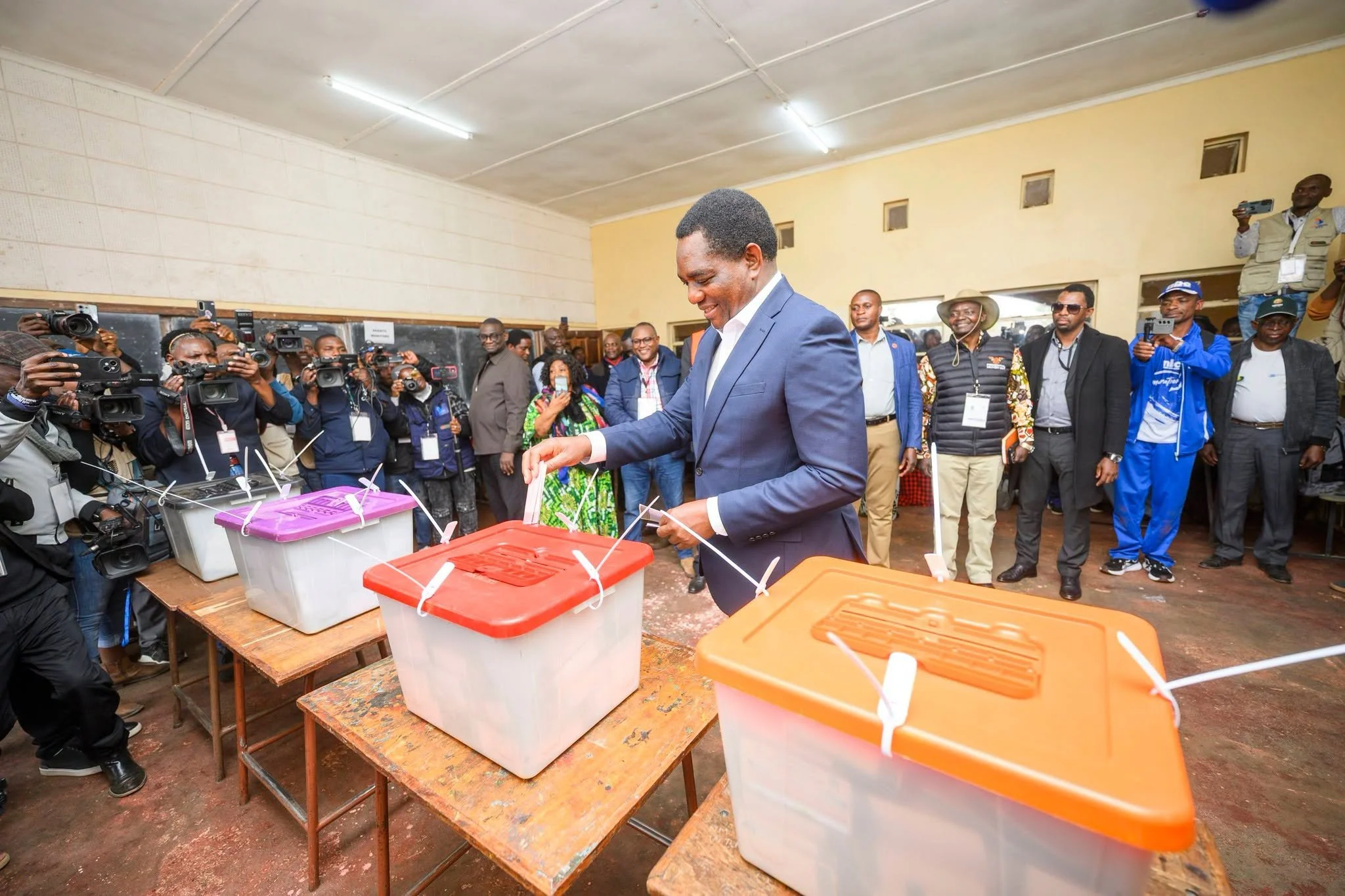
President Hakainde Hichilema casts his vote in the 2026 General Election
In this month's briefing:
Zambia re-elected President Hakainde Hichilema on 13 August and the market answered within days. The first bond auction since the vote, was oversubscribed by 37%, with bids exceeding the K6.3bn on offer, seven-year yields fell 101 basis points, and the Lusaka Securities Exchange set out plans for a record US$1bn of listings. Elsewhere in the economy, inflation fell to 6.2% and annual external debt service is set to drop to about US$900m from US$2.6bn. Copper output reached 447,182 tonnes in the first half of the year, Lumwana revenue rose 32% to US$852m. The Energy Regulation Board approved US$972m of investment, and Cabinet approved two new fuel pipelines. The Food Reserve Agency beat its maize target by more than 180,000 tonnes, and consultations opened on a new local content strategy.
🔢 AUGUST IN NUMBERS
→ 6.2% – August inflation, the lowest since February 2018
→ 14.79% – Seven-year bond yield at the first post-election auction, down 101 basis points
→ 40% – Rise in ZCCM-IH investment income for 2025
→ US$900m - Annual external debt service from 2026, down from US$2.6bn
→ US$1bn – Listings pipeline the Lusaka Securities Exchange expects to bring to market
→ 447,182t – Copper produced in the first half of 2026
→ US$852m – Lumwana revenue in the first half, up 32%
→ US$705m – Invested in Konkola Copper Mines since July 2024
→ US$972m – Energy sector investment approved by the Energy Regulation Board
→ 67MWp – Solar plant agreed for Chisamba by Solarcentury Africa and the IDC
→ 680,914t – Maize bought by the Food Reserve Agency, against a 500,000-tonne target
→ K3.4bn – Paid to farmers so far in the 2026 marketing season
→ 18.78 – Kwacha to the dollar after the result, Africa's best-performing currency this year
🗳 THE ELECTION AND THE ECONOMY
President Hichilema Declared Winner of August 13 Election
The Electoral Commission of Zambia declared President Hakainde Hichilema the winner of the general election in the early hours of 18 August. He received 2.97 million votes, or 60.5%, against 1.86 million and 38% for Brian Mundubile, on a turnout of 57.2%. The kwacha firmed 0.8% to 18.78 to the dollar on the day of the declaration. The Government has previously has said it will seek a new IMF programme by year-end.
Investors Welcome the Result as ContinuityThe outcome handed investors the policy continuity they had sought, with a new IMF programme identified as the first test of the second term. Zambia's 2033 dollar bond, its only international issue, was bid at 97.72 cents on the dollar on the day of the declaration, broadly unchanged against a weaker backdrop for African debt. The previous US$1.7bn arrangement expired in January. Stuart Culverhouse, Chief Economist and Head of Fixed Income Research at Tellimer, said: "For investors, Hichilema offers continuity." Philip Fielding, Portfolio Manager at Fidelity International, said a return to international markets "would give the companies in the country a benchmark to price debt off".
⚡MARKETS AND CAPITAL
ZZCM-IH Investment Income Rises 40% to K3.4bn
ZCCM Investments Holdings reported investment income up 40% to K3.4bn for the year ended 31 December 2025. Royalty income from Kansanshi reached US$64.5m, following commissioning of the S3 expansion, while dividend income doubled to K1.57bn, including first-ever dividends of US$39.2m from Maamba Energy and US$21.2m from Copperbelt Energy Corporation. The investment portfolio rose to US$1.91bn. Chief Executive Kakenenwa Muyangwa said ZCCM-IH and IRH have advanced approximately US$640m to Mopani's recapitalisation since the partnership began.
Inflation Cools To Eight-Year Low of 6.2%
Zambia's annual inflation fell to 6.2% in August, down from 6.5% in July and the lowest rate since February 2018, held near the floor of the Bank of Zambia's 6-8% target band by a strong kwacha that has contained import costs. Acting Statistician-General Chola Daka said prices rose 0.2% on the month, with food inflation easing to 6% and non-food to 6.6%. A moratorium on fuel taxes, extended last month to 30 September, has also eased pricing pressure. The Bank of Zambia cut its policy rate to 13.25% in May, a third consecutive reduction, with the next decision due at the end of September.
External Debt Service Falls to US$900m a Year
Zambia's annual external debt-service payments will fall to about US$900m from 2026, down from the estimated US$2.6bn a year the country would have owed without restructuring, according to Secretary to the Treasury Felix Nkulukusa. Debt service previously absorbed close to K70 of every K100 of domestic revenue collected and now takes about K15, freeing resources for education, health, agriculture, social protection and infrastructure. The fiscal deficit has narrowed from 9% in 2021 to 3.8% in 2025, and international reserves have risen from around US$3bn in 2021 to US$6.5bn by June 2026.
Bond Auction Draws Bids 37% Above Offer
The first bond auction since the election drew bids 37% above the K6.3bn on offer on 24 August, worth about US$332m, with the seven-year tightening 101 basis points to 14.79% and reversing a June sale that had failed to attract enough bids. Citigroup had gone overweight on Zambian debt days earlier, saying political continuity and the prospect of fiscal consolidation would likely give Moody's reason to upgrade Zambia from Caa2. Holders of Zambian local-currency debt have returned about 37% this year, second in the world only to Colombia. Eugene Hangoma, Head of Treasury Sales at First Capital Bank in Lusaka, called the result "an early, meaningful signal of post-election market confidence".
LuSE Expects Record US$1bn Listings PipelineThe Lusaka Securities Exchange expects to bring a record US$1bn of initial public offerings to market following the election, spanning manufacturing, telecommunications, mining, financial services and property. The main index more than doubled in dollar terms last year and remains near all-time highs, although first-half activity was slow, with the All-Share Index just below zero for the period and limited offshore participation. Chief Executive Nicholas Kabaso said the pipeline "will be unprecedented for us", and that strong copper prices remained "the biggest tailwind".
ZDA and LuSE Sign Capital Access AgreementThe Zambia Development Agency and the Lusaka Securities Exchange signed a memorandum of understanding on access to long-term capital, covering investment promotion, market access, green financing and trade promotion. The ZDA has registered close to 3,000 greenfield and brownfield companies between 2021 and 2026, many of which require financing, and Director General Albert Halwampa said lack of access to capital remains a major obstacle to projects reaching financial close. The partnership will use the Zambia Investment Deal Room platform to connect fund seekers with providers. Four LuSE-listed companies currently carry market capitalisations above US$1bn.
⛏ Mining and Copper
Copper Output Reaches 447,182 Tonnes in First Half of Year
Zambia produced 447,182 tonnes of copper in the first half of 2026, up 0.45% on the same period last year. Output rose at Kansanshi, Konkola, Lumwana and Lubambe, offset by declines at NFCA Mining, Chibuluma and Mopani, where planned maintenance at the Mindola shaft affected hoisting. Kansanshi is guided at 175,000 to 205,000 tonnes for 2026, rising to 230,000 to 260,000 tonnes by 2028, with Sentinel at 190,000 to 220,000 tonnes through the same period. Mining consumed about 63% of national electricity in 2025.
Lumwana Revenue Rises 32% to US$852mBarrick's Lumwana mine lifted first-half revenue 32.1% to US$852m, from US$645m a year earlier, as higher prices more than offset lower volumes. The average realised copper price rose to US$3.21 a pound, about US$7,077 a tonne, from US$2.51 a pound in the first half of 2025. Sales eased to 70,000 tonnes from 73,000 tonnes. Lumwana is expected to produce up to 150,000 tonnes this year. The Super Pit expansion targets first expanded output at the end of the first quarter of 2028, at around 240,000 tonnes a year over a mine life exceeding 30 years.
KCM Reports US$705m Invested Since 2024Konkola Copper Mines says it has invested more than US$705m in Zambia since Vedanta resumed stewardship in July 2024, covering development of the Konkola Deep Mining Project, mine infrastructure, tax contributions and community programmes. The company reports overall production more than doubled and integrated production tripled year on year, with underground development metres at KDMP up tenfold on pre-reinstatement levels. It plans around 44 kilometres of underground development this year and is targeting annual output of about 85,000 tonnes, with more than US$1bn earmarked for KDMP.
Government Opens Consultations on New Local Content Strategy
The Government has opened consultations on a new National Local Content Strategy, beginning in Southern Province, with the previous strategy having expired in 2022. The new framework is expected to promote locally produced goods and services, local materials, skills development, technology transfer and value addition. Livingstone District Commissioner Eunice Nawa said the objective is to build productive capacity that allows Zambian businesses to grow from small suppliers into competitive enterprises serving domestic and export markets. UNECA's Olayinka Bandele called for a capability-based approach going beyond procurement targets.
⚡ENERGY
Energy Regulation Board Approves US$972m of Investment
The Energy Regulation Board approved energy sector investments worth about US$972m, across electricity, renewables and petroleum. The approvals cover 23 licences and 20 construction permits, alongside licence expansions tied to development projects, and include two utility-scale solar developments, five new fuel retail stations and permits for 116 petroleum transport operators. Approved activities span renewable energy equipment manufacturing, petroleum transportation and distribution, and lubricant blending and import.
Solarcentury Africa and IDC Agree 67MWp Chisamba Plant
Solarcentury Africa and the Industrial Development Corporation have agreed heads of terms for a 67MWp solar plant near Chisamba in Central Province, designed primarily to supply large industrial users. The plant will connect to the ZESCO transmission backbone near Chisamba, reducing the need to move power from southern generation centres. The IDC has secured the site and completed initial technical studies, with Solarcentury Africa expected to lead development, design, financing and delivery.
Globeleq Commissions First Solar-Hydro Hybrid
Globeleq and Lunsemfwa Hydro Power Company have commissioned Zambia's first solar-hydro hybrid plant, integrating 27MWp of solar generation with LHPC's existing hydropower station. Globeleq, owned by British International Investment and Norfund, completed the acquisition of a 51% stake in the Kabwe-based company earlier this year; LHPC operates two hydroelectric plants totalling 56MW. Globeleq launched its Leopards Hill project in April, pairing 250MWp of solar with a 150MW battery storage system.
Cabinet Approves Tanzania and Namibia Fuel Pipelines
Cabinet approved two regional pipeline projects to diversify fuel supply routes, along with a shareholding structure for the first. The Tanzania-Zambia Multi-Products Pipeline will complement the existing TAZAMA line, carrying petrol, diesel, jet fuel and kerosene from Tanzania. The Namibia-Zambia Refined Petroleum and Natural Gas Pipeline establishes a western corridor carrying refined products and natural gas, opening the way for gas-to-power generation and industrial supply. Both are intended to reduce reliance on a single import corridor.
🏗 INFRASTRUCTURE AND INDUSTRY
ZAF and NAPSA Sign K150m Lusaka Water Pipeline
ZAF Projects and the National Pension Scheme Authority have signed a K150m contract for a bulk water supply pipeline, funded equally by the two parties and built by Lusaka Water Supply and Sanitation Company over 18 months. The 12-kilometre line runs from Stuard Park in Woodlands via Kingsland, ZAF Twin Palm Base and Datong to River View Park, and is expected to serve 25,000 residents.
Government Commissions Dams in Pemba and Kalomo
The Government has commissioned two dams in Southern Province, one in Pemba District and one in Kalomo District, to supply communities, livestock and agriculture in areas exposed to erratic rainfall. The facilities are intended to support productive activity year-round and give farmers water access through prolonged dry spells. Ministry of Water Development and Sanitation Permanent Secretary Mr Kamanga said the projects reflect cooperation between government, the private sector and other stakeholders under the Eighth National Development Plan, and handed over houses to families displaced by construction.
EU-Backed Project Targets Lobito Corridor Councils
The Commonwealth Local Government Forum has launched a project on inclusive local economic development along Zambia's stretch of the Lobito Corridor, supported by the European Union through Global Gateway. It covers councils in the Copperbelt and North-Western Provinces including Chingola, Kitwe, Ndola, Kalumbila, Solwezi and Kapiri Mposhi, where corridor investment in mining, agriculture and logistics will raise demand for land, housing, roads, water and sanitation. The work targets capacity building for newly elected councils and technical support for at least three priority councils during integrated development plan reviews.
🚜 AGRICULTURE
FRA Exceeds Maize Target With 680,914 Tonnes Brought
The Food Reserve Agency has bought 680,914 tonnes of Grade A white maize in the 2026 marketing season, exceeding its initial 500,000-tonne target, with more than K3.4bn disbursed to farmers so far. Maize is priced at K347 per 50kg bag and paddy rice at K300 per 40kg bag. Combined with carry-over stock of 1.455 million tonnes, national stocks now exceed two million tonnes. Board Chairperson Suresh Desai said a new digital payment system using mobile money and direct bank transfers has enabled prompt payment, and that the agency remains on the market.
Omnia Begins Construction of Lusaka Fertiliser Plant
Omnia has begun construction of a fertiliser blending plant in Lusaka in partnership with the Government, producing soil-specific blends matched to the nutrient requirements of different farming regions. The facility will receive, process, blend, package and distribute product. Country Manager Nigel Seabrook said the investment allows the company to produce customised blends based on soil nutrient requirements.
AUGUST MILESTONE ⛰️
President Hakainde Hichilema was re-elected on 18 August with 60.5% of the vote, and a mandate built on five years of economic stability and macroeconomic repair. Inflation, currently at 6.2%, has now sat inside the Bank of Zambia's 6-8% band for seven consecutive months after almost five years above it. The external position has turned with it, with a K30.1bn trade surplus in the year to July against a K4.1bn deficit over the same period last year. Markets answered within a week: the first bond auction since the vote, drew bids 37% above the K6.3bn on offer, the seven-year tightening 101 basis points, and holders of local-currency debt are up about 37% this year. The stability that drew close to US$10bn into mining now underwrites a second term, with the task of widening the share of those gains reaching ordinary Zambians.
👀 WHAT WE’RE WATCHING IN SEPTEMBER
→ The inauguration on 1 September and the opening weeks of the second term, with cabinet appointments and early policy signals the first indication of how the administration intends to convert stabilisation into growth.
→ The 24th Africa Down Under conference in Perth from 2 to 4 September, where ZCCM-IH will again showcase Zambia's mining and investment potential to Australian investors.
→ The Food Reserve Agency's buying campaign, which continues to the gazetted close of the marketing season on 31 October.
→ The Bank of Zambia's monetary policy decision at the end of September, following three consecutive cuts that took the benchmark rate to 13.25% in May.
QUOTE OF THE MONTH
“We can only redistribute the benefits of growth and that growth only comes through trade and investment.”
— President Hakainde Hichilema, in his national address following his election victory on 18 August 2026.
Zambia Investor Briefing - July 2026
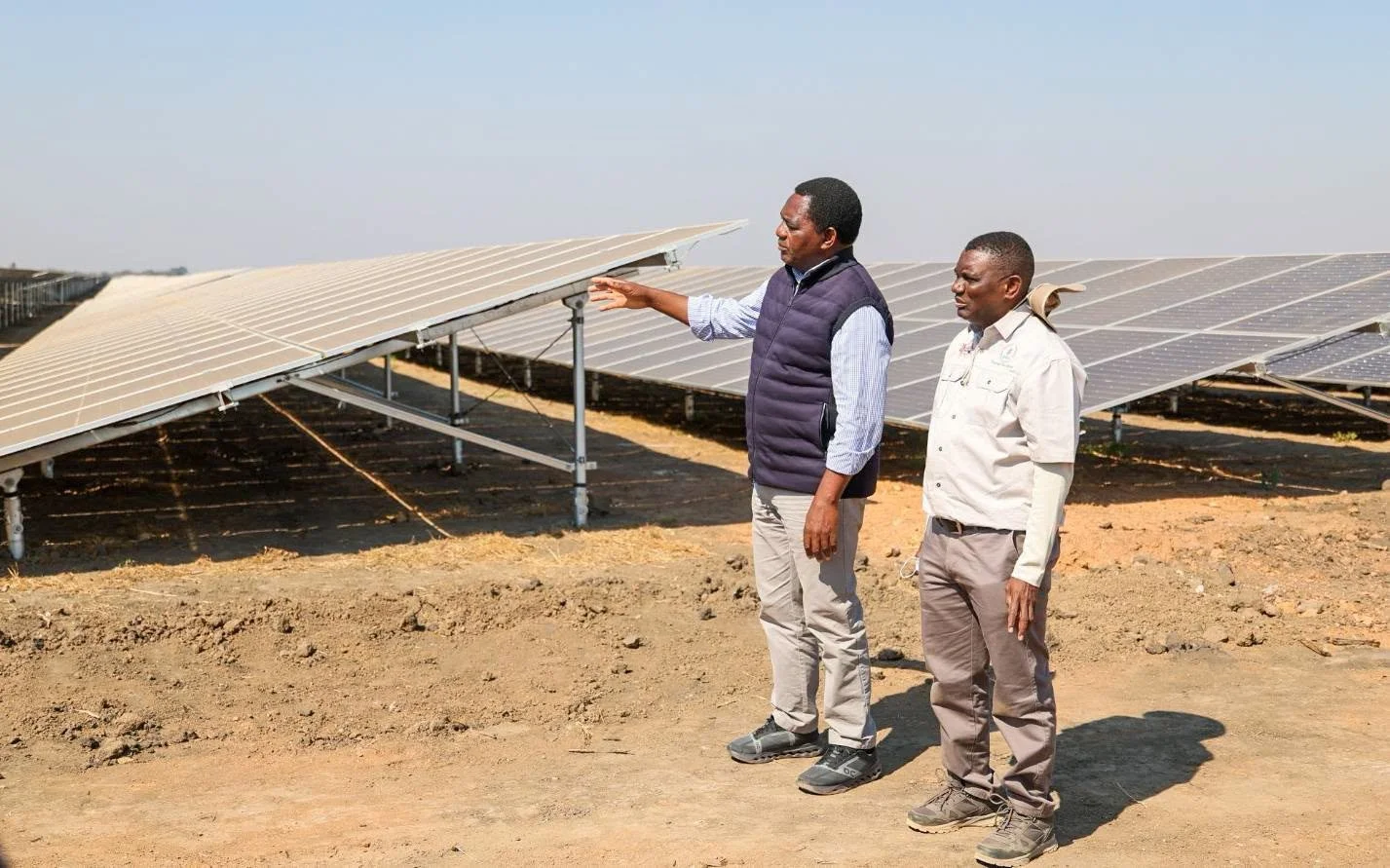
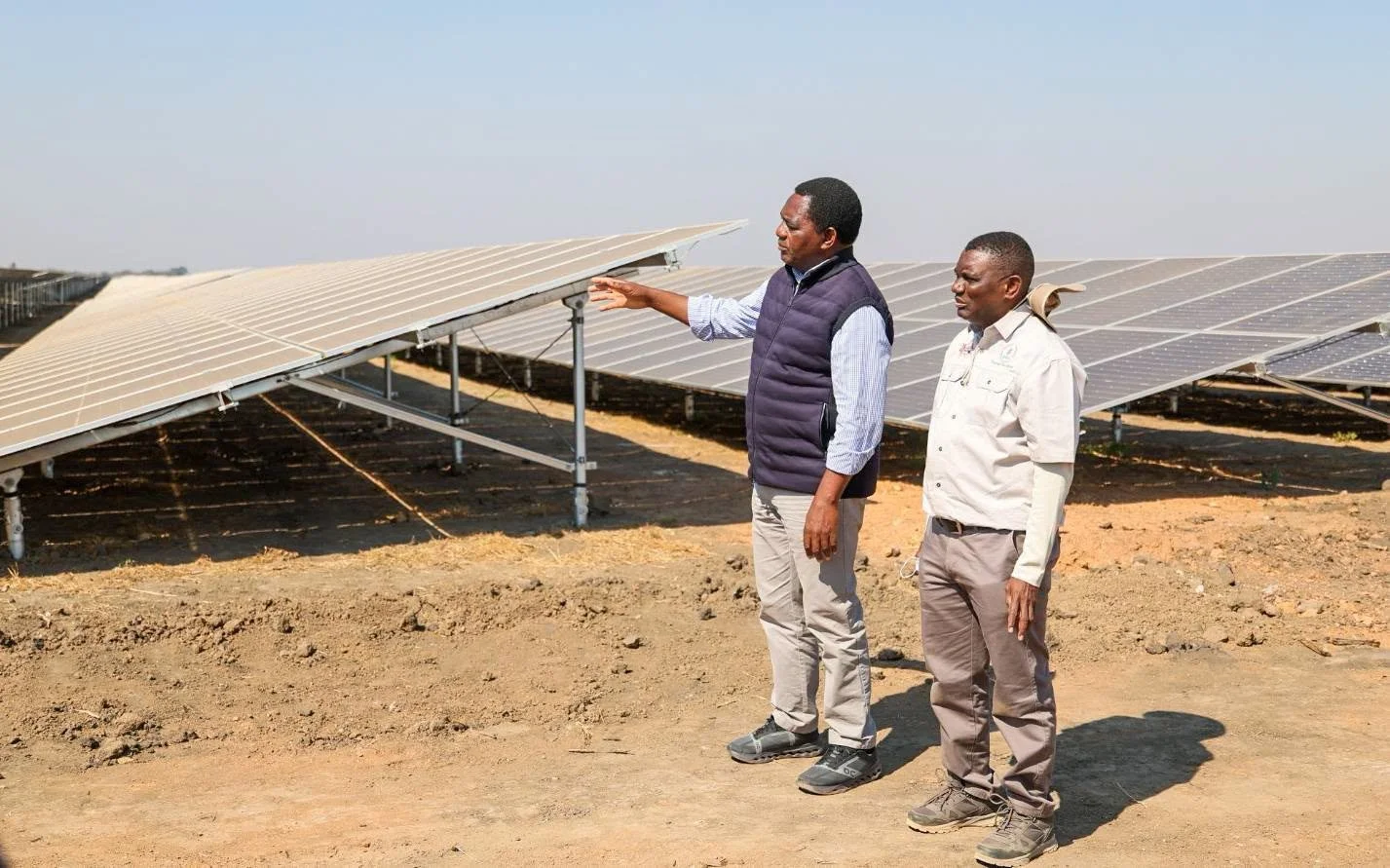
President Hakainde Hichilema inspecting the Chisamba Solar Complex on July 21, where he commissioned the 100MW Phase II plant, doubling capacity to 200MW of clean energy.
In this month's briefing:
Zambia opened its 2026 crop marketing season. The Government commissioned the 100MW Chisamba Phase II solar plant. Local-currency bonds delivered a world-beating 36% return, the kwacha held near multi-year highs, and the former Finance Minister said a new IMF programme could be agreed by year-end. Inflation held at 6.5%, the Lobito Corridor railway reached a US$753m financial close, the ZDA reported US$19bn of investment realised since 2021, and the Government's PPP pipeline swelled to US$14.2bn. Reforms targeted 40% local participation in mining, Zambia joined the new World AI Cooperation Organization, and fuel import debt fell by nearly US$700m as the country completed its largest fuel depot.
🔢 JULY IN NUMBERS
→ 36% – Local-currency bond return this year, best in emerging markets
→ 18% – Kwacha appreciation against the dollar this year
→ 6.5% – July inflation, inside the Bank of Zambia's 6-8% target band
→ US$753m – Financial close reached on the Lobito Corridor railway
→ US$19bn – Investment realised since 2021, reported by the ZDA
→ US$14.2bn – Government public-private partnership pipeline
→ US$104.9m – Tobacco sales by Week 11, from 51.96 million kg traded
→ 200MW – New capacity of Chisamba solar plant with Phase II now commissioned
→ US$700m – Fall in fuel import debt since 2022, to around US$210m
→ US$123.5m – Investment in Lusaka's new fuel depot, the country's largest
→ K347 – New FRA maize floor price per 50kg bag, up K7
→ 40% – Mining local-participation target, up from 20%
⛏️ MINING EXPANSION
President Hichilema Targets 40% Local Participation in Mining
President Hakainde Hichilema has set a target to double local participation in the mining sector from 20% to 40% through new local content reforms requiring mining companies to source goods and services from Zambian suppliers. Speaking in Chililabombwe, he tied the drive to the revival of three major Copperbelt assets, Konkola Copper Mines, Lubambe and Mingomba, and to fresh employment and business opportunities. He also pointed to a sharp rise in the Constituency Development Fund, from K1.6m to K40m per constituency, as a vehicle for community projects.
ZCCM-IH and Ministry of Mines in Talks to Set Up Gold Markets
ZCCM-IH is in talks with the Ministry of Mines to establish markets in areas where gold mining is being formalised, as part of a wider effort to formalise the country's gold and manganese sectors. Board Chairperson Phesto Musonda said the company was committed to supporting formalisation and described the move as central to the Government's broader economic agenda. He said the ministry had so far trained local miners and issued licences to between 700 and 1,000 cooperatives in areas such as Mufumbwe.
Zambia Champions Pan-African Metals ExchangePresident Hakainde Hichilema is championing a pan-African metals exchange to help African nations capture more value from their mineral wealth through greater local trading, refining and ownership. The platform would drive value addition and curb raw-material exports, building on Zambia's existing metals-trading joint venture with Mercuria Energy Group. Initial discussions have been confirmed with the Democratic Republic of Congo, with talks underway with two other nations.
⚡ENERGY AND INFRASTRUCTURE
Presidential Initiative to Build 156 Solar Plants Nationwide
Zambia has contracted a consortium of five Chinese firms to build 156 solar plants, one in every constituency, each generating 2MW for a combined 312MW. The K4.3bn (about US$160m) Presidential Constituency Energy Initiative supports the goal of lifting generation capacity from 3,500MW to 10,000MW by 2030. Construction is scheduled for completion within twelve months, coordinated by ZESCO, and is expected to create around 15,600 jobs. Local authorities will be able to hold equity stakes, giving communities a long-term revenue stream
President Hichilema Commissions Chisamba Phase II Solar PlantPresident Hichilema has commissioned the 100MW Chisamba Phase II solar plant, a US$75m investment by Kariba North Bank Extension Power Corporation, a ZESCO subsidiary, built by Power China International Group. The plant doubles the Chisamba Solar Complex to 200MW and created 1,480 jobs over a seven-month construction period. All 100MW will feed into the national grid, supporting the 10,000MW-by-2030 target, with national solar capacity now at about 800MW.
World Bank Backs 192km Zambia-Malawi Power CorridorThe World Bank has approved a US$43m International Development Association grant for the Zambia–Malawi Interconnector, a 192km cross-border transmission corridor. The funding covers about 47km of 400kV line on the Zambian side, enabling electricity trade and reducing each country's reliance on domestic generation during shortages. The link is designed to connect both nations to regional electricity markets and strengthen energy security.
FMO Prepares US$80m for Solarcentury AfricaThe Dutch development bank FMO is preparing up to US$80m in financing for Solarcentury Africa to expand solar generation across Southern Africa. The package includes US$40m to refinance existing assets, among them the 25MW Mailo solar plant in Zambia, and US$40m for future projects. Around 90% of the electricity from the immediately financed projects will supply Zambia, easing exposure to hydropower shortfalls. The merchant model allows direct sales to regional markets rather than relying solely on government power purchase agreements.
US$300m Kafue Multi-Facility Economic Zone Nears CompletionThe US$300m Golden Baobab Multi-Facility Economic Zone in Kafue is approaching completion, having broken ground in September 2025. Several companies are already installing machinery for commercial operations, positioning the zone as one of Zambia's largest industrial hubs, with capacity for manufacturing, agro-processing, energy and value-added sectors. Deputy Secretary to the Cabinet for Finance and Investment Mr Siakalenge said the development would strengthen investor confidence, expand industrial capacity and create employment.
US$14.2bn PPP Pipeline Drives Infrastructure PushAt the Zambia International Trade Fair this month, the Government showcased its private-capital drive for infrastructure, with its public-private partnership programme now overseeing about 70 projects worth more than US$14.2bn. PPP Office official Stephen Chanda said 19 concession agreements worth US$9.1bn had been signed since 2022, up from just US$35m that year, with US$780m signed in 2026 alone. The projects span transport, borders, education, housing and logistics, and have generated over 15,000 direct and 30,000 indirect jobs. Flagship schemes include the Ndola–Lusaka Dual Carriageway, nearing 80% completion, and a US$249m Mulungushi University accommodation deal.
Government Completes US$123.5m Fuel Depot
The Government has completed its largest fuel storage facility to date, a US$123.5m depot in Lusaka with capacity of 102,000 cubic metres, enough for 60 million litres of diesel, 40 million litres of petrol and 2 million litres of kerosene. Energy Permanent Secretary Prof Ephraim Munshifwa said during a tour on 24 July that the depot bolsters energy security, with strategic reserves currently at about 24 days of diesel and 17 days of petrol.
US$1.6m Project to Modernise TAZARA Railway CorridorPresident Hichilema says a US$1.6m rehabilitation of the Tanzania-Zambia Railway Authority (TAZARA) line will transform Kapiri Mposhi into one of the country's key transport and logistics hubs. The project will modernise the railway from Kapiri Mposhi to the Tanzanian port of Dar es Salaam and includes a dry port and railway workshops in the district, creating jobs and stimulating trade along the corridor. Speaking at TAZARA Main Station, the President said the dry port alone was expected to attract US$65m in investment.
💵 ECONOMY AND DEBT
Fuel Import Debt Cut by Nearly US$700m
Zambia has cut its fuel import debt from over US$900m in 2022 to about US$210m by July 2026, according to the Ministry of Energy. Permanent Secretary Ephraim Munshifwa credited the shift to private-sector-led fuel procurement, which has improved efficiency and eased the strain on public finances. The savings are being redirected towards healthcare, education and social programmes, with private companies now managing petroleum imports under greater competition.
Inflation Holds Steady at 6.5% on Kwacha Strength
Zambia's annual inflation held steady at 6.5% in July, unchanged from June and near the floor of the Bank of Zambia's 6-8% target band, as a rallying kwacha contained import costs. Statistician-General Sheila Mudenda said prices rose 0.2% on the month, with food inflation easing to 6.4% while non-food growth ticked up to 6.7%. The kwacha has appreciated almost 18% against the dollar this year, buoyed by soaring copper prices, ranking it among the world's best-performing currencies.
Zambia Targets New IMF Programme by Year-EndFormer Finance Minister Situmbeko Musokotwane says Zambia hopes to agree a new IMF programme before the end of the year, following its exit from sovereign default. The previous US$1.7bn arrangement concluded in January after underpinning the country's debt restructuring. The new programme would prioritise investment in mining, energy and agriculture to drive growth and jobs, with the Government holding off on fresh international bond issuance to reinforce investor confidence.
Local Bonds Deliver World-Beating 36% RallyZambia's local-currency government bonds have returned 36% in dollar terms this year, outpacing all other emerging-market local debt. Citigroup said a clear election win for President Hichilema would likely draw more offshore investors into upcoming auctions and push yields lower. The benchmark 10-year yield has already fallen around 70 basis points in 2026, while the kwacha has appreciated nearly 18% against the dollar, amplifying returns for international holders.
Stable Kwacha Boosts Cross-Border TradeA stable kwacha lifted cross-border trade in the first quarter, according to the Southern Africa Cross Border Traders Association. Secretary General Jacob Makambwe said currency stability had cushioned traders even amid Ebola-related restrictions in the DRC, with the kwacha holding between K17 and K19 to the dollar. The predictability has allowed merchants to forecast costs more reliably when sourcing imported goods.
🚜 AGRICULTURE
FRA Raises Maize Floor Price to K347 as Buying Begins
The Food Reserve Agency has raised its maize buying price by K7 to K347 per 50kg bag for the 2026 marketing season, with buying opening on 29 July, across 1,749 buying points nationwide. The FRA held 1.4 million tonnes of maize in stock with sufficient liquidity for this year's purchases. Zambia is expected to remain one of the few Southern African countries that will not need to import maize despite anticipated El Niño conditions, supporting food security and affordable mealie-meal prices.
EIB and EU Launch €40m Agriculture Finance Facility
The European Investment Bank and the European Union have committed €40m through three Zambian banks, Zanaco, First Capital Bank and Zambia Industrial Commercial Bank, to establish the Zambia Agriculture Value Chain Facility. The facility targets financing gaps for farmers and agri-SMEs, supporting climate-resilient practices, irrigation and modern equipment as the sector recovers from drought and power shortages. An EU-backed risk-sharing guarantee encourages lending to smaller businesses with limited collateral, alongside technical assistance.
💶 TRADE AND INVESTMENT
ZDA Announces US$19bn Investment Milestone Since 2021
The Zambia Development Agency announced that US$19bn of investment has been realised between 2021 and the second quarter of 2026, a near-20% realisation rate against US$97.07bn in total commitments. Director General Albert Halwampa said the figure demonstrated sustained investor confidence in the country's industrialisation agenda. Manufacturing and mining led the way, accounting for more than 73% of actualised investment, with transport, energy, agriculture, ICT and tourism also drawing capital.
Tobacco Sales Reach US$104.9m
Tobacco sales reached US$104.9m by Week 11 of the season, with 51.96 million kg traded, according to the Tobacco Board of Zambia. Flue-cured Virginia dominated at 44.45 million kg, averaging US$1.97/kg for US$87.34m, while air-cured Burley fetched a premium US$2.35/kg across 7.51 million kg for US$17.63m. The Board said Virginia remained the leading contributor to export earnings owing to its higher production volumes.
Lobito Corridor Railway Reaches US$753m Financial Close
The Lobito Corridor railway has reached financial close of US$753m, clearing the way for construction on one of Africa's most strategic trade routes. The financing, US$553m from the US International Development Finance Corporation and US$200m from the Development Bank of Southern Africa, will fund the rehabilitation and long-term operation of the 1,300km line from the Port of Lobito to the DRC border, with the Africa Finance Corporation acting as co-financial adviser and a Mota-Engil and Trafigura joint venture as operator. A planned new link would connect Zambia's north-west to the Angolan network, giving the Copperbelt improved access to the Atlantic.
US$49.9m Project Targets Rural Jobs and Financial Inclusion
The Government has launched the Financial Inclusion for Resilience and Innovation Project, a seven-year, US$49.9m initiative backed by the International Fund for Agricultural Development. It aims to expand access to finance, strengthen climate resilience and create more than 144,000 rural jobs, directly benefiting around 370,000 people and reaching some 1.8 million rural residents. Women and youth are prioritised, targeted at 40% and 50% of participants respectively, through tailored financial products and a new Innovation and Outreach Facility.
💻 TECHNOLOGY AND DIGITAL
AI Lifts Farm Yields
The Government has hailed artificial intelligence's growing impact across the economy, citing gains in agriculture, healthcare and education. Technology and Science Permanent Secretary Dr Habeenzu said precision farming had lifted yields by up to 20%, while AI tools had cut missed cases in healthcare by between 20% and 40%. He was speaking at a COMESA and World Bank Inclusive Digitalisation workshop in Lusaka, where he reaffirmed the Government's commitment to addressing remaining barriers to AI adoption.
Government Launches GovLink Private 4G Network
Zambia has launched GovLink Private 4G, a government-owned connectivity platform unveiled to link health facilities, schools and public institutions through secure infrastructure. Implemented by SMART Zambia Institute with partners IHM Southern Africa, Tuso Business Dynamics and Quadrupleplay, the network is, already deployed across more than 2,000 health facilities. Copperbelt Province serves as the rollout model, with nationwide expansion planned once demonstration sites are validated.
Zambia Becomes Founding Member of Global AI Organisation
Zambia has become a founding member of the newly established World Artificial Intelligence Cooperation Organization (WAICO), signing the agreement in Shanghai on 16 July. Technology and Science Permanent Secretary Brilliant Habeenzu signed on behalf of the Government, with Zambia joining 28 other countries from Africa, Asia, Europe and South America; UN Secretary-General António Guterres attended the ceremony. Launched by China, WAICO aims to promote international cooperation and governance in artificial intelligence and to narrow the technology gap for developing countries, particularly in the Global South. The Government said membership aligns with its National Artificial Intelligence Strategy, while President Xi Jinping pledged 5,000 AI training opportunities for developing countries over the next five years.
JULY MILESTONE ⛰️
July brought fresh proof that Zambia's reforms are turning promises into capital. The Zambia Development Agency reported that US$19.07bn of committed investment had actually been actualised between 2021 and June 2026, a near-20% actualisation rate against US$97.07bn in commitments, drawn from 838 monitored enterprises. Manufacturing and mining led the way, together accounting for more than 73% of the total, while the monitored projects created almost 150,000 direct jobs, concentrated in Lusaka, the Copperbelt and North-Western Province. Director General Albert Halwampa credited macroeconomic stability, the restructuring of some 94% of external debt, sector reforms and sustained investor engagement under President Hichilema, and stressed the figure is likely conservative, with the true total higher still.
👀 WHAT WE’RE WATCHING IN AUGUST
→ The 13 August general election, the month's defining event, testing President Hichilema's re-election bid and the UPND's parliamentary majority under the new mixed electoral system. Investors will be watching closely: Citigroup expects a decisive result in Hichilema’s favour to draw fresh offshore demand into the post-election Treasury bond auction and extend Zambia's world-beating 36% local-bond rally.
→ Progress towards a new IMF programme, with talks expected to resume after the vote and Former Finance Minister Musokotwane targeting agreement before year-end.
→ The Food Reserve Agency's buying campaign, which opened on 29 July, watch purchases build towards the 500,000-tonne target across 1,749 depots.
📖 WHAT WE’VE BEEN READING IN JULY
Value Added by Economic Sector as a Share of GDP, Zambia (1983–2025) – Statista | 1 July 2026
Hakainde Hichilema | The Zambian Model: A Case for African Reform – News24 | 2 July 2026
WFP Zambia Country Brief, July 2026 – ReliefWeb | 24 July 2026
QUOTE OF THE MONTH
"The story Africa is told is too often one of what happens to us. The story we are writing in Zambia is one of our own making.”
— President Hakainde Hichilema, writing in News24 on 2 July 2026 on Zambia's economic reforms
Zambia Investor Briefing - June 2026
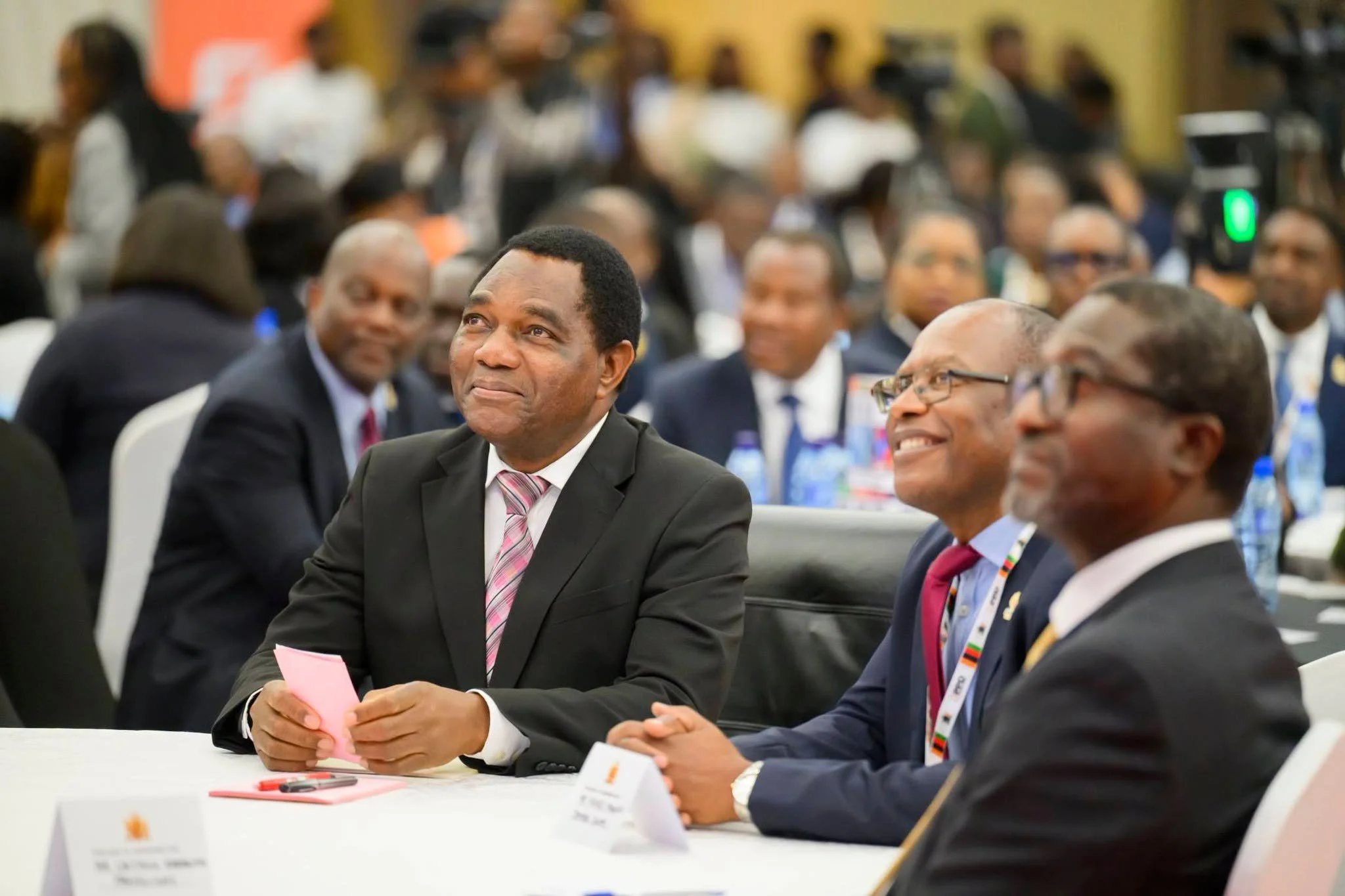
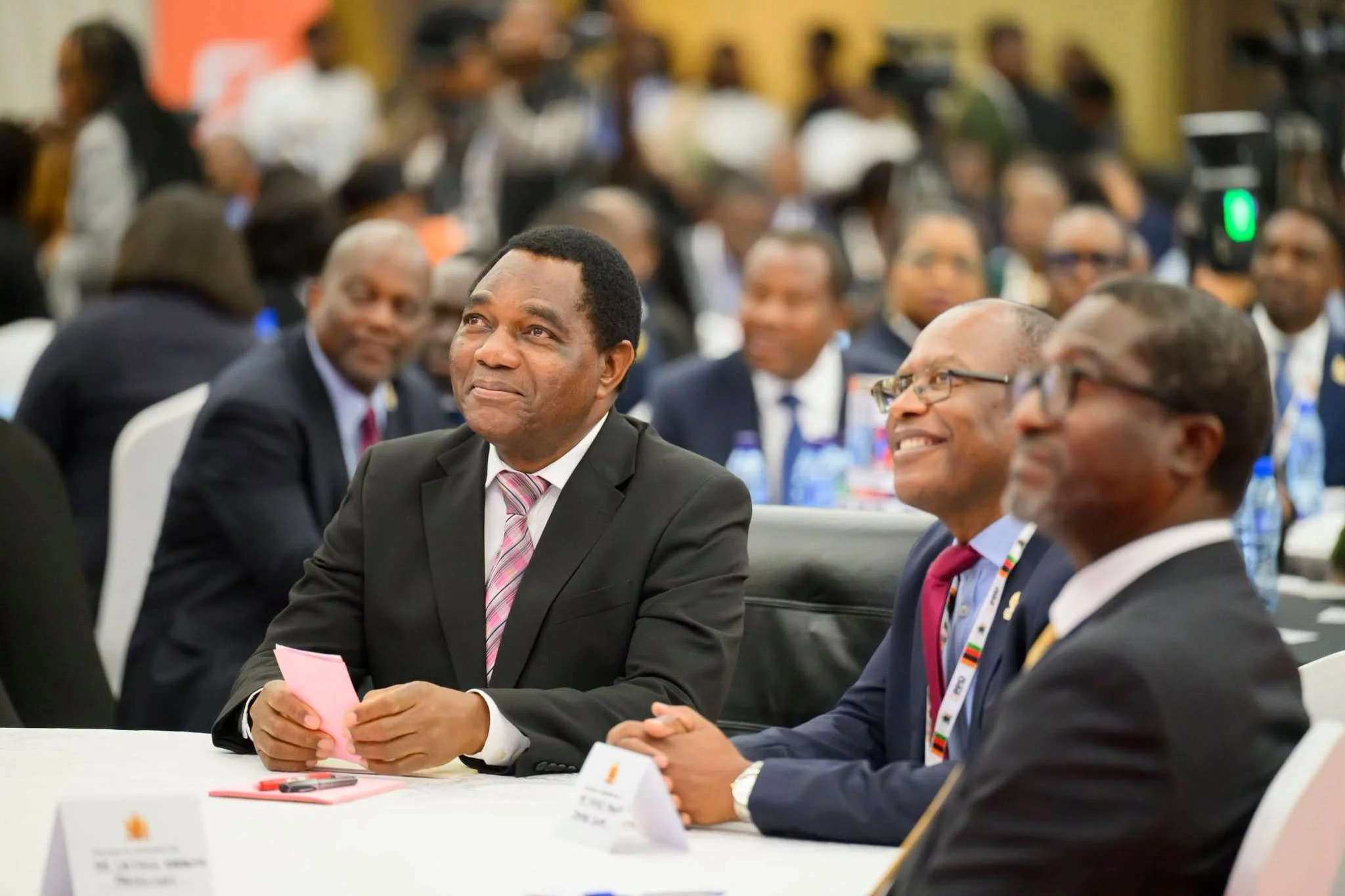
President Hakainde Hichilema officiating at the Mid-Year Private Sector Day on June 12, where he reaffirmed that the Public-Private Dialogue Forum should remain central to Zambia's reform agenda and called for fewer barriers, more investment and stronger private sector-led growth.
In this month's briefing: Zambia completed a landmark debt-for-energy bond buyback, retiring more than $1.1bn of dollar bonds with the help of a $600m African Development Bank loan. Inflation fell to an eight-year low of 6.5%, the economy grew 7.7% in the first quarter, up from 4.5% a year earlier, and the kwacha held its place as the world's best-performing currency. ZCCM-IH hosted its Capital Markets Day in Paris and moved to revive its London listing, targeting a rise in market capitalisation from $1.4bn to $7bn within a decade, while Vedanta prepared a US listing of CopperTech Metals to accelerate a $2.7bn expansion. Three new thermal power projects worth a combined $1.3bn were announced alongside fresh solar and hydro investment to close the power gap. Airtel Zambia passed a $1bn market capitalisation on the Lusaka exchange. Zambia’s trade surplus rose to K7bn in May, and external debt service fell $90.9m. The country also secured a realignment of a $491m US grant to support the Lobito Corridor.
🔢 JUNE IN NUMBERS
→ 6.5% - June annual inflation, the lowest since early 2018
→ 7.7% - Q1 2026 GDP growth, up from 4.5% a year earlier
→ 22% - kwacha appreciation against the dollar this year
→$400m (K7bn) - May trade surplus, up from K3.5bn in April
→$1.1bn - Cumulative trade surplus in the first five months of 2026
→ $575.1m - External debt service in 2025, down US$90.9m on the year
→ $1bn - Airtel Zambia market capitalisation on LuSE, the fourth company to pass the mark
→ $491m - MCC grant realigned to support the Lobito Corridor
→ $900m - Upper range of South Korea's proposed KS Eco solar and nuclear investment
→ $87.9m - Tobacco revenues this season, from 43.17 million kg traded
→ 2.4m tonnes - Maize available for export after national needs are met
→ 81 points - Zambia's score under the 2023 EITI global mining and resource transparency standard
⛏️ MINING EXPANSION
ZCCM-IH Moves to Revive London Listing
ZCCM-IH has appointed advisers to revive its London listing and widen its free float, as it works to tap international capital markets. Chief Executive Kakenenwa Muyangwa said the group wants to lift its market capitalisation from about US$1.4bn to around US$7bn within a decade. It is also weighing an increase in its free float from 7% to as much as 25%, and a possible switch to US dollar reporting.
Vedanta Prepares CopperTech US Listing
Vedanta is preparing the US listing of CopperTech Metals, which will operate its 79%-owned Konkola Copper Mines. ZCCM-IH says the IPO could accelerate a US$2.7bn expansion project, with the listing reported to raise around US$372m. The move signals renewed investor appetite for Zambian copper assets.
Barrick and First Quantum Back Copper Push
Barrick and First Quantum are backing Zambia's drive to triple copper output to three million tonnes by 2031. The companies are among those benefiting from an extended suspension of the 10% duty on copper concentrate exports, which is helping clear stockpiles while major smelters undergo maintenance.
Tertiary Minerals Advances Target A1 DrillingTertiary Minerals has begun drilling at its Target A1 prospect in North-Western Province, a near-surface body roughly 500 metres long, 300 metres wide and up to 75 metres thick. Holes will reach a vertical depth of about 125 metres, with the programme expected to take six to 12 weeks. The project sits 28 kilometres east of the historic Kalengwa copper mine, one of the highest-grade deposits ever mined in Zambia.
Jubilee Secures Backing for Copper Expansion
Jubilee Metals has secured a US$1.5m convertible loan note to accelerate development in the greater Molefe region. The investor previously helped develop Mantos Copper and its merger with Capstone Copper, lending weight to Jubilee's strategy. Discussions are underway on a potential staggered package of up to US$10m.
Atomic Eagle Expands Uranium Footprint
Atomic Eagle has expanded uranium mineralisation at its wholly owned Muntanga project, mainly at the Chisebuka deposit. Recent drilling has extended the northern high-grade zone to 900m by 600m. The company plans to begin diamond drilling late in 2026, aiming to position Chisebuka for a large-scale mine.
Zambia Scores High on Mining TransparencyZambia has earned an 81-point rating under the 2023 Extractive Industries Transparency Initiative standard. The assessment commended progress on transparency and accountability in the sector, while calling for further reforms in contract disclosure and environmental governance. The score reinforces the country's improving investment credentials.
⚡ENERGY AND INFRASTRUCTURE
ZCCM-IH Partners with Wonderful Group on 600MW Thermal Power Plant
ZCCM-IH has agreed a deal with Chinese-owned Wonderful Group to build a 600MW thermal power plant at an estimated US$452m. The plant will be developed in two phases through a special purpose vehicle, Ever Great Energy, with ZCCM-IH taking a 30% equity interest for US$54.2m. It aims to help close a peak demand shortfall of 1,400MW and reduce reliance on hydropower.
EZRA Group Begins Work on US$561m Thermal Power PlantEZRA Group has begun construction of a 400MW thermal power plant worth US$561m at Sinazeze in Sinazongwe District. The project will be delivered in two phases, with the first 200MW due to be commissioned by the end of 2027 and full completion expected in December 2029. ZESCO said the plant forms part of efforts to build an energy-resilient nation.
Vedanta's KCM Plans 300MW Thermal Power PlantVedanta's Konkola Copper Mines plans to build a 300MW thermal power plant worth US$317m in the south of the country, where it faces regular electricity shortages. The facility will be built in two phases, addressing KCM's position as one of Zambia's biggest single power users.
South Korea Proposes Up to US$900m Solar and Nuclear InvestmentKS Eco Solutions has proposed investing between US$700m and US$900m in Zambia's solar and nuclear sectors. The plan centres on a 500MW solar project built in ten phases, with power sold to ZESCO under a long-term agreement. Officials estimate it could address close to a third of the country's current energy shortfall.
Zambia Signs Northrise Solar Agreement
The Government has signed an implementation agreement for the 16MW Northrise Solar project in Twapia, Ndola. Developer Lifesong for Orphans Zambia has invested more than US$12m in the first phase and plans a further 35MW expansion. The plant is due to enter commercial operation in July 2026, with the agreement setting out development rights and a framework for risk allocation between the Government and the developer.
ARC Power Secures US$60m Solar InvestmentZambia has secured an initial US$60m solar investment through a partnership between developer ARC Power and Kiyona Energy, a subsidiary of state utility ZESCO. The funding will expand solar generation as Zambia works to reduce its dependence on hydropower. It is structured under ARC Power's FUSE model, backed by the International Finance Corporation, in which the developer designs, finances and builds the infrastructure before transferring it to public utilities or operating it under power purchase agreements of up to 20 years. The deal is the first phase of a longer-term programme aligned with the World Bank's Mission 300 target.
Lunzua Takes Stake in 180MW Ngonye HydroLunzua Power Company has acquired a 27% stake in Western Power Company to support development of the 180MW Ngonye Hydroelectric Power Falls project in Western Province. The agreement, signed in Cape Town during the Africa Energy Forum, will provide funding for the project and secure long-term contracted revenues for Lunzua.
Batoka Gorge Scheme Goes to MarketZambia and Zimbabwe have opened a market sounding for the proposed 2,400MW Batoka Gorge hydroelectric scheme, held at the Africa Energy Forum in Cape Town. Jointly developed by the two countries through the Zambezi River Authority, the project is one of the largest hydropower schemes planned in Southern Africa.
BB Energy Launches LPG Distribution
BB Energy has launched an LPG distribution business in Zambia, expanding access to cleaner, more reliable energy. The launch builds on the global group's growing presence in LPG and other transitional and renewable energy sectors, drawing on its trading, logistics and risk management expertise to supply the Zambian market.
ERB Approves 32 Licences and K4.5bn in PledgesThe Energy Regulation Board has approved 32 licences, 16 construction permits and various amendments, attracting investment pledges of K4.5bn, equivalent to US$253m. Granted at a Licensing Committee meeting on 15 June, the approvals span electricity, renewable energy and downstream petroleum, and include four new solar plants with a combined capacity of 126 MWp. PR Manager Namukolo Kasumpa said they reflect sustained investor confidence in Zambia's energy sector.
JICA and UNDP Commission Road and Bridge
The Government, JICA and UNDP have commissioned a 25km road and 120-metre footbridge at Mayukwayukwa in Western Province. The US$5.3m project will benefit more than 42,000 people across the Mayukwayukwa and Meheba settlements, improving year-round access to health care, education and markets for refugee and host communities.
💵 ECONOMY AND DEBT
Zambia Completes World-First Debt-for-Energy Swap
Zambia has completed a maiden debt-for-energy swap, securing a US$600m loan from the African Development Bank to fund the buyback of dollar bonds sold in 2024. The rest of the more than US$1.1bn total was funded from the country's own resources, helped by the copper rally and a stronger kwacha. Savings on repayments of US$275m over 15 years will go into expanding the power grid, offering a template other African nations could follow.
Inflation Falls to to Eight-Year LowZambia's inflation fell in June to 6.5%, the lowest level since early 2018, down from 6.6% in May and falling in the Bank of Zambia’s target of 6-8%. Food inflation eased to 6.7% and non-food price growth to 6%. The kwacha has appreciated more than 22% against the dollar this year.
Economy Grows 7.7% in First QuarterZambia's economy grew by 7.7% in the first quarter of 2026, up from 4.5% in the same period a year earlier, an acceleration of 3.2 percentage points. ZamStats Statistician-General Sheila Mudenda said the performance was driven largely by agriculture, forestry and fishing, arts and entertainment, information and communication, transport and accommodation. GDP at purchasers' prices was estimated at K191,385m, up from K153,882m a year earlier, with mining and quarrying the single largest contributor at 14.8% of total output.
Trade Surplus Surges to K7bn in MayZambia's trade surplus has surged to K7bn in May, roughly US$400m, up from K3.5bn in April. The cumulative surplus for the first five months of 2026 reached about US$1.1bn, against US$146m for all of 2025.
External Debt Service Falls in 2025
Zambia's external debt service fell by US$90.9m in 2025 to US$575.1m, driven largely by lower payments on restructured Eurobonds. The public and publicly guaranteed external debt-to-GDP ratio declined to 60.9% from 66.4%, helped by higher nominal GDP. Export proceeds tracking also improved, with the repatriation rate rising to 85.6%.
💶 TRADE, INVESTMENT AND AGRICULTURE
Zambia Realigns US$491m Grant to Lobito Corridor
Zambia has agreed with the US Millennium Challenge Corporation to expand the use of a US$491m grant to support critical minerals infrastructure. The “farm-to-market” grant, signed in 2024, will now also support the Lobito Corridor linking Zambia's Copperbelt to Angola's Atlantic coast. Priority road segments in North-Western and Copperbelt Provinces have been aligned with the corridor.
Airtel Zambia Passes US$1bn Market Value
Airtel Zambia has become the fourth company on the Lusaka Securities Exchange to surpass a US$1bn market capitalisation. The milestone reflects continued investor confidence and the growing role of the telecoms sector in Zambia's capital markets. Airtel has expanded through investment in network infrastructure and financial inclusion.
TAZAMA Declares K120m Dividend
TAZAMA Pipelines has declared more than K120m in dividends to the Government of Zambia, with a further K60.1m due to Tanzania. The company recorded a profit of over K180.5m and retained more than K541.7m for future investment. The Treasury said the payout shows the role of state-owned enterprises in generating value.
Tobacco Revenues Reach US$87.9m
Tobacco revenues have reached US$87.9m this season, with 43.17 million kg traded, according to the Tobacco Board of Zambia. The figures point to the sector's growing contribution to agricultural export earnings. It adds to a broadly positive picture for the rural economy.
Bumper Harvest Opens Export Opportunities
An agricultural expert has said the bumper harvest of nearly five million tonnes of maize presents a major opportunity to strengthen food security and expand exports. After meeting consumption, industrial and reserve needs, about 2.4 million tonnes will be available for export. Chief Agricultural Advisor Coillard Hamusimbi credited reforms under the Electronic Voucher System and improved farmer incentives.
Zambia Wins AviaDev Africa 2027 Host Bid
Zambia has won the bid to host AviaDev Africa 2027, a major aviation route development conference. The win comes as the country pushes to attract new air routes and strengthen connectivity. It places Zambia at the centre of the continent's aviation growth conversation.
JUNE MILESTONE ⛰️
June marked another milestone in Zambia's return to international capital markets. Having been the first African country to default after Covid, and then the pioneer for the G20's Common Framework, the country has now completed the world's first debt-for-energy swap. A US$600m loan from the African Development Bank, alongside its own resources, funded the buyback of more than US$1.1bn of dollar bonds, with savings of around US$275m over fifteen years earmarked for expanding the power grid. The deal demonstrates restored market access, the fiscal room rebuilt by a copper rally and stronger kwacha, and a model tying debt relief directly to productive investment that others may follow.
👀 WHAT WE’RE WATCHING IN JULY
→ Northrise Solar (16MW) is scheduled for commissioning in July 2026, with developer Lifesong for Orphans eyeing a further 35MW expansion.
→ Progress on the Wonderful Group Ndola Lime Revival, as it moves towards operational detail.
📖 WHAT WE’VE BEEN READING IN JUNE
Zambia's State-Owned Miner Seeks to Revive London Listing - Financial Times | 26 June 2026
Zambia Currently Boasts Its Best Economic Performance in 8 Years - Business Insider Africa | 25 June 2026
Turning Debt Into Power: Zambia, the AfDB and Africa's New Frontier in Development Finance - African Business | 19 June 2026
Next Africa: Zambia Goes From Debt Defaulter to a Global Trailblazer - Bloomberg | 10 June 2026
QUOTE OF THE MONTH
“Our goal is simple: fewer barriers, more transactions, more investment, more jobs and shared prosperity for all.”
— President Hakainde Hichilema at the conclusion of the Mid-Year Private Sector Day in Lusaka on June 12
Zambia Investor Briefing - May 2026
In this month's briefing: Zambia is headed for a record 4.94 million tonne maize harvest this year. Inflation fell to an eight-year low of 6.6% and the Bank of Zambia cut its policy rate to 13.25%. ZCCM-IH is partnering with China's Wonderful Group to revive the dormant Ndola Lime plant, launching a separate gold joint venture under Kyalo Goldfields, and is intending to lift its Mingomba copper holding to 25%. Konkola reopened its Chingola mine after 18 years, First Quantum reported a $3.46 billion contribution to the economy, and emerald production surged 241%. President Hichilema commissioned infrastructure projects in Western province and championed investment at the Africa Forward Summit in Nairobi, while Israel restructured $460 million of Zambian debt and the UK, EU and Germany all backed the country as an investment destination.
🔢 MAY IN NUMBERS
→ 4.9m tonnes - Projected 2025/26 maize harvest, a record
→ $1.36bn - Zambia's 2053 bond tender offer
→ 6.6% - May inflation, down from 6.8% in April and from 23.2% in May 2021
→ 13.25% - Bank of Zambia policy rate after third consecutive cut
→ $3.46bn - First Quantum Minerals 2025 contribution to Zambia's economy
→ $2.3bn - KoBold Metals Mingomba copper mine construction figure
→ $1.69bn - ZDA Q1 2026 actualised investments
→ $500m - ZDA-ZPEC Ndola oil refinery agreement
→ $460m - Israel debt restructuring deal
→ $175m - Texxon Energy Sinazongwe coal plant
→ $125.8m - CEC Itimpi II solar plant commissioned
→ $30m - ZCCM-IH and Wonderful Group joint venture to revive Ndola Lime
→ $97m - German development cooperation pledge
→ $13.7m - Government digital infrastructure upgrade
→ 241.41% - Emerald production surge year-on-year
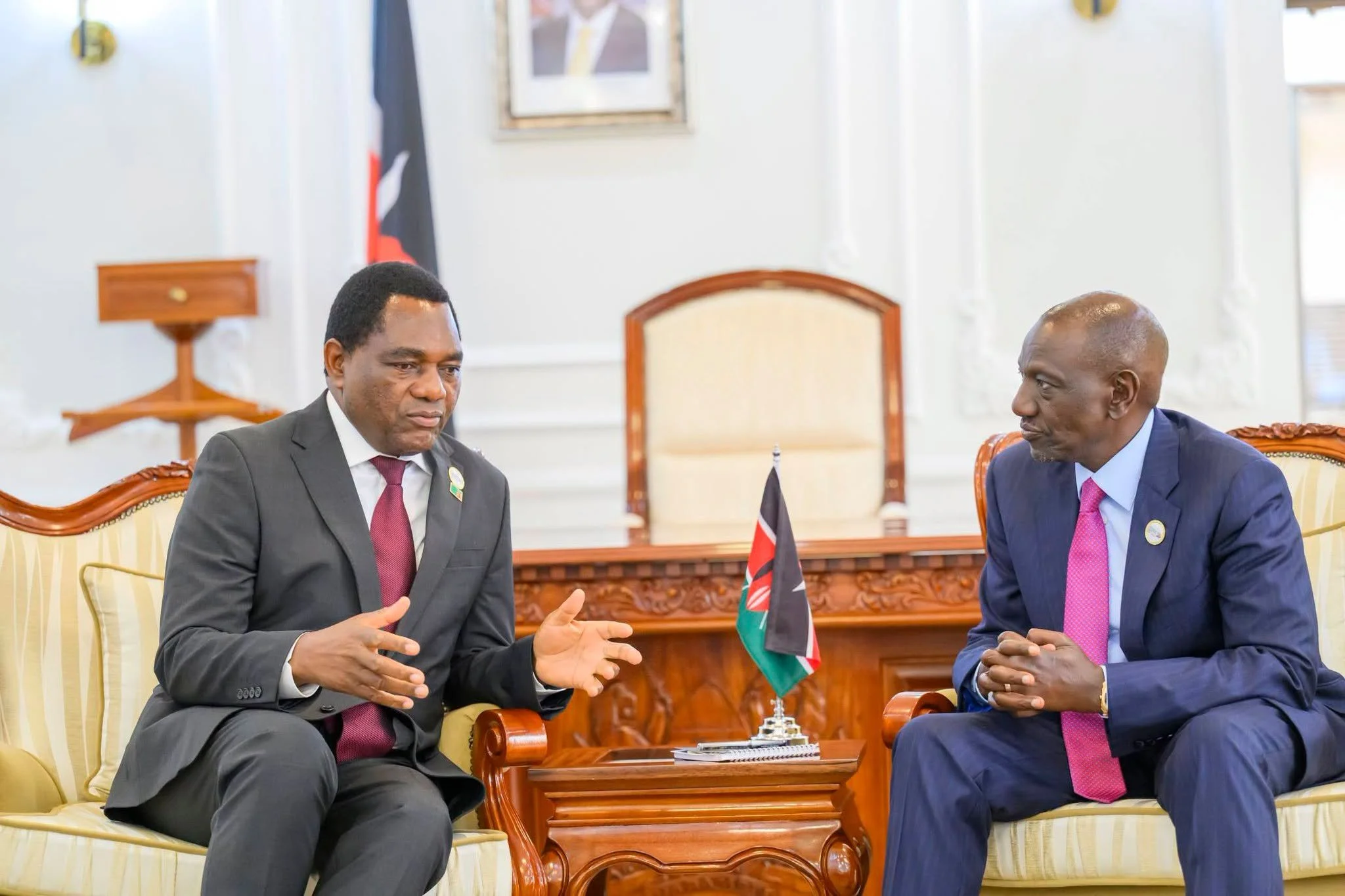
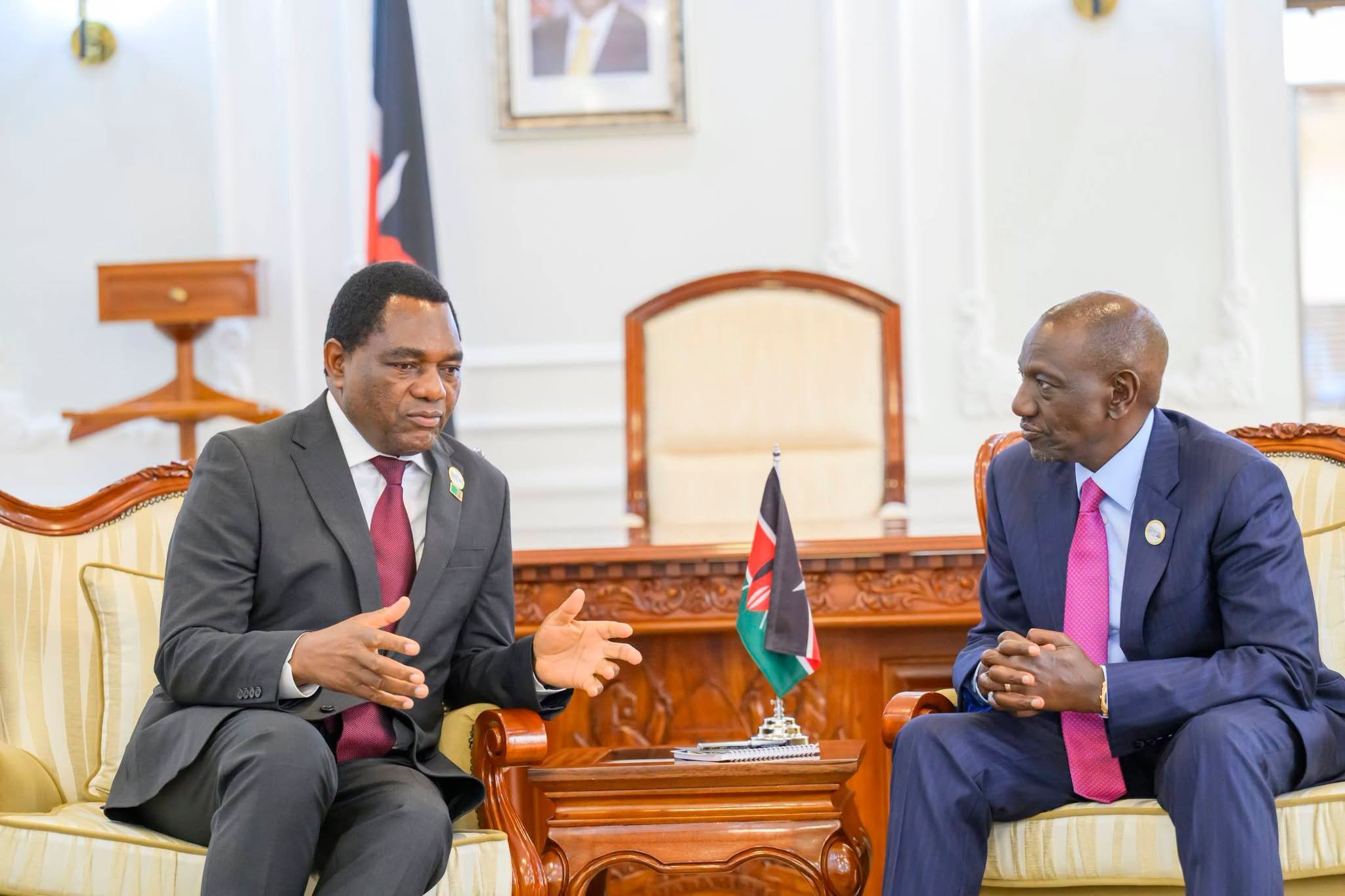
President Hakainde Hichilema met Kenyan President William Ruto on the sidelines of the inaugural Africa Forward Summit in Nairobi.
⛏️ MINING EXPANSION
Konkola Reopens Chingola Mine After 18 Years
Konkola Copper Mines resumed mining at its Chingola “B” Mine, 18 years after operations ceased. The mine is projected to produce more than 200,000 tonnes of ore per month, Chief Executive Deshnee Naidoo said. KCM is 79.4% owned by Vedanta Resources and 20.6% by ZCCM-IH.
First Quantum Records $3.46bn Economic Contribution
First Quantum Minerals reported a $4.1 billion direct contribution across its operating jurisdictions in 2025, with the bulk landing in Zambia. Local operations supported more than 23,500 employees and contractors, with procurement of around $2.1 billion. The December commissioning of the $1.25 billion Kansanshi S3 Expansion will nearly double the mine's processing capacity.
ZCCM-IH Targets Higher Mining Stakes
ZCCM Investments Holdings signalled its intent to raise minority stakes in mining assets on commercial terms and not through forced sales, Chief Executive Kakenenwa Muyangwa said. The firm lifted its Lubambe stake to 30% last year and is planning on raising its Mingomba holding to 25% from 20%. It also aims to extend the royalty-to-revenue model pioneered at Kansanshi, which has delivered $110 million since 2022.
ZCCM-IH Forms Gold Joint Venture
ZCCM-IH announced a gold joint venture with Mining Mineral Resources, taking a 51% stake in newly incorporated Kyalo Goldfields. The venture will operate in the Kikonge area of North-Western Province. It aims to formalise artisanal mining and build local processing capacity to retain value within Zambia.
Emerald Surge and Copper Strength Lift Sector
Mines Minister Paul Kabuswe pointed to robust first-quarter performance across copper and gemstones. Large-scale mines lifted copper output by 1.8%, with Lumwana up 19.2% and Konkola up 22.02%, while emerald production soared 241.41% year-on-year. The gains boosted foreign exchange earnings and helped lift the kwacha to its strongest level in nearly two years.
SRK Opens Kitwe Office
SRK Consulting set out a favourable outlook for the sector at ZIMEC 2026, citing strong government support, a transparent mining cadastre and central location on planned export corridors. The firm, which has opened a practice in Kitwe, noted the diversification push into cobalt, lithium, nickel and rare earths. It also flagged the greater geotechnical and environmental risks that come with deeper extraction.
🚜 AGRICULTURE
Zambia Heads for Record Maize Harvest
Zambia is expected to record its highest maize harvest ever, at about 4.94 million tonnes in the 2025/26 season, continuing the rebound since the 2023/24 drought and lifting output by roughly a quarter on the previous record. Targeted interventions by Government and cooperating partners have driven the turnaround, alongside favourable weather. Around 94% of production comes from small-scale farmers and family farms.
ZCCM-IH Revives Century-Old Ndola Lime Plant
ZCCM-IH has entered a $30 million joint venture with Wonderful Group to restore industrial-scale lime and cement production in Ndola, taking a 45% interest with Wonderful Group holding the balance. The site has produced lime since 1931, supplying critical inputs to Zambia's copper, construction and agricultural sectors, until its owner fell into insolvency in 2018. The revival will run in three phases, starting with a 600-tonnes-per-day lime plant. Chief Executive Kakenenwa Muyangwa called it a new chapter for the 95-year-old Copperbelt institution and a clear example of active portfolio management in practice.
⚡️ ENERGY & INFRASTRUCTURE
CEC Commissions Zambia’s Largest Solar Plant
The CEC Group commissioned the 136 MW Itimpi II solar plant in Kitwe, lifting its total solar capacity to 230 MW. Built in 14 months for $125.8 million and funded by CEC's Green Bond, it is now the country's largest operational solar facility. The project created 2,568 jobs, over 95% held by Zambians, and CEC aims to exceed 500 MW of solar by 2027.
ZDA and ZPEC Sign $500m Ndola Refinery Agreement
The Zambia Development Agency and ZPEC signed an Investment Promotion and Protection Agreement for a $500 million oil refinery in Ndola, expected to create more than 3,500 jobs. ZPEC will produce Jet A1, petrol, diesel, kerosene and LPG for domestic and regional markets. Director General Albert Halwampa expressed confidence the project would be fully operational by next year.
Texxon Energy To Build $175m coal plant
Texxon Energy Limited is expected to construct a 180-megawatt coal-fired power plant in Sinazongwe District, Southern Province. Valued at $175 million and due for completion within three years, the project is expected to create 1,200 jobs.
Government Approves K255 Digital Upgrade
Technology and Science Minister Felix Mutati announced K255 million to upgrade digital infrastructure and improve quality of service, particularly in rural areas. The country's fibre-optic network has expanded from 15,000 kilometres in 2021 to more than 45,000 kilometres, with connectivity coverage reaching 94%. AI and robotics were identified as strategic priority areas for mining and education.
Smart Zambia and Huawei Sign AI Data Centre Deal
Smart Zambia and Huawei signed a Memorandum of Understanding supporting co-investment in a National Artificial Intelligence Data Centre. The deal will train 5,000 Zambian ICT professionals by 2028 and speed up AI-powered public services across all 25 ministries. Vice President Mutale Nalumango said Zambia was determined to take a leading role in the global digital revolution.
Western Province Infrastructure Drive Gathers Pace
President Hakainde Hichilema commissioned the Mongu-Limulunga Road, a 28.9-kilometre urban stretch he described as a symbol of tangible development. Infrastructure Minister Charles Milupi said Government saved millions after renegotiating an inflated $31 million contract, channelling the savings into road extensions, bridges and a Kambule-Mongu dual carriageway. The President also commissioned the new Silanda and Luanginga bridges in Kalabo District, improving access to Liuwa National Park, with works on the Kalabo-Sikongo Border Road to follow.
🌍 TRADE & INVESTMENT POLICY
Inflation Cools to Eight-Year Low
Zambia's annual inflation slowed to a more than eight-year low in May, with consumer prices rising 6.6% from 6.8% in April, supported by a stronger kwacha and a bumper maize harvest. The kwacha has appreciated around 20% against the dollar this year, making it Bloomberg's best-performing currency, while foreign exchange reserves rose 13% in the first quarter to $6.2 billion, equivalent to 5.2 months of import cover. Food inflation eased to 6.9% from 7.3%, with fuel tax suspensions and zero-rated VAT also blunting the impact of higher global energy prices.
Bank of Zambia Cuts Rate to 13.25%
The Bank of Zambia cut its policy rate by 25 basis points to 13.25%, a third consecutive reduction. The central bank pointed to the favourable maize harvest, relative stability in the kwacha, and inflation holding within its 6-8% target band. Governor Denny Kalyalya said upside risks linked to the war against Iran warranted a cautious adjustment, with inflation now projected to average 6.8% in 2026 and 6.1% in 2027.
Kwacha Firms on Mining Inflows
Zambia's kwacha is expected to strengthen further against the dollar, supported by steady inflows from the mining sector, traders told Reuters. The currency was quoted at 18.69 per dollar, up from 19.01 a week earlier. Analysts pointed to elevated copper prices near record highs, the benefits of December's dedollarisation directive, and the restructuring of the national debt as the main drivers of the kwacha's strength.
ZDA Records $1.69bn in Q1 Actualised Investments
The Zambia Development Agency reported $1.69 billion in actualised investments in Q1 2026, alongside 9,576 jobs. Manufacturing and energy together accounted for over 70% of the total, with Lusaka Province contributing 65.3%. Cumulatively, the Agency has recorded $16.4 billion in actualised investments and 109,488 jobs since 2021.
Zambia Targets China Soybean Export Market
Zambia is planning to tap the soybean export market after China expressed interest in buying up to three million metric tonnes from the country. Ministry of Defence Permanent Secretary Maambo Haamaundu said the defence wings would contribute to increased soybean production, in line with Government's broader agricultural diversification drive.
💶 DEBT RESTRUCTURING
Zambia Bonds Rally on $1.36bn Buyback Tender
Zambia launched a cash tender offer to buy back its $1.36 billion bond due 2053, funded by a $600 million African Development Bank loan and own resources. The bond rallied 5.5 cents to 79.21 cents on the dollar, with the yield falling 28.5 basis points to 14.1%, the best-performing emerging-market sovereign dollar bond on the day. Holders tendering by 5 June will receive $780 per $1,000 of principal.
Zambia and Israel Sign $460m Debt Restructuring
Zambia signed an agreement with Israel to restructure $460 million of debt. Finance Minister Situmbeko Musokotwane called it proof of the Government's commitment to fiscal discipline and debt sustainability. Israeli Ambassador Ofra Farhi said the deal cleared the path for a surge in bilateral trade and private sector investment.
🤝 INTERNATIONAL PARTNERSHIPS
President Hichilema Champions Investment At Africa Forward Summit
President Hakainde Hichilema urged investors to seize Zambia's policy reforms at the inaugural Africa Forward Summit in Nairobi. He highlighted energy sector reforms and called for a power interconnector linking Southern Africa to North Africa, stressing that the continent must ultimately be developed by Africans leveraging their own resources.
Germany Pledges K1.8bn for Development
Germany committed K1.8 billion towards Zambia's development agenda over the next two years, following bilateral talks on development cooperation. The pledge covers good governance, water and energy access, and food security through climate-resilient agriculture. It builds on a partnership of more than 60 years between the two countries.
UK and EU Back Zambia as Investment Destination
The UK described Zambia as an emerging destination for long-term investment at the Impact Capital Africa Investment Fest. High Commissioner Rebecca Terzeon said Zambia's inclusion in BII's new five-year strategy signalled confidence in its potential, while EU Ambassador Karolina Stasiak praised the country's stability and reforms. Officials urged Zambian SMEs to sharpen financial reporting to attract capital.
MAY MILESTONE ⛰️
May confirmed one of the most significant productivity shifts in the Zambian economy. The 2025/26 season is forecast to deliver a record 4.94 million tonnes of maize, up 28% on last year, improving food security. Area planted is broadly flat, meaning the gain reflects yield improvement rather than expanded acreage. Around 94% of production comes from small-scale farmers and family farms, signalling that the recovery is broad-based. The contrast with two years ago is stark, when the 2023/24 crop was devastated by the worst drought in living memory.
👀 WHAT WE’RE WATCHING IN JUNE
→ ZCCM Investment Holdings PLC is hosting its Capital Markets and Investor Day on Friday, 19 June 2026 in Paris, France.
→ Progress on the ZCCM-IH gold joint venture under Kyalo Goldfields and the Wonderful Group Ndola Lime Revival, as both move from announcement towards operational detail.
📖 WHAT WE’VE BEEN READING IN MAY
ZCCM-IH and Wonderful Group Revitalise Ndola Lime Production Facility - Discovery Alert | 28 May 2026
Favourable Outlook For The Mining Sector in Zambia - African Mining Market | 14 May 2026
Zambia Is the World’s Walking Safari Capital - BBC Travel | 4 May 2026
QUOTE OF THE MONTH
“The next chapter is about more jobs, industrial growth, more business, lower the cost of living and expand for every Zambian, opportunity”
— President Hakainde Hichilema at the filing of his nomination for re-election, May 22, 2026
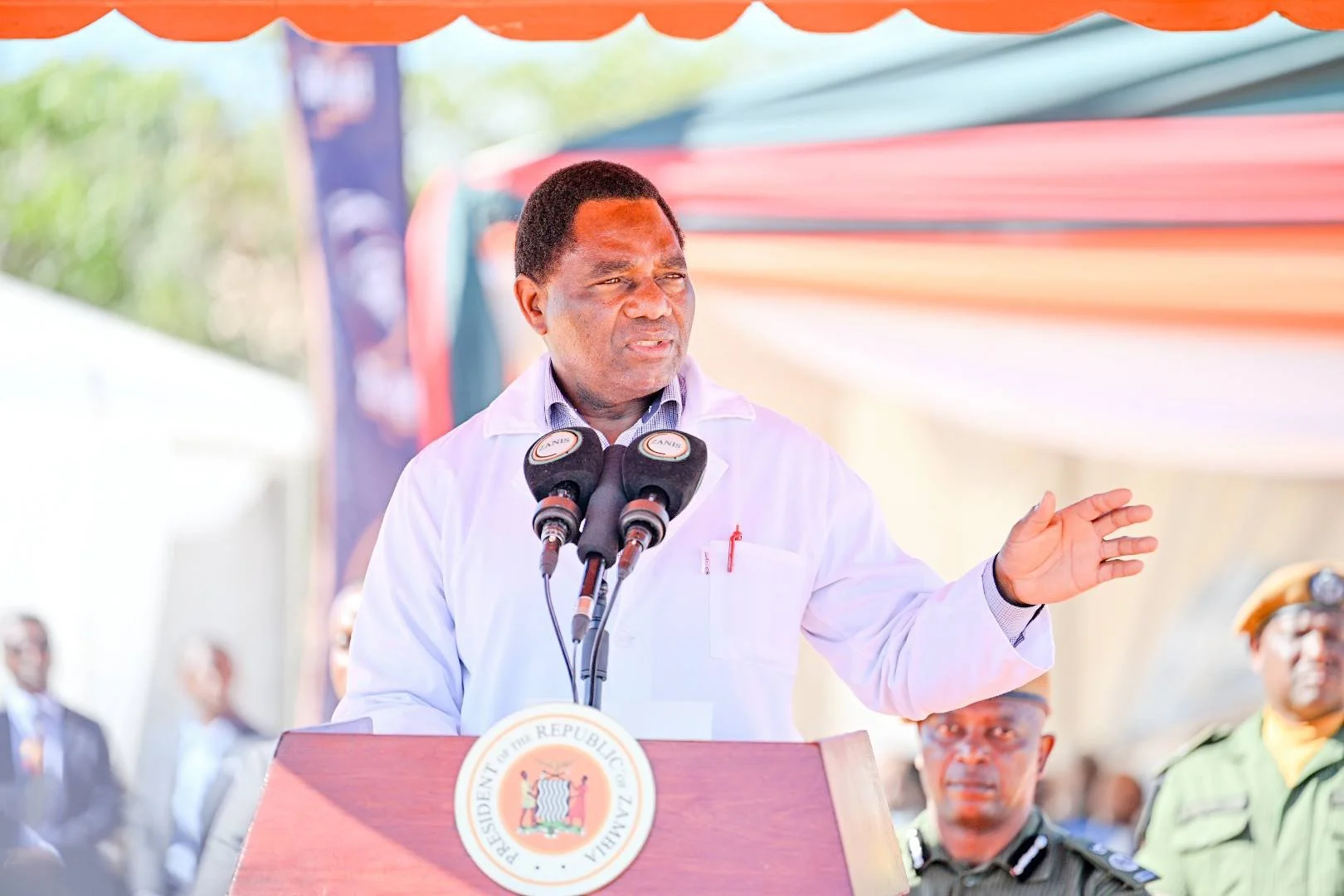
Zambia Investor Briefing - April 2026
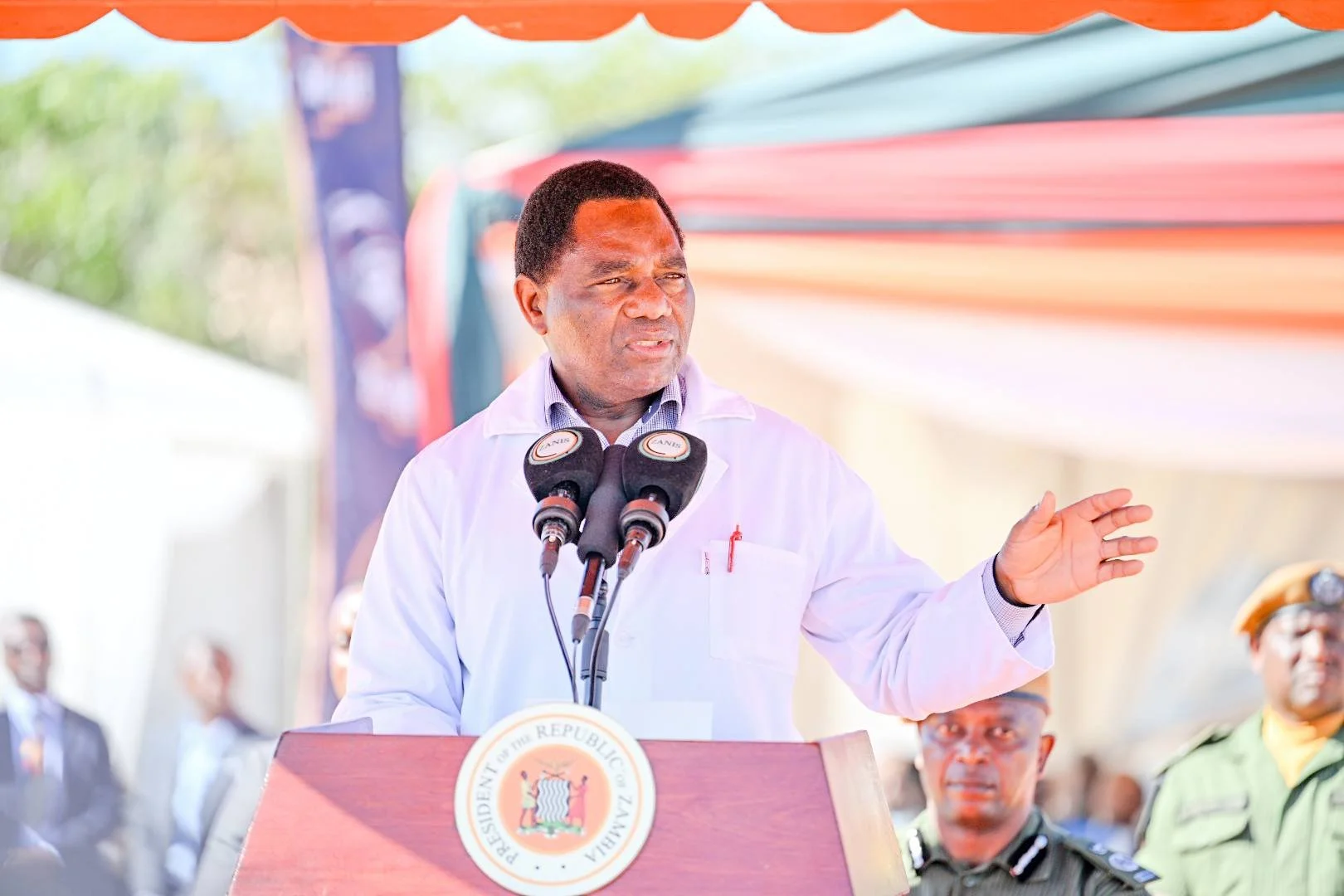
In this month's briefing: Zambia's inflation fell to 6.8% as investment momentum accelerated across mining and energy. KoBold Metals broke ground on the $2.3 billion Mingomba mine targeting 300,000 tonnes annual production, while BHP signalled large-scale copper exploration intent. President Hichilema launched Globeleq's $350 million 250MW solar plant, commissioned the 50MW Mansa facility, and reopened the $140 million Mulungushi Textiles plant after 20 years. British International Investment named Zambia a priority frontier market in its £15 billion strategy, while the Luanshya mine restarted after two decades.
🔢 APRIL IN NUMBERS
→ 6.8% - April inflation (maintaining target band)
→ $2.3bn - KoBold Metals Mingomba copper mine investment
→ $5.1bn - Chinese investment in Zambian mining sector
→ $2.18bn - Zimbabwe-Zambia rail line linking Kafue to Beira
→ $1.5bn - China-backed energy deal for 900MW capacity
→ $1.24bn - Tazara railway rehabilitation by Chinese mining firms
→ $20.3bn (£15bn) - British International Investment five-year strategy
→ $600k - ZDA export development fund for youth businesses
→ $350m - Globeleq-ZESCO 250MW solar plant construction
→ $140m - Mulungushi Textiles Kabwe plant reopening
→ $48m - Mansa 50MW solar plant commissioned
President Hichilema officiates the groundbreaking ceremony for KoBold Metals’ $2.3 billion Mingomba copper mine.
⛏️ MINING EXPANSION
Kobold Mingomba Mine Groundbreaking
KoBold Metals, the exploration company backed by billionaires including Bill Gates and Sam Altman, officially broke ground on what will be Zambia's biggest copper mine. The Mingomba mine will cost over $2.3 billion to build, making it one of the biggest ever investment projects in Zambia. It will eventually produce more than 300,000 tonnes of copper a year, ranking it among the continent's top sources. Silicon Valley-based KoBold has used its proprietary artificial intelligence technology to turbocharge exploration at Mingomba, discovering a previously unknown highly concentrated copper resource deep underground after acquiring the project in December 2022.
BHP Signals Exploration Intent
BHP has signalled intent to pursue large-scale copper exploration in Zambia, deploying advanced geological methods to detect deeply buried deposits traditional techniques miss. Head of global generative exploration Campbell McCuaig said many remaining large deposits are hidden beneath geological cover and require large-scale data analysis. BHP welcomed Zambia's efforts to expand geoscience data access, including government-backed airborne surveys and digitisation of geological records.
Chinese Investment Creates Jobs
Chinese firms have invested over $5.1 billion in Zambia's mining sector, creating around 19,000 jobs, according to Chinese Embassy Economic and Commercial Counsellor Jin Jun. China remains Zambia's largest export market for refined copper, accounting for over 15 percent of production. Jun confirmed dewatering works at Luanshya's 28 Shaft have been completed, with production expected to begin in September 2026.
Luanshya Mine Set To Resume Production
The Luanshya copper mine is set to resume production in August 2026 after a two-decade shutdown, marking a significant Copperbelt revival. The restart follows completion of dewatering operations at the site, idle since the early 2000s. The reopening is expected to add to Zambia's copper output as the country works toward its target of one million tonnes in 2026 and three million tonnes by 2031.
Battery-Electric Mining Truck Commissioned
First Quantum Minerals and Hitachi Construction Machinery commissioned the world's first ultralarge battery-electric mining truck at Kansanshi copper and gold mine. The all-electric Hitachi EH4000 truck integrates advanced battery technology with trolley-assist systems, representing a significant step towards decarbonising heavy mining haulage.
SRK Opens Kitwe Office
SRK Consulting, a global advisory firm in the mining sector, launched its tenth African office in Kitwe, positioning the firm to support Zambia's growing mining sector. Partner Des Mossop said opportunities for growth are significant, with a revised mining cadastre in place and over half the country's surface remaining unexplored. The base is close to Zambia's centre of copper mining and near operations in the Democratic Republic of Congo, where SRK has a Lubumbashi office. SRK provides technical advisory services across the full mining lifecycle.
⚡️ ENERGY & INFRASTRUCTURE
Chongwe Solar Plant Launched
President Hakainde Hichilema launched construction of a 250-megawatt solar power plant and 150 MW/600 MWh battery energy storage system in Chongwe District. The $350 million project, to be constructed by Globeleq in partnership with ZESCO, will be situated at Kyindu Ranch along Leopards Hill Road. The President said the project contributes to Zambia's 10,000 megawatt target and emphasised diversifying beyond hydro, which accounts for over 80 percent of electricity.
Mansa Solar Facility Commissioned
Zambia commissioned a 50-MW solar plant in Mansa District, Luapula Province, marking the first major power generation investment in the region in over 60 years. Built at $48 million by China Machinery Company, the project created over 350 jobs during construction from February to December 2025. President Hichilema described the facility as a milestone for Luapula Province, noting it will support economic activities including manganese mining.
China Energy Deal Signed
Zambia secured a $1.5 billion China-backed energy deal to add 900MW of power capacity through three separate 300MW projects spanning solar, wind, and coal-fired thermal generation. Signed with the Zambia Development Agency, the agreement forms part of Zambia's ambition to reach 10,000 MW by 2031. China Machinery Engineering Corporation plans to implement projects simultaneously rather than in phases, with technical teams arriving June 2026 for feasibility studies. The hybrid structure combines renewable expansion with firm baseload generation.
Zimbabwe-Zambia Railway
Zimbabwe and Zambia signed a Memorandum of Understanding for construction of a $2.18 billion railway line linking Lion's Den in Zimbabwe to Kafue in Zambia. The 311-kilometre line will pass through key areas including Chirundu, with 217 kilometres in Zimbabwe and 94 kilometres in Zambia. Zimbabwe's Permanent Secretary Engineer Joy Makumbe said the railway would reduce transit distances by 800 kilometres from Zambia to Beira versus the North-South corridor, 1,000 kilometres shorter than to South African ports, and 500 kilometres shorter than to Dar es Salaam.
Chinese Investment Creates Jobs
Chinese mining, shipping and logistics companies are joining a $1.24 billion project to revamp the 1,860-kilometre Tazara railway linking Zambia's copper region to Dar es Salaam. Copper producers CMOC Group and Zijin Mining Group are teaming up with state-owned China Civil Engineering Construction Corp, which will retain an 80 percent stake. The backing comes as Washington tries to loosen Beijing's grip on critical minerals supply chains in Africa. Once completed, the rehabilitated infrastructure will ease road congestion in Zambia and Congo.
🌍 TRADE & INVESTMENT POLICY
Inflation Falls to 6.8%
Zambia's annual inflation slowed to a more than eight-year low in April as government measures to cushion consumers blunted the impact of surging energy costs driven by the war in Iran. Consumer prices rose 6.8% this month compared with 7.1% in March, Statistician-General Sheila Mudenda told reporters in Lusaka on Thursday. Prices rose 0.7% in the month. The sustained inflation performance maintains Zambia within the Bank of Zambia's 6-8% target band.
BII Names Zambia Priority
British International Investment named Zambia among its priority frontier markets for investment as part of a new five-year strategy committing £15 billion to developing economies. The UK's development finance institution set out its ambition to scale up support for high-impact, climate-aligned investment across Africa, South Asia and the Caribbean.
ZDA Export Fund Approved
The Zambia Development Agency approved a $600,000 loan facility under the Zambia Export Development Fund to support businesses exporting Zambian products. Of the amount, $400,000 has been set aside for youth-led export businesses, while $200,000 goes to SMEs supplying goods and services to the mining sector. ZDA Head of Communications Kwali Mfuni said the funding aims to grow non-traditional exports and create employment.
Mulungushi Textiles Plant Reopened
President Hichilema reopened the $140 million Mulungushi Textiles plant in Kabwe, a Zambia-China joint venture manufacturing uniforms for military, nurses, and public servants. The plant, dormant for 20 years, will create 500 jobs and provide a new market for local cotton farmers. The President directed Health and Defence ministries to buy uniforms locally, saying government wants to see the plant fully achieve its potential.
🤝 INTERNATIONAL PARTNERSHIPS
Vietnam Agricultural Reforms Discussed
President Hakainde Hichilema and his Cabinet met former Vietnamese Minister of Agriculture Dr. Cao Duc Phat in a session focused on drawing practical lessons from one of the world's most remarkable agricultural transformations. Dr. Phat presented on Vietnam's landmark Đổi Mới reforms, a 1986 liberalisation programme that shifted the country from subsistence farming to a globally competitive export industry. President Hichilema said Vietnam's experience offered actionable lessons for Zambia, and reaffirmed his government's national production targets: 10 million metric tonnes of maize, 1 million metric tonnes of wheat, and 1 million metric tonnes of soybeans annually by 2031. The President called for relations with Vietnam to be elevated into a formal Economic Partnership covering trade, investment, technology transfer, and skills development.
Ghana Zambia Digital Collaboration Deepened
Ghana and Zambia took steps toward deepening collaboration in digital transformation and innovation following a high-level meeting between Ghana's Minister for Communication, Digital Technology and Innovations Samuel Nartey George and Zambian Minister for Technology and Science Felix Mutati. The visit featured policy dialogues, regulatory meetings, and business-to-business sessions designed to unlock cross-border opportunities. Key Ghanaian institutions mobilised included the Bank of Ghana, National Communications Authority, National Information Technology Agency, Cyber Security Authority, and Ghana Investment Promotion Centre.
Sweden Zambia Political Consultations Institutionalised
Zambia and Sweden signed a Memorandum of Understanding on Political Consultations in Stockholm on March 30, institutionalising bilateral dialogue on issues from trade and development cooperation to peace, security, and climate action. Foreign Affairs Minister Mulambo Haimbe said the MoU marked a new chapter in the longstanding partnership between the two countries, which have maintained diplomatic relations since 1965.
📊 SECTOR DEVELOPMENTS
Carbon Feed-in Programme Launched
Zambia launched its Carbon Feed-in Premium programme in April, designed to unlock up to 300 MW of private renewable investment, alongside plans for a 60,000 barrels-per-day crude oil refinery in Ndola to reduce dependence on imported refined fuels. Energy Minister Makozo Chikote will showcase the integrated strategy at African Energy Week 2026 in Cape Town from 12-16 October. Zambia has committed to adding over 2,610 MW of new capacity by end-2026.
APRIL MILESTONE ⛰️
When KoBold Metals acquired the Mingomba exploration license in December 2022, the site had been passed over by traditional mining companies for decades, what changed wasn't the geology, but the technology used to read it. Silicon Valley's machine learning models identified high-grade copper deposits deep underground that conventional exploration had missed, leading to the $2.3 billion project that broke ground in April. Production at 300,000 tonnes annually would position Mingomba as one of Africa's top ten copper operations and contribute roughly a third of Zambia's current total output once operational in the early 2030s. The joint venture structure sees KoBold holding 52%, Australian private equity firm EMR Capital 28%, and ZCCM Investments Holdings 20%, giving the Zambian state direct ownership in what will be the country's largest copper mine without upfront capital requirements.
👀 WHAT WE’RE WATCHING IN MAY
→ KoBold Metals Mingomba mine shaft sinking progress following April 29 groundbreaking ceremony
→ China Machinery Engineering Corporation technical teams arrival in June for $1.5bn energy deal feasibility studies
→ Luanshya copper mine production restart timeline ahead of August 2026 target
→ Zimbabwe-Zambia $2.18bn railway project financing structure and construction tender announcements
→ BHP Zambia exploration drilling commencement following April commitment to large-scale copper exploration
📖 WHAT WE’VE BEEN READING IN APRIL
KoBold’s Mingomba: Zambia’s Most Ambitious Copper Mine in 2026 - Discovery Alert | 30 April 2026
Big funds bet billions on mining supercycle - Reuters | 30 April 2026
Global scramble for battery metals intensifies as U.S. Chinese firms target Zambia’s $10 billion critical minerals market - Business Insider Africa | 30 April 2026
QUOTE OF THE MONTH
"It is everyone's responsibility to ensure that Zambia develops, so let us create a conducive environment for investors"
— President Hakainde Hichilema at the launch of the 250MW Leopards Hill Solar Plant, April 21, 2026
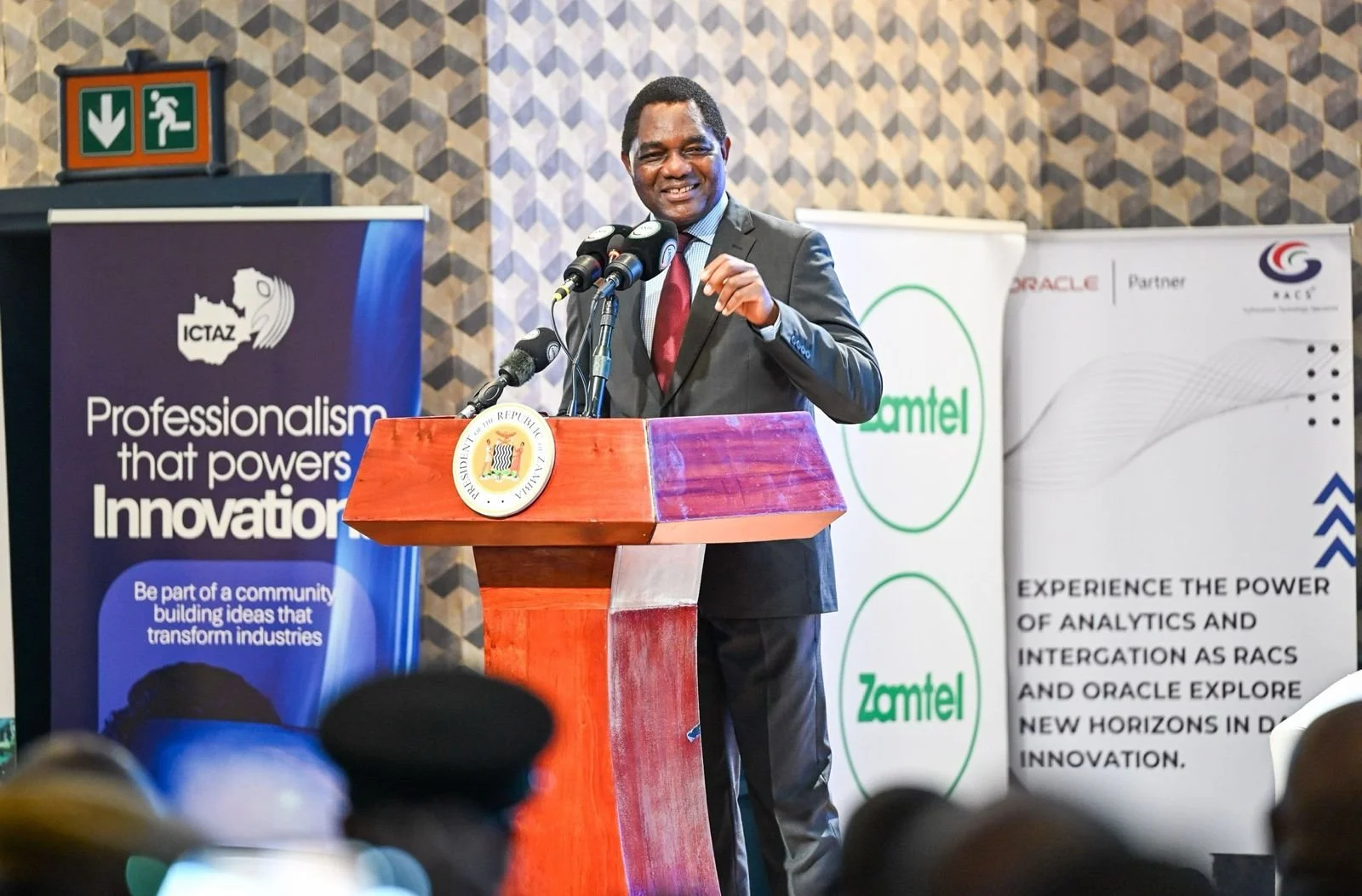
Zambia Investor Briefing - March 2026
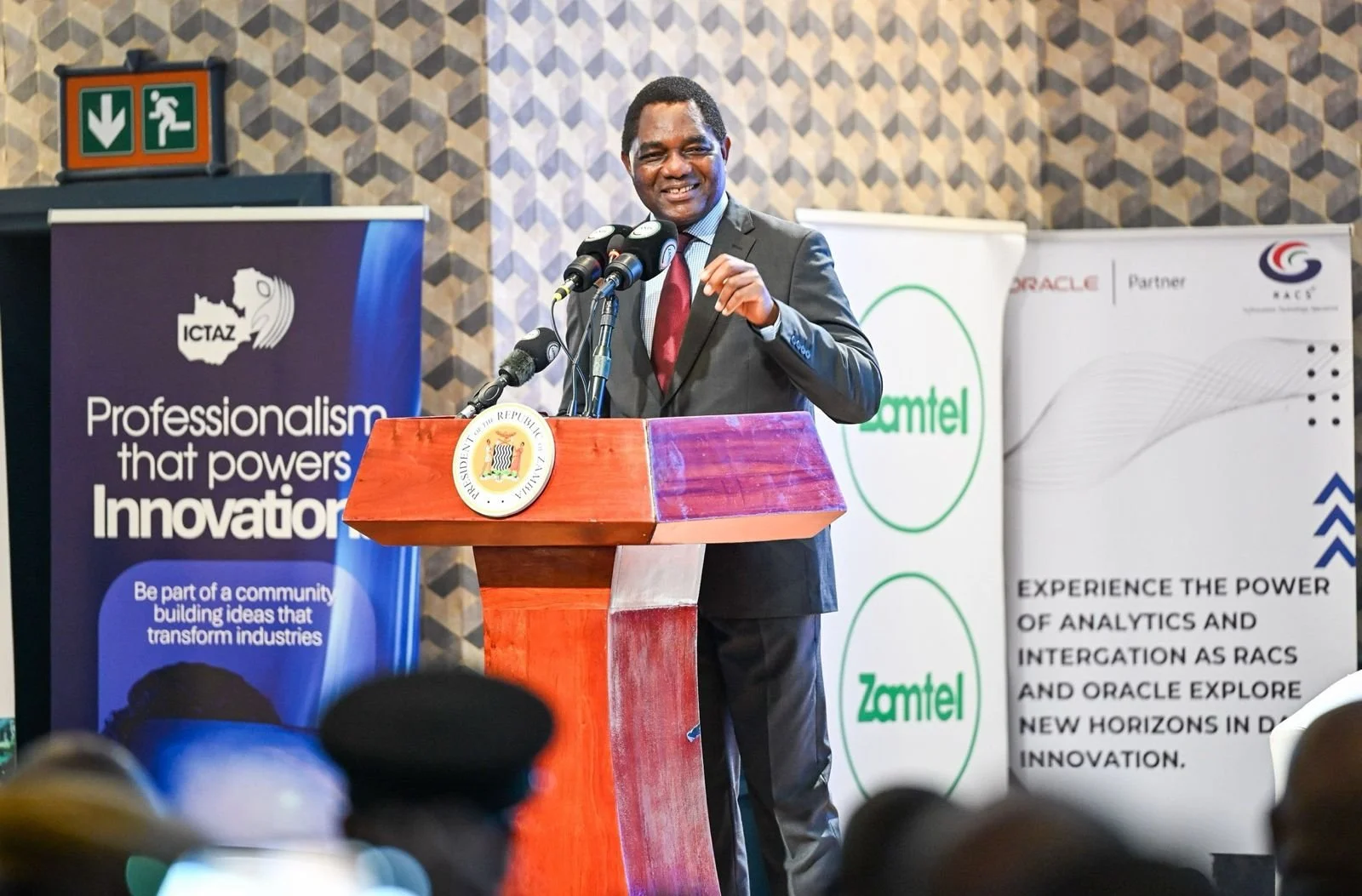
In this month's briefing: Zambia's GDP growth forecast strengthened to 6.1% for 2026 as copper prices posted their first weekly gain amid Middle East conflict. KoBold Metals kicked off a $2.5 billion copper project targeting early-2030s production, while Canada's mining giants pushed output toward the 1 million tonne milestone. The Zambian government approved multi-billion dollar petroleum pipelines from both Tanzania and Namibia, establishing dual-ocean energy security. Inflation fell to 6.5% in March, while Q4 2025 revenue exceeded targets by 15.9% driven by mining sector profitability.
🔢 MARCH IN NUMBERS
→ 6.5% - March inflation (maintaining target band)
→ 6.1% - 2026 GDP growth forecast
→ 21.1% - Q4 2025 export growth ($3.52B→$4.27B)
→ 22.3% - Q4 2025 copper export earnings growth ($2.12B→$2.59B)
→ $2.5B - KoBold Metals copper project investment
→ $250M - Solar-wind hybrid energy project secured
→ $45M - World Bank budget support approved
→ 10-year - Tax holiday offered by ZDA for foreign investment
President Hichilema officiates ICTAZ Tech Conference, Training Expo and 17th Annual General Meeting in Livingstone.
📈 MIDDLE EAST CONFLICT & COPPER MARKETS
Iran Conflict Drives Market Volatility
Copper posted its first weekly gain in March amid rebounding Chinese demand, even as the Iran-US conflict continued to roil markets. The conflict, now entering its second month, has dented economic growth outlook, weighing on base metals. Aluminium has emerged as an exception given the Strait of Hormuz closure throttling approximately 9% of global supply. Japanese aluminium buyers paid their highest premium in 11 years. Copper added 0.4% to $12,195/tonne on London Metal Exchange (LME), giving it a 2.2% weekly gain. Shanghai Futures Exchange warehouses posted their second-biggest inventory decline on record as Chinese buyers took advantage of lower prices.
📝 POLICY AND GOVERNANCE DEVELOPMENTS
Inflation Maintains Target Band
March inflation fell to 6.5%, maintaining position within the Bank of Zambia's 6-8% target band for the second consecutive month after reaching 7.5% in February. The sustained convergence validates the central bank's monetary policy framework and creates space for further interest rate reductions to support growth. The inflation performance has been supported by the Kwacha's 17% appreciation against the dollar since the start of 2026, favourable weather conditions supporting food production, and continued macroeconomic stability. The achievement marks dramatic turnaround from the 22% inflation peak experienced in 2023.
Revenue and Export Growth Strengthens
Zambia recorded stronger revenue collections, rising exports, and improved economic growth during 2025, according to the Debt Statistical Bulletin. Revenue and grants reached K53.23 billion ($2.8B) in Q4 2025, exceeding the K45.93 billion ($2.4B) target by 15.9%. Performance was driven by higher income tax from mining and non-mining sectors, supported by increased mining profitability. Government recorded primary fiscal surplus of K8.36 billion ($437M). Exports increased 21.1% from $3.52 billion to $4.27 billion in Q4 2025 versus Q4 2024. Copper export earnings rose 22.3% from $2.12 billion to $2.59 billion, driven by higher volumes and stronger prices.
UK Bilateral Debt Restructuring
Zambia signed a bilateral debt restructuring agreement with the United Kingdom, marking another milestone in the country's comprehensive debt resolution strategy. The agreement follows the successful restructuring of 94% of $13.3 billion external debt under the G20 Common Framework and contributes to restoring long-term fiscal sustainability. The UK agreement joins previous bilateral restructuring deals with China, France, and other creditor nations, demonstrating continued international support for Zambia's economic reform programme.
World Bank Budget Support
The World Bank approved $45 million in budget support for Zambia, adding to the institution's portfolio which surpassed $3 billion in February. The additional support reflects continued confidence in Zambia's reform trajectory and economic governance performance, complementing ongoing IMF programme discussions. The budget support is designed to help government maintain essential services while implementing structural reforms, particularly in social protection, healthcare, and education.
GDP Growth Forecast Revised Upward
Zambia's GDP growth forecast was revised to 6.1% for 2026, reflecting strengthening economic momentum across multiple sectors. The projection is supported by expanding copper production approaching the 1 million tonne milestone, rising manufacturing investment commitments exceeding $4 billion, and improved macroeconomic stability following inflation's sustained return to the 6-8% target band. Key growth drivers include mining and quarrying sector benefiting from higher copper prices and volumes, agriculture sector recovery from drought, and expanding wholesale and retail trade. The forecast represents significant improvement from the -2.8% contraction experienced in 2020.
⛏️ MINING AND INDUSTRIAL DEVELOPMENTS
KoBold Metals $2.5B Copper Project
Jeff Bezos and Bill Gates-backed KoBold Metals kicked off a $2.5 billion copper project in Zambia targeting early-2030s production, representing one of the largest greenfield copper commitments in recent years. The AI-powered mineral exploration company uses machine learning and data analytics to identify high-potential copper deposits. The project is expected to create thousands of jobs during construction and operations while contributing to Zambia's goal of tripling copper output to 3 million tonnes by 2031.
Canadian Mining Giants Lead Expansion
Canadian mining companies are leading Zambia's copper expansion as output approaches the record 1 million tonne milestone, with major investments from First Quantum Minerals, Barrick Gold, and other Canadian operators driving production gains. Following the 890,346 tonne 2025 output, Canadian firms are expanding through FQM’s $1.25 billion Kansanshi S3 expansion, Barrick’s Lumwana super-pit development, and sustained production increases at existing facilities. The expansion aligns with Washington's efforts to diversify critical mineral supply chains away from Chinese dominance, with Canadian companies viewed as reliable partners in North American supply chain security.
Makor Resources $30M Investment
Makor Resources entered Zambia with a $30 million copper investment plan focused on exploration and development activities, adding to the growing pipeline of international mining commitments. Makor's investment will focus on brownfield exploration near existing copper operations and greenfield exploration in underexplored regions of the Copperbelt. The company joins a growing cohort of junior and mid-tier mining companies entering Zambia to capitalise on its favourable geology and an improved regulatory environment.
Zambia Third Most Attractive Mining Destination
Zambia emerged as the third most attractive mining investment destination in Africa according to industry rankings, positioning behind only South Africa and Ghana. The ranking reflects institutional reforms including the establishment of the Mines Appeals Tribunal and Cadastre Department, the implementation of digital licensing systems, and improved geological data management reducing friction for investors. The positioning validates President Hichilema's Mining Indaba 2026 pitch positioning Zambia as partner of choice for responsible mining investment, highlighting approximately $12 billion in mining sector investments secured over the past four years.
ZCCM-IH PlanetGold Partnership
ZCCM Investments Holdings signed an MoU with PlanetGold to support mercury-free gold mining, addressing critical environmental concerns in artisanal and small-scale gold mining sector. The partnership demonstrates government commitment to responsible mining practices while formalising and supporting artisanal miners which have historically operated informally. PlanetGold, a United Nations Development Programme initiative, provides technical assistance and financing to help small-scale miners transition away from mercury use. The MoU includes training, equipment provision, and access to formal gold markets for miners adopting mercury-free techniques.
Seeking Global Investors for Copper Target
Zambia is courting global investors, including from the United States, as it aims to more than triple copper output to 3 million tonnes by 2031, Mines Minister Paul Kabuswe confirmed. Investment talks extend to various countries as part of broader strategy to achieve the production target from 890,346 tonnes produced in 2025. Kabuswe emphasised fair deals: "It has to be a win-win situation for Zambia and for the investors."
⚡️ ENERGY & INFRASTRUCTURE
Multi-Billion Dollar Pipelines Approved
Cabinet approved development of two major cross-border pipelines signaling a strategic shift toward multi-corridor supply model to end reliance on a single import route. The Tanzania-Zambia Multi-Products Pipeline (TZMPP) will run parallel to the historic 1,710km TAZAMA pipeline, transporting petrol, jet fuel, and kerosene with a $2 billion investment and 7 million metric tonne annual capacity (exceeding the 2030 consumption forecast of 3.7 million tonnes). The Namibia-Zambia Refined Petroleum and Natural Gas Pipeline (NZPGP) will connect Walvis Bay to Lusaka, carrying refined petroleum and 350 million cubic feet of natural gas daily for gas-to-power applications supporting copper mining.
$250M Solar-Wind Hybrid Project
Zambia attracted $250 million for a 100MW solar-wind hybrid energy project, diversifying the renewable energy portfolio beyond hydropower dependence. The hybrid approach combines solar photovoltaic generation during daylight with wind power generation, reducing dependence on weather patterns and providing more consistent baseload power. The project addresses capacity constraints that contributed to severe load-shedding during the 2024-2025 drought when hydropower generation was curtailed. The 100MW capacity will support mining sector power requirements and national grid stability, contributing to government's goal of ending load-shedding and ensuring reliable electricity for industrial expansion.
Anzana 50MW Hydropower for FQM
Anzana will develop a 50MW hydropower project dedicated to First Quantum Minerals operations in Zambia, supporting the mining company's expansion plans and reducing dependence on the national grid. The dedicated power supply strengthens operational resilience for First Quantum's Kansanshi and Sentinel mines while contributing to Zambia's renewable energy generation capacity. The project follows an embedded generation model, where large industrial consumers develop their own power infrastructure to ensure supply reliability and cost competitiveness. Anzana will finance, construct, and operate the facility under long-term power purchase agreement with First Quantum.
EU Railways Rehabilitation Support
The European Union pledged further support for Zambia Railways rehabilitation following the initial €50 million grant, according to the Managing Director's March statement. The commitment strengthens regional connectivity and directly supports the Lobito Corridor strategy linking Zambia's Copperbelt to Atlantic port access through Angola, providing an alternative to traditional routes through South Africa and Tanzania. The railway rehabilitation is critical for reducing transport costs for copper exports and improving regional trade facilitation.
Air Transport Earnings Surge
Air transport earned Zambia K9.9 billion in 2025, reflecting the growing aviation sector's contribution to GDP and demonstrating economic diversification beyond traditional mining revenues. The aviation earnings include revenues from national carrier Zambia Airways, private carriers, airport services, and related aviation infrastructure. The sector's growth aligns with broader tourism expansion objectives and improved regional trade facilitation.
🌍 TRADE & INVESTMENT POLICY
ZDA 10-Year Tax Holiday
The Zambia Development Agency announced a 10-year tax holiday package to attract foreign investment, significantly strengthening incentives for international investors considering projects in priority sectors. The policy complements expansion of special economic zones and aligns with broader industrialisation and economic diversification strategy. The tax holiday applies to qualifying investments in manufacturing, agriculture processing, tourism infrastructure, and renewable energy.
First Capital Bank SME Recognition
First Capital Bank Zambia was named Fastest Growing SME Bank Zambia 2026 by Global Banking & Finance Review, recognising the institution's significant role in supporting small and medium enterprises across the country. First Capital Bank has developed specialised SME banking products including working capital facilities, equipment financing, and digital banking solutions tailored to small business needs.
FNB-BII MSME Partnership
FNB and British International Investment (BII) signed an MoU to support micro, small and medium enterprises, expanding access to finance for businesses driving economic diversification. The partnership leverages international development finance to address SME financing constraints that have historically limited growth of small businesses. BII's involvement brings patient capital and technical expertise to help FNB expand its MSME lending portfolio.
Klapton Reinsurance Regional Expansion
Klapton Reinsurance is targeting regional expansion as direct listing anchors capital market entry, strengthening Zambia's financial services sector. The reinsurance company's regional expansion strategy positions Zambia as a financial services hub for Southern Africa, complementing the country's ambitions beyond commodity exports. The direct listing on the Lusaka Securities Exchange demonstrates growing sophistication of domestic capital markets following macroeconomic stabilisation.
MARCH MILESTONE ⛰️
March's $2.5 billion KoBold Metals copper project, backed by Bezos, Gates, and AI-powered exploration, represents the largest greenfield copper commitment in recent years and validates Zambia's positioning as the destination for next-generation mining investment. The AI exploration approach, Canadian expansion toward 1 million tonnes, and Makor Resources entry demonstrate that Zambia has moved from crisis recovery to competitive selection. When technology investors deploy $2.5 billion in African copper, they're betting on geology, yes, but they're betting on governance first.
👀 WHAT WE’RE WATCHING IN APRIL
→ KoBold Metals project development timeline and construction commencement
→ Tanzania-Zambia and Namibia-Zambia pipeline financing structures and PPP terms
→ Canadian mining companies' production ramp toward 1 million tonne milestone
→ Bank of Zambia May MPC meeting and potential further rate cuts
→ Choolwe Chibomba kicks off season 6 of BackChat in an interview with Rebecca Terzeon, British High Commissioner to Zambia
📖 WHAT WE’VE BEEN READING (AND WATCHING) IN MARCH
Africa should not pick sides in minerals race, says Zambia - Financial Times | 2 March 2026
Zambia Seeks Global Investors to Triple Copper Production by 2031 - Discovery Alert | 16 March 2026
‘We learnt the hard way’, says Zambia’s Central Bank Governor Denny Kalyalya - The Africa Report | 16 March
QUOTE OF THE MONTH
"With have a clear pathway to achieving 3 million tonnes of copper by 2031 through revived operations, new projects, and ongoing exploration, Zambia is open for business and ready for partnerships that create jobs, deliver value, and drive sustainable growth."
— President Hakainde Hichilema speaking at the 2026 Zambia International Mining and Energy Conference and Exhibition
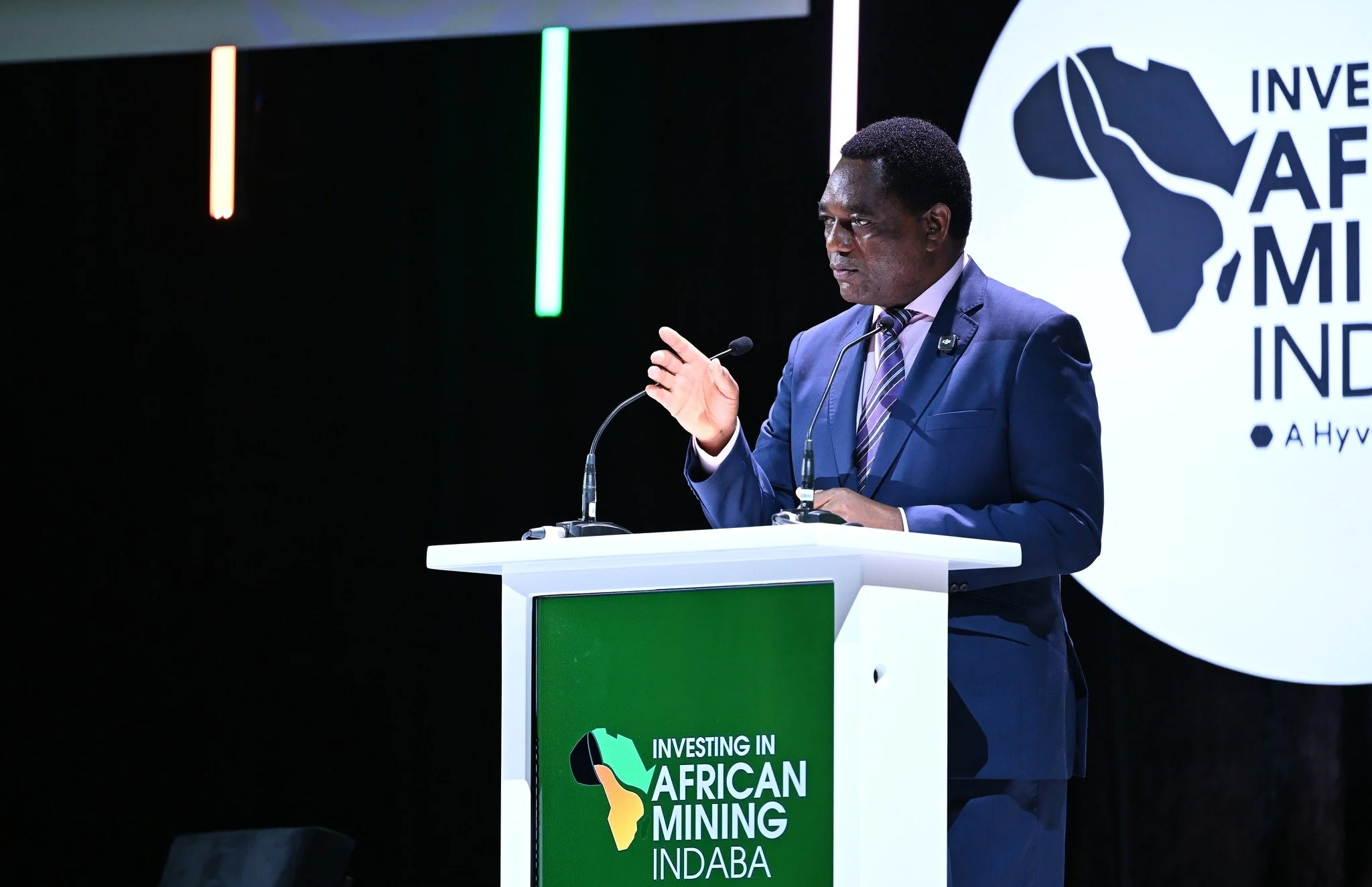
Zambia Investor Briefing - February 2026
SIGN UP HERE TO RECEIVE NEXT MONTH’S BRIEFING DIRECT TO YOUR INBOX
February 2026
In this month's briefing: Inflation fell to 7.5% in February - within the central bank's 6-8% target band for the first time in nearly seven years - prompting a 75 basis point rate cut to 13.5%. World Bank support surpassed $3 billion as GDP growth projections strengthened to 6.4% for 2026. Major infrastructure approvals included Tanzania-Zambia and Namibia-Zambia petroleum pipelines, while China's zero-tariff policy effective 1 May opens new export opportunities across agriculture and manufacturing sectors.
🔢 FEBRUARY IN NUMBERS
→ 7.5% - February inflation (first time in target band since 2019)
→ 13.5% - Policy rate (75bps cut, largest since 2020)
→ $3B+ - World Bank support portfolio
→ $12B - Mining sector investments secured (2021-2025)
→ $72M - Ghana-Zambia fintech deals ($7M concluded, $65M negotiating)
→ 8,000 - Jobs from Ghana partnership deals
→ $130M - ERB-approved energy licences (K2.45B)
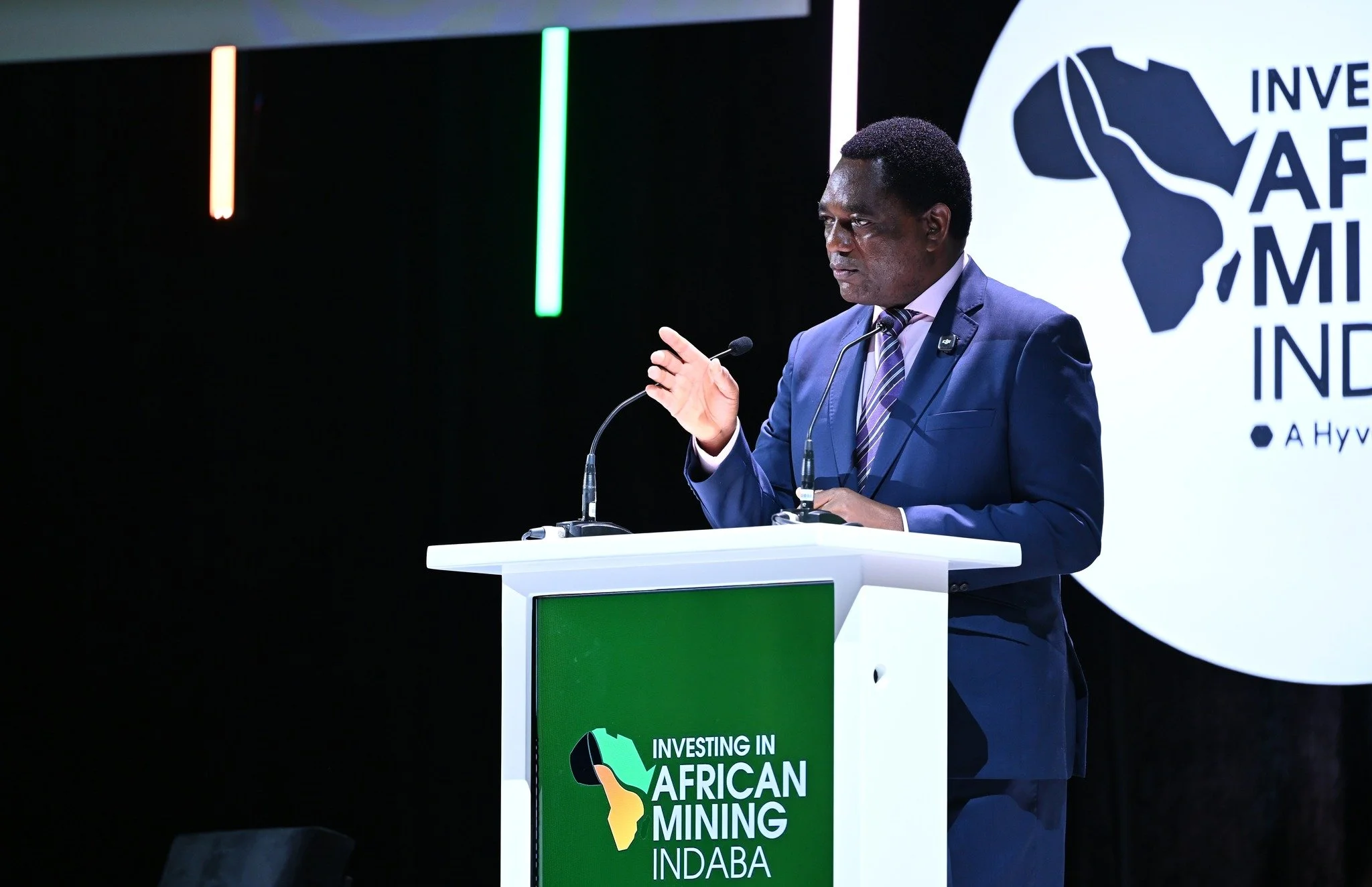
President Hichilema delivers the keynote address at Mining Indaba 2026 in Cape Town.
📝 POLICY AND GOVERNANCE DEVELOPMENTS
Inflation Hits Target Band
Annual inflation fell to 7.5% in February from 9.4% in January, reaching the Bank of Zambia's 6-8% target band for the first time since May 2019, faster than the central bank's second-quarter projection. Food inflation cooled to 8.2% from 10.9% while non-food prices softened to 6.5% from 7.3%. The Kwacha rallied 17% year-to-date. The achievement strengthens the case for further rate cuts at May's Monetary Policy Committee meeting.
Central Bank Rate Cut
The Bank of Zambia lowered its key interest rate to 13.5% from 14.25%, implementing a 75 basis point cut—the largest since 2020. Governor Denny Kalyalya projected inflation will average 6.9% in 2026 (revised from 7.6%) and reach 6.3% in 2027. Foreign exchange reserves increased to $5.5 billion (4.8 months import cover). Risks remain tilted to the downside, with favourable weather, high metals prices and macroeconomic stability alleviating pricing pressures.
IMF Talks Timeline
Finance Minister Situmbeko Musokotwane confirmed IMF negotiations will begin "almost immediately" but finalise only after the August elections. With macroeconomic stability achieved, the next programme will focus on growth and job creation. Musokotwane reaffirmed fiscal consolidation commitment regardless of programme status. Copper price surges boost revenues while constitutional amendments increase parliamentary constituencies requiring supplementary budget allocations.
World Bank Support Surpasses $3 Billion
The World Bank confirmed financial support to Zambia surpassed $3 billion, with the portfolio expected to grow further. World Bank Vice President Guangzhe Chen noted the expanding program reflects confidence in Zambia's reform trajectory and economic governance. The delegation launched the Knowledge Impact Programme—a new agriculture initiative providing direct support to smallholder farmers to strengthen productivity and resilience.
Economic Reforms Delivering Results
Finance Minister Musokotwane stated economic reforms are delivering results with macroeconomic stability established. Pension withdrawals totalling K10.6 billion reached 518,000 contributors, water access expanded to 4.9 million citizens, 60,000 new electricity connections were made. GDP growth is projected at 6.4% in 2026 with fiscal deficit falling to 2.1% (from 9% in 2021). Manufacturing commitments exceed $4 billion with investment pledges from 20 companies generating 31,000 jobs.
⚡️ ENERGY & INFRASTRUCTURE
Tanzania-Zambia Pipeline Approved
Zambia’s Cabinet approved construction of the Tanzania-Zambia Multi-Products Pipeline through public-private partnership, positioning Zambia as an emerging regional energy hub. The pipeline will complement existing TAZAMA infrastructure to meet fuel demand projected at 3.7 million tonnes annually by 2030. Cabinet also approved the Namibia-Zambia Refined Petroleum and Natural Gas Pipeline, creating multiple supply corridors to safeguard against disruption and price volatility.
Kazungula Bridge Authority Launched
President Hichilema called on African nations to take ownership of economic development during the launch of the Kazungula Bridge Authority in Kasane, Botswana. The bridge has become the preferred route for countries further north, with truck traffic expected to rise from 400 trucks daily to 1,000. Hichilema stressed increased traffic must translate into real economic value including trade efficiency, lower transportation costs, and business growth. Botswana President Duma Boko emphasised Africa must break free from exporting raw minerals and importing finished products, calling for value addition and industrialisation.
ERB Energy Licences
The Energy Regulation Board approved 29 licences and 5 construction permits worth K2.45 billion ($130 million). The approvals strengthen Zambia's renewable energy infrastructure and demonstrate continued private sector confidence in the energy sector. The licences support government's diversification strategy away from hydropower dependency while addressing capacity constraints.
EU Lobito Corridor Investment
The European Union committed $130 million for key road infrastructure supporting the Lobito Corridor. The investment strengthens regional connectivity linking Zambia's copper production to Atlantic port access through Angola, reducing transport costs and transit times. The corridor represents strategic infrastructure positioning Zambia within evolving regional trade networks and critical mineral supply chains.
⛏️ MINING AND INDUSTRIAL DEVELOPMENTS
Mining Indaba Keynote
President Hichilema delivered the keynote address at Mining Indaba 2026 in Cape Town, announcing mining sector reforms have attracted approximately $12 billion in investments over four years. The President highlighted recapitalisation of Konkola Copper Mines and Mopani Copper Mines as key to achieving 3 million tonne copper production by 2031. Institutional changes including the Mines Appeals Tribunal and Cadastre Department have strengthened governance. Hichilema positioned Zambia as the partner of choice for responsible mining investment.
ZCCM-IH Metals Trading Strategy
ZCCM Investments Holdings is developing plans to start trading commodities to capture more value from mineral wealth. CEO Kakenenwa Muyangwa confirmed ZCCM-IH wants to access production from portfolio companies equivalent to ownership stakes to sell internationally. ZCCM-IH is transitioning from dividends to royalties, having successfully implemented a 3.1% royalty model with First Quantum at Kansanshi. The company approached China Nonferrous and JCHX Mining about following the model.
Manufacturing Price Reductions
More than 30 manufacturers announced price cuts on essential household and industrial goods following government pressure. Reductions span mealie meal, sugar, cooking oil, soya pieces and mattresses. Breakfast mealie meal dropped from K300 to K260, Zambia Sugar cut prices by 5%, and Seba Soya Pieces saw 19% reductions. Zambia Association of Manufacturers President Mohammed Umar attributed cuts to improved macroeconomic fundamentals including strengthening Kwacha and easing inflation.
🌍 TRADE & POLICY
China Zero-Tariff Policy
China'szero-tariff treatment on imports from 53 African countries, including Zambia, takes effect May 1st, 2026. The policy lowers entry costs for qualifying exports and widens market access for local producers. Honey, soy products and tobacco are identified as potential growth areas. The administration's broader programme - including TAZARA railway rehabilitation and special economic zones expansion - reinforces ambitions for Zambia to evolve into a regional production base.
UAE Bilateral Trade
UAE-Zambia bilateral trade hit $3.4 billion with the UAE targeting deeper commercial ties. The relationship reflects growing Gulf state interest in Zambian mining assets and infrastructure projects, following International Resources Holdings' acquisition of Mopani Copper Mines in 2023.
Ghana Partnership
Ghana and Zambia forged a comprehensive economic partnership during President Mahama's state visit spanning mining sector knowledge sharing, trade facilitation, and investment promotion. A Zambia-Ghana Business Dialogue yielded fintech transactions worth $7 million concluded between companies with $65 million in negotiations underway—deals expected to generate 8,000 jobs. The partnership demonstrates South-South collaboration models between African nations pursuing economic transformation.
FEBRUARY MILESTONE ⛰️
February's inflation return to the 6-8% target band after nearly seven years validates Zambia's macroeconomic stabilisation program. The 7.5% reading, achieved faster than projected, enabled the Bank of Zambia to implement its largest rate cut since 2020—signaling a fundamental shift from crisis management to growth orientation. Combined with $5.5 billion in reserves, 6.4% GDP growth projections, and manufacturers voluntarily reducing prices, the convergence demonstrates that fiscal discipline is translating into tangible household benefits. The milestone positions Zambia to negotiate a growth-focused IMF program from strength rather than distress.
👀 WHAT WE’RE WATCHING IN MARCH
→ Bank of Zambia inflation trajectory toward 6% lower bound target
→ Tanzania-Zambia pipeline financing structure and construction timeline
→ ZCCM-IH metals trading strategy implementation and Mercuria partnership developments
→ China zero-tariff policy (May 1st) preparation and export sector readiness
→ Manufacturing price reductions transmission to retail consumer prices
📖 WHAT WE’VE BEEN READING (AND WATCHING) IN FEBRUARY
Analysing Africa newsletter: An interview with Zambia’s president - The Economist | 24 February 2026
Zambia calls for domestic debt to be part of major indices - Financial Times | 20 February 2026
What Zambia’s 75bps interest rate cut really means for the economy - Business Insider Africa | 11 February 2026
IMF Forecasts Strong 5.8% Zambia Economic Growth for 2026 - Discovery Alert | 30 January
QUOTE OF THE MONTH
"Economic reforms are delivering results, with macroeconomic stability now firmly established and household-level benefits increasingly taking shape. Zambia is entering a period where the benefits of reform will increasingly become visible across sectors and communities."
— Finance Minister Situmbeko Musokotwane, speaking after President Hichilema's address to Parliament
CONTACT US
If you would like to find out more, receive tailored briefings on specific sectors, or send news stories to be included in the next briefing get in touch via info@zambiaisback.com. To stay up to date follow us on social media:
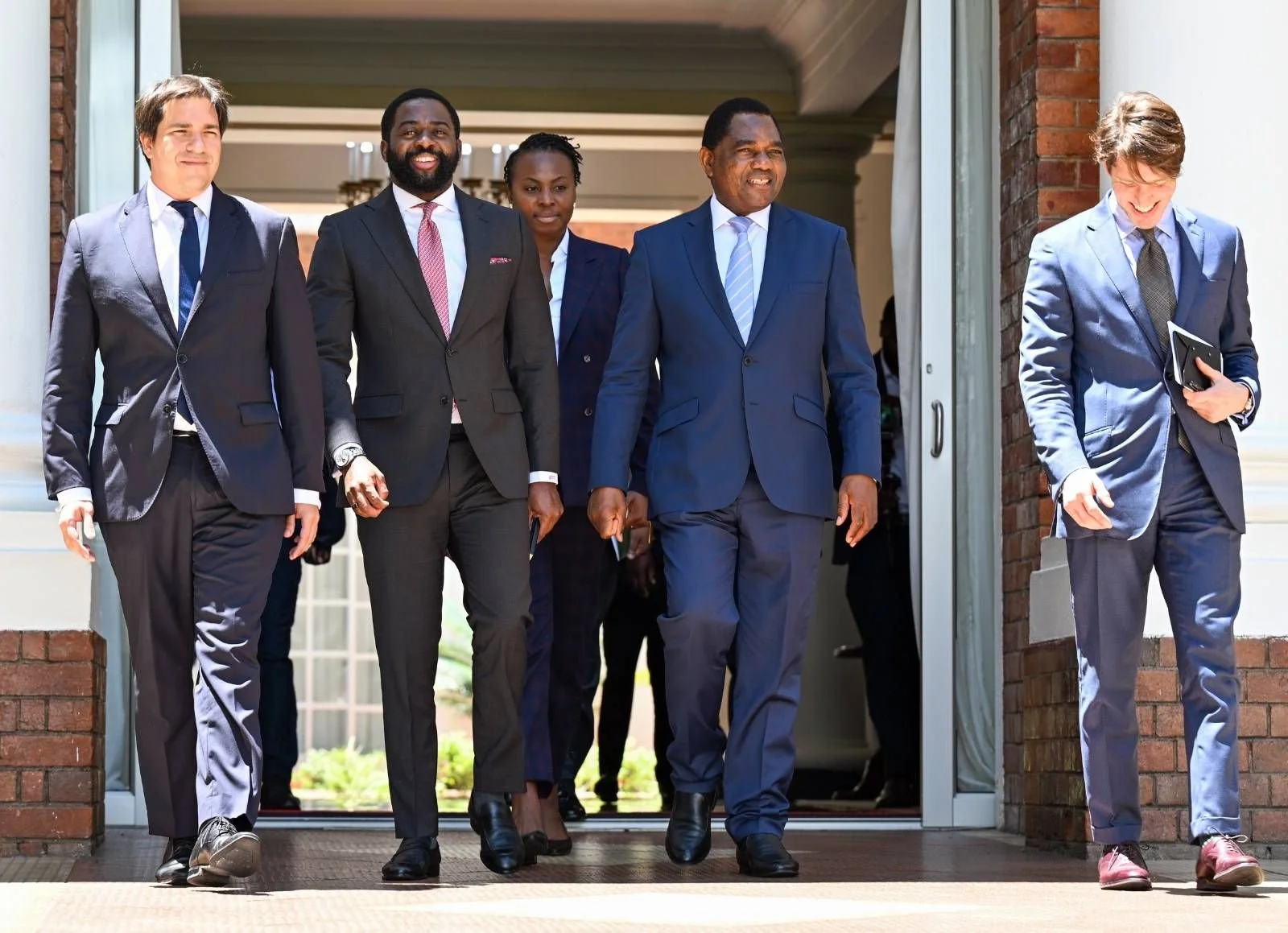
Zambia Investor Briefing - January 2026
SIGN UP HERE TO RECEIVE NEXT MONTH’S BRIEFING DIRECT TO YOUR INBOX.
January 2026
In this month's briefing: Zambia's 2025 copper production reached 890,346 metric tonnes (8% increase), inflation dropped below 10% for the first time since 2023, and Chinese mining companies began paying taxes in yuan marking an Africa-first policy shift. Major energy announcements included ZCCM-IH's $202 million renewable energy initiative targeting 312MW across all constituencies, while Zambia and Zimbabwe committed $440 million in equity to revive the $4.2 billion Batoka Gorge hydropower project.
🔢 JANUARY IN NUMBERS
→ 890,346 tonnes - 2025 copper production (+8%)
→ 9.4% - January inflation (first sub-10% since 2023)
→ $202M - ZCCM-IH renewable energy initiative (312MW)
→ $440M - Batoka Gorge equity commitment
→ $1B - Zambia Sugar market capitalisation milestone
→ $190M - IMF final ECF disbursement
→ 2,375 - Mining licences issued in 2025 (+9.2%)
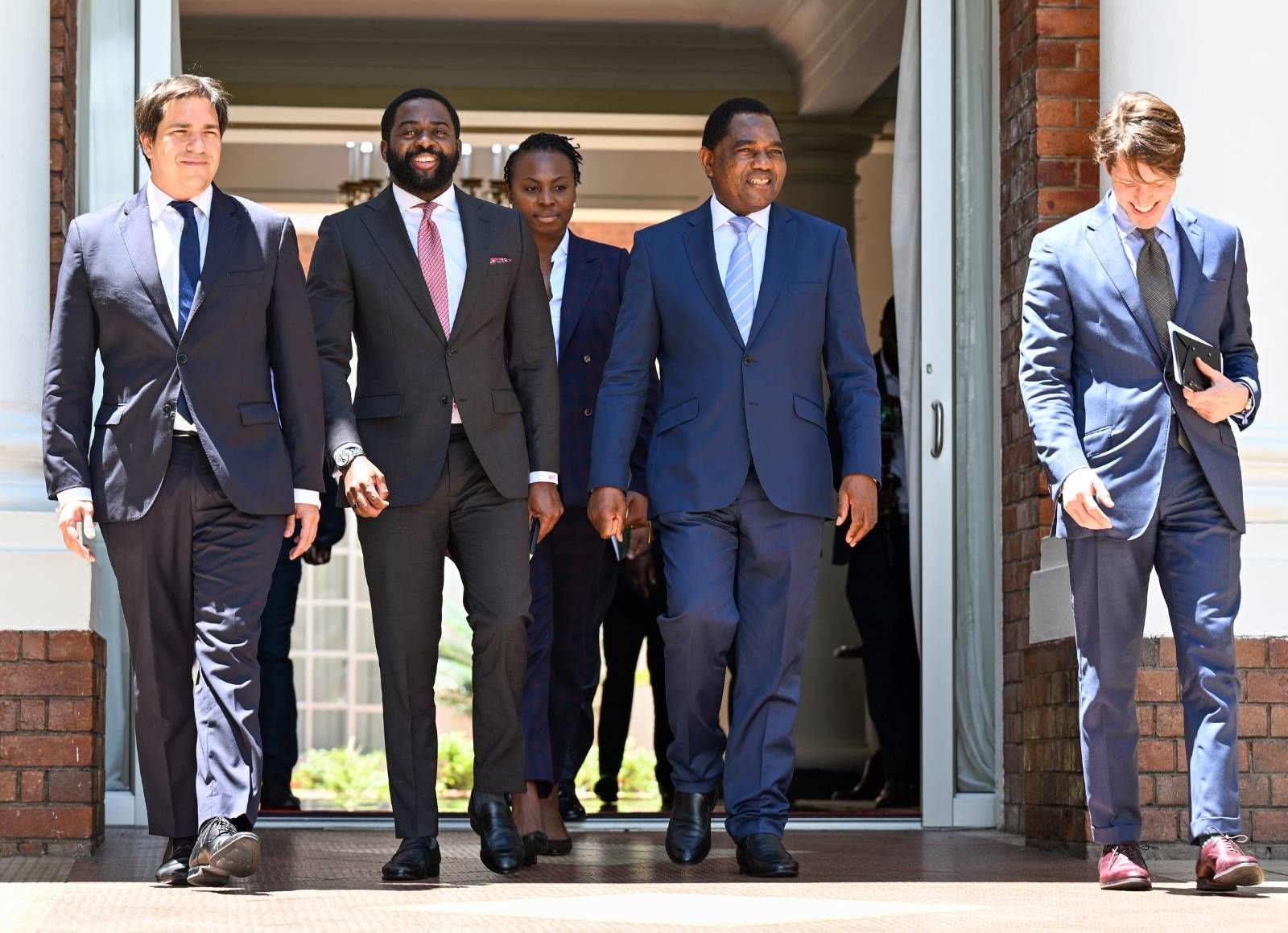
President Hichilema hosts a delegation of global investors led by JP Morgan and Chase, joined by representatives from leading firms across London, Geneva, Boston, Dubai, Luxembourg, and the United States.
⛏️ MINING DEVELOPMENTS
2025 Copper Production Results
Zambia's copper production reached 890,346 metric tonnes in 2025, an 8% increase from 825,513 tonnes in 2024, though falling short of the one-million-tonne target. Vedanta's Konkola Copper Mines posted a four-fold increase to 80,215 tonnes, while Mopani Copper Mines increased output 40%. First Quantum's Kansanshi and JCHX Mining's Lubambe also recorded gains. The performance demonstrates progress toward the 3-million-tonne 2031 target as $10 billion in expansion projects advance across the sector.
Yuan Tax Payments
Chinese mine operators began paying royalties and taxes in yuan in October, making Zambia the first African nation to accept mining-tax payments in renminbi. The Bank of Zambia expanded 2018 dollar surrender requirements to include yuan, enabling operators to choose which currency to sell for tax obligations. The central bank cited reserve diversification and cost-effective debt servicing to China as key objectives. With copper exports heavily concentrated in Chinese markets where payments arrive in renminbi, the policy illustrates a high degree of commercial realism.
Mining Licensing Surge
The government issued 2,375 mining licences in 2025, a 9.2% increase from 2,175 in 2024. Artisanal Mining Rights jumped 57% from 680 to 1,068 licences. Of total 2025 licences, 1,666 involved direct Zambian participation. Major investments include Sinomine's $600 million Kitumba Mine featuring a 50MW solar plant, and FQM's $1.25 billion Kansanshi S3 Expansion creating 1,500 jobs. Strengthened oversight comes through the Geological and Minerals Development Act No. 2 of 2025 and the newly operational Minerals Regulation Commission.
🚜 AGRIBUSINESS EXPANSION
Zambia Sugar Valuation Milestone
Zambia Sugar PLC reached a $1 billion market capitalisation on the Lusaka Securities Exchange, becoming the first company outside energy and mining sectors to achieve this landmark. Share price increased 40% since FY2025 close, rising from K48 to K67. The company announced plans to expand power generation from 40MW to 53MW by end-2026, reaching 60MW by 2030 through cogeneration technology. The expansion forms part of a $132 million investment programme to increase sugar production from 400,000 to 500,000 metric tonnes annually.
⚡️ ENERGY & INFRASTRUCTURE
ZCCM-IH Renewable Energy Initiative
ZCCM Investments Holdings launched Zambia National Energy Corporation Limited in partnership with the Ministry of Finance to drive the $202 million Presidential Constituency Energy Initiative. ZNEC will deploy renewable energy solutions targeting 2MW in each of Zambia's 156 constituencies for 312MW total capacity. The investment structure comprises 70% debt and 30% equity, with ZCCM-IH contributing $36.36 million for a 60% stake. The initiative strengthens ZCCM-IH's presence in energy transition while improving access in underserved constituencies.
Batoka Gorge Revival
Zambia and Zimbabwe committed $440 million in equity ($220 million each) to revive the delayed $4.2 billion Batoka Gorge hydropower project. The 2,400MW facility will provide 1,200MW to each country when complete. Located 54km downstream of Victoria Falls, the project faced years of delays including pandemic disruptions and June 2023 procurement withdrawal over transparency concerns. The equity commitment aims to strengthen project bankability and attract private capital for the 181m-high arch-gravity dam.
📝 POLICY DEVELOPMENTS
Inflation Drops Below 10%
Annual inflation fell to 9.4% in January from 11.2% in December, marking the first sub-10% reading since 2023. The Kwacha rallied 16% against the dollar since December, driven by central bank restrictions on foreign-currency use and surging copper prices. Food inflation eased to 10.9% from 12.9% while non-food inflation decelerated to 7.3% from 8.7%. The drop strengthens the case for further rate cuts when the Monetary Policy Committee meets February 11.
IMF Program Completion
The IMF Executive Board approved the sixth and final review of Zambia's Extended Credit Facility, authorising immediate disbursement of $190 million and bringing total disbursements to $1.7 billion. Real GDP growth is estimated at 5.2% in 2025, projected at 5.8% in 2026. Zambia significantly reduced macroeconomic imbalances and restructured 94% of $13.3 billion in debt while safeguarding social spending. The President thanked Zambians for their patience and resilience during the economic recovery programme, noting that results stem from prudent fiscal management and structural reforms recognised by the IMF.
JANUARY MILESTONE ⛰️
Zambia became the first African nation to accept yuan for mining tax payments, marking a pragmatic recalibration rather than strategic realignment. The Bank of Zambia's decision to complement—not replace—dollar tax channels reduces conversion frictions while maintaining the dollar as reserve anchor. With Chinese creditors holding an estimated 30% of external debt and China accounting for 20.5% of imports, the yuan option aligns settlement infrastructure with established trade patterns. The policy demonstrates Zambia's capacity to adapt currency administration to copper sector fundamentals without abandoning Western institutional relationships or compromising fiscal credibility.
👀 WHAT WE’RE WATCHING IN FEBRUARY
→ Bank of Zambia Monetary Policy Committee meeting (Feb 11) and potential further rate cuts following single-digit inflation
→ ZCCM-IH renewable energy rollout implementation timeline for 156-constituency deployment
→ Batoka Gorge project financing mobilisation and private investor engagement following $440M equity commitment
→ Zambian delegation arrives at Mining Indaba 2026 (Feb 9-12)
📖 WHAT WE’VE BEEN READING (AND WATCHING) IN JANUARY
Africa's Mineral Makeover - TIME Magazine | 15 January 2026
Zambia Metalex Cobalt Copper Project: Strategic Western Investment Initiative - Discovery Alert | 10 January 2026
China's Shadow in Copper: Zambia's Case for Yuan Mining Tax Payments - ZIPAR | 9 January 2026
QUOTE OF THE MONTH
"Despite external and domestic shocks, Zambia has significantly reduced macroeconomic imbalances, made considerable progress on debt restructuring, and undertaken sustained fiscal consolidation while safeguarding social spending."
— Nigel Clarke, IMF Deputy Managing Director, on completion of Zambia's Extended Credit Facility
CONTACT US
If you would like to find out more, receive tailored briefings on specific sectors, or send news stories to be included in the next briefing get in touch via info@zambiaisback.com. To stay up to date follow us on social media:
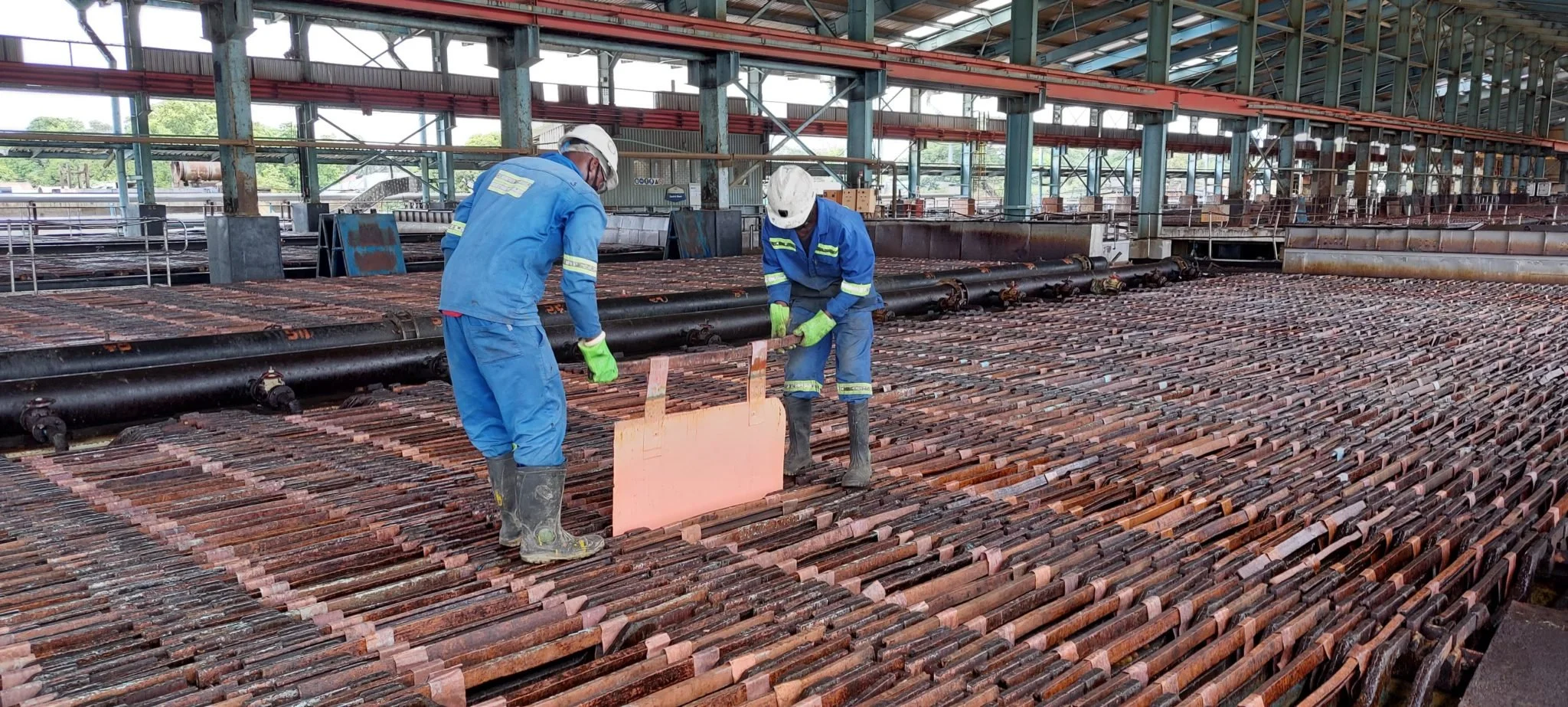
Zambia's Copper Boom: A Golden Opportunity Built on Smart Economic Reforms
The numbers tell a remarkable story: copper prices have surged nearly 50% since the start of 2025, recently smashing through $13,000 per ton for the first time in history. For Zambia, Africa's second-largest copper producer, this isn't just a commodity rally—it's validation of years of strategic economic reforms that have repositioned the country as one of the continent's most attractive investment destinations.
A Currency Success Story
The impact of sound economic management is perhaps most visible in Zambia's currency performance. The kwacha has strengthened by an impressive 26% against the dollar, while yields on the country's dollar bonds have fallen to record lows. These aren't just statistics—they represent growing international confidence in Zambia's economic trajectory and the government's reform agenda.
This currency strength reflects a broader transformation in investor sentiment. Where skepticism once dominated, optimism now prevails, driven by concrete policy changes that have made Zambia's mining sector more attractive and its broader economy more stable.
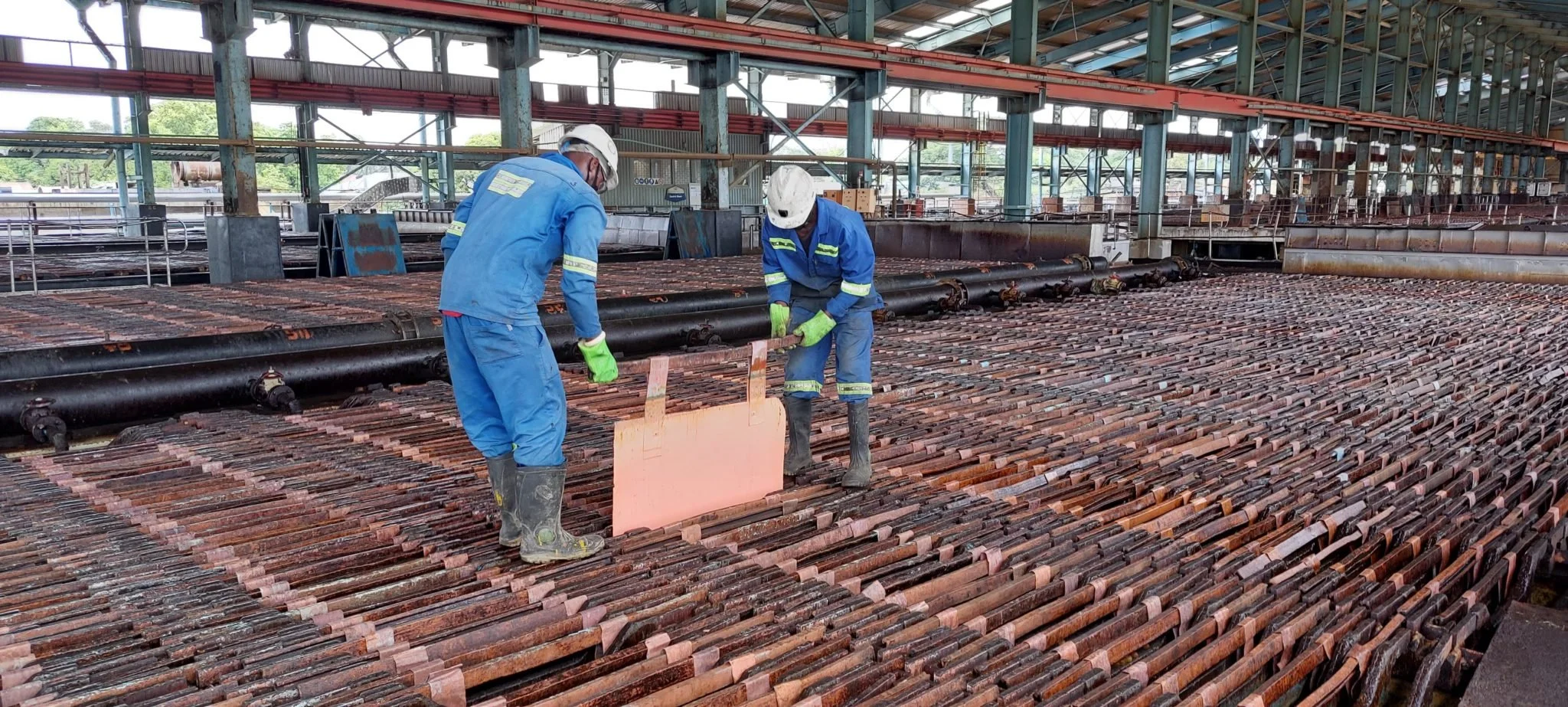
Zambia’s President Hichilema has set an ambitious target of 3 million tonnes of copper per year by the early 2030s.
Ambitious Production Targets Within Reach
Zambia has set an ambitious goal: to more than triple its copper output by the early 2030s. What makes this target credible isn't just geological potential—it's the reformed investment climate that's attracting the capital needed to make it happen.
The government's approach has been pragmatic and investor-friendly, addressing long-standing concerns about fiscal predictability, regulatory clarity, and operational efficiency in the mining sector. These reforms are already bearing fruit, with renewed interest from both existing operators and new entrants eyeing Zambia's copper belt.
Perfect Timing in a Restructuring Global Economy
Zambia's copper resurgence comes at an ideal moment. Global demand continues to accelerate, driven by:
The renewable energy transition, which requires massive amounts of copper for wind turbines, solar installations, and electric vehicle infrastructure
Data center expansion, as AI and cloud computing drive unprecedented demand for copper-intensive electrical systems
Power grid modernization worldwide, requiring copper for transmission and distribution networks
Meanwhile, supply constraints from underinvestment in new mines globally and disruptions at existing operations mean the market will remain tight. Zambia, with its combination of geological endowment and improving business environment, is perfectly positioned to capture this opportunity.
From Resource Curse to Strategic Asset
What distinguishes Zambia's current copper boom from previous cycles is the government's commitment to ensuring citizens benefit fully from the country's mineral wealth. The challenge isn't just to maximize production—it's to translate copper revenues into sustained economic development, infrastructure improvements, and enhanced living standards.
The currency stability achieved through recent reforms provides a foundation for this broader transformation. A strong kwacha reduces inflation pressures, makes imports more affordable, and creates conditions for diversified economic growth beyond the mining sector.
A Growing Role in the Global Economy
As global supply chains reorganize and countries seek reliable sources of critical minerals, Zambia's importance continues to grow. The copper that flows from Zambian mines powers the technologies reshaping our world—from electric vehicles to renewable energy systems to the data infrastructure underlying modern economies.
Recent market dynamics—including concerns about tariffs on refined copper that have triggered increased shipments to the United States—underscore copper's strategic importance. With America now holding roughly half of global inventories and traditional supply buffers diminished, producers like Zambia become even more critical to global market stability.
The Road Ahead
Zambia's copper story is ultimately about more than commodity prices. It's about what happens when a government implements coherent economic reforms, creates conditions for investment, and positions the country to capitalize on global trends.
The record copper prices and currency strength are symptoms of success—evidence that reforms are working and that international investors recognize Zambia as a stable, reliable partner in the critical minerals supply chain that will power the global economy for decades to come.
For investors seeking exposure to the metals that will define the 21st century economy, Zambia offers a compelling combination: world-class copper resources, improving governance, currency stability, and a government committed to creating an environment where mining investments can thrive.
The copper boom has indeed handed Zambia an opportunity of a lifetime. What matters now is execution—and early signs suggest the country is rising to meet the moment.
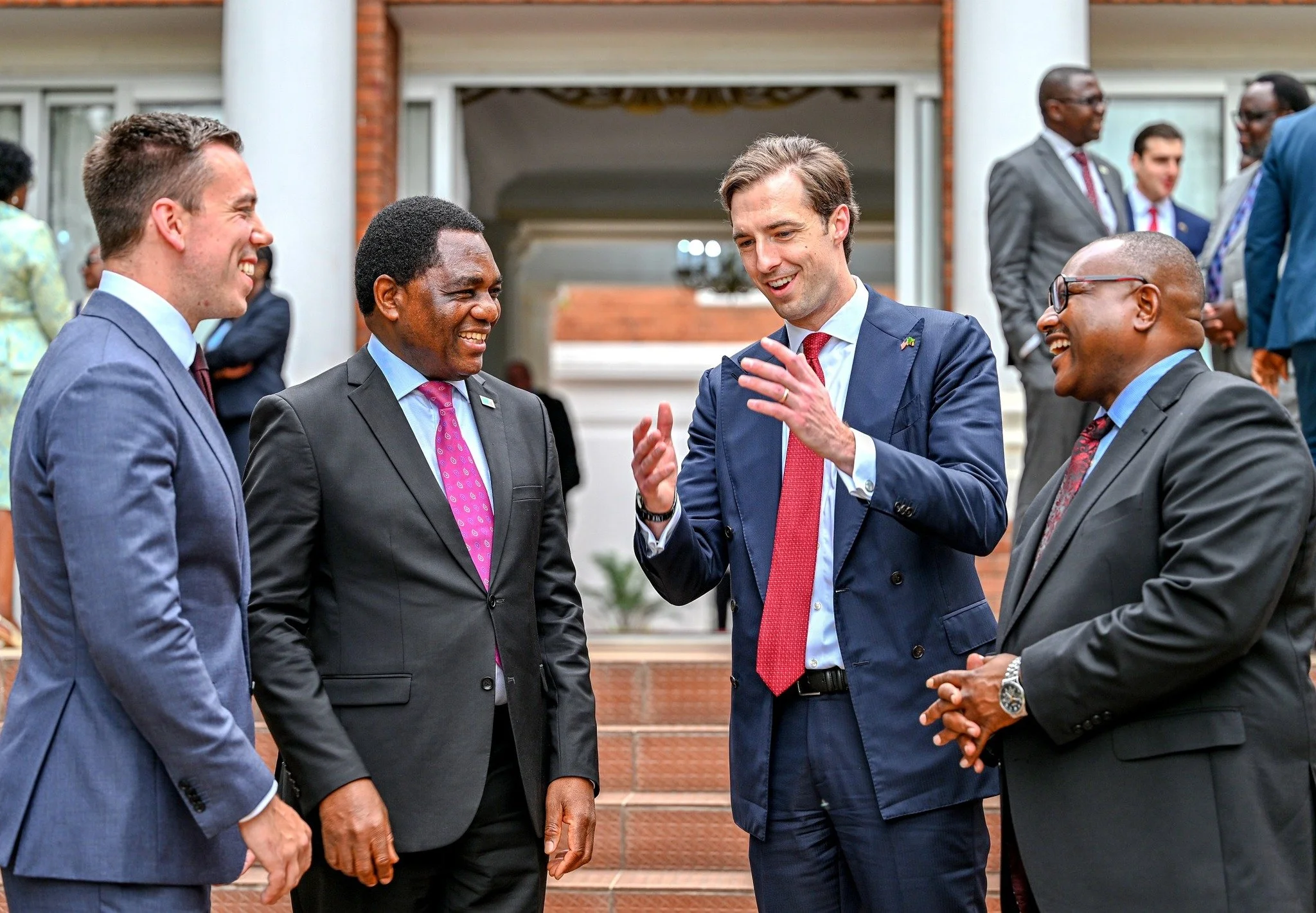
Zambia Investor Briefing - December 2025
SIGN UP HERE TO RECEIVE NEXT MONTH’S BRIEFING DIRECT TO YOUR INBOX.
December 2025
In this month's briefing: as Zambia closes out 2025, copper export data released in December showed October earnings surged 31.2% to $920 million, and major energy investments advanced the country's renewable energy transition. Infrastructure developments included the launch of the $326 million Mutanda-Kaoma road project and $4.5 million in railway modernisation funding.
🎅 DECEMBER IN NUMBERS
→ $920M - October copper export earnings (+31.2%)
→ $900M - Amsons Group power investment (1.3GW)
→ $326M - Mutanda-Kaoma road project
→ $132M - Zambia Sugar expansion
→ $4.5M - Railway modernisation funding
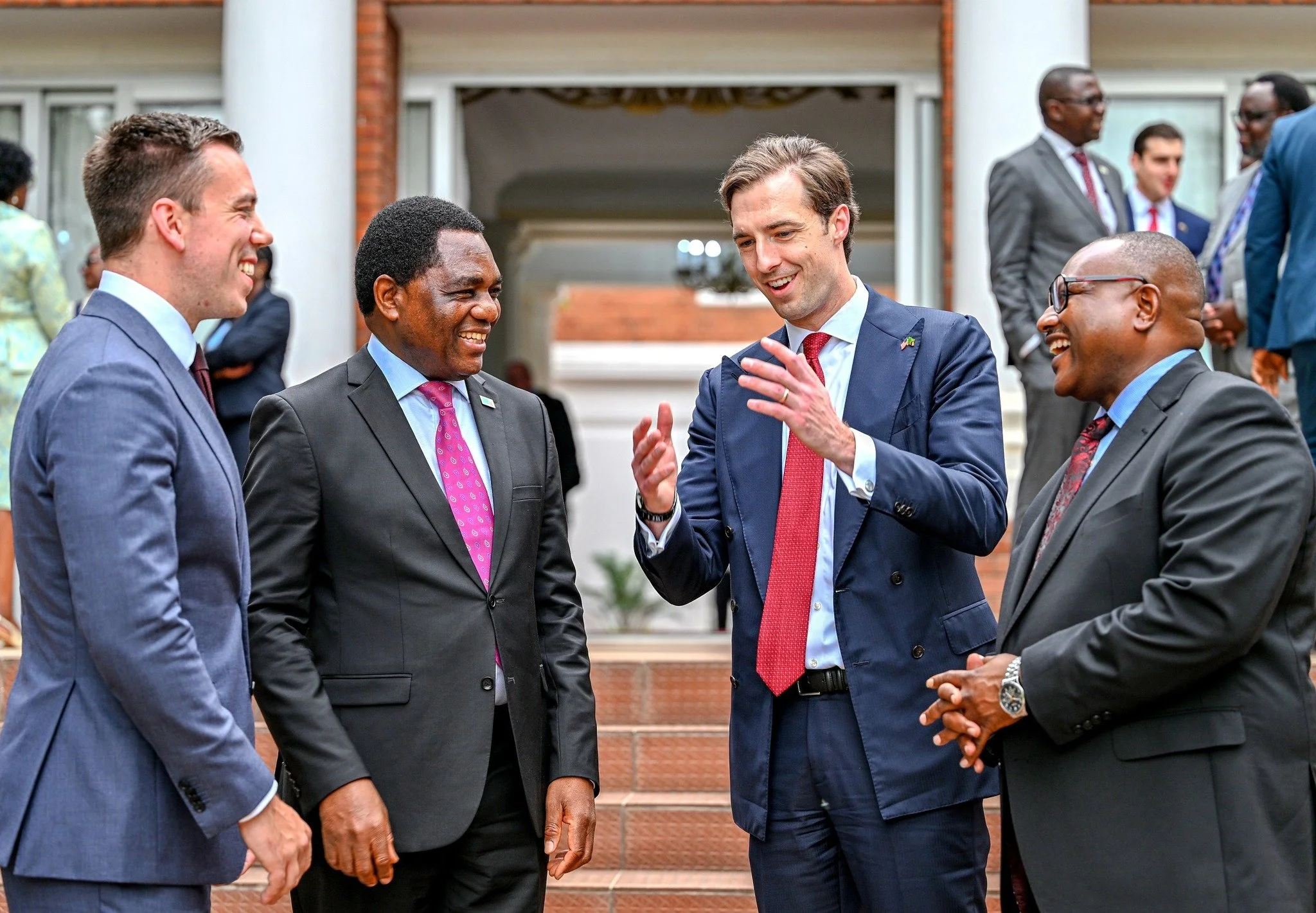
President Hichilema welcomes a delegation from the United States government, led by Caleb Orr, Assistant Secretary for the Bureau of Economic, Energy and Business Affairs
⛏️ MINING DEVELOPMENTS
Copper Export earnings surge
December data releases showed Zambia's copper sector posted strong October results, with export earnings from refined copper rising 31.2% to $920 million, up from $660 million in September. The monthly increase reflects momentum driven by strengthening global copper prices and accelerating demand from renewable energy infrastructure, electric vehicles, and power grid modernisation. The performance demonstrates the impact of President Hichilema's pro-business policies attracting fresh investment. Major expansions from First Quantum, Barrick, Vedanta, and others support the government's long-term target of three million tonnes annually by 2031.
First Quantum supports local businesses
First Quantum Minerals backed newly gazetted regulations aimed at increasing local participation following the Minerals Development (Preference for Zambian Goods and Services) Regulations, 2025. The company spent $1.7 billion with Zambian-registered businesses in 2024—84% of spending and equivalent to 6% of GDP. The Kansanshi S3 Expansion involved 2,500 Zambians and 535 local companies. First Quantum developed a new vendor registration system for local suppliers.
Jubilee Metals production surge
Jubilee Metals reported a 65% jump in first-quarter copper output as operations recovered from power outages. The company secured a private power purchase agreement for its Roan concentrator and set guidance of 4,500-5,100 tonnes for the year ending June 2026—roughly double prior output. CEO Leon Coetzer confirmed stable power supply. The company forecasts doubled 2026 production as it transitions from South African chrome and PGM assets to focus on Zambian copper.
🚜 AGRIBUSINESS EXPANSION
Zambia Sugar investment
Zambia Sugar PLC announced a $132 million expansion to boost capacity from 400,000 to 500,000 metric tonnes. Investment includes an $18 million falling film evaporator, $23 million in irrigation technologies, and $75 million for the Twazabuka warehouse facility. CEO Oswald Magwenzi said the expansion will contribute to non-traditional exports and foreign exchange earnings. The company also plans to expand power generation to 100MW. Zambia Sugar ranks among the top 10 global producers and is a major employer in Southern Province.
Zambeef results
Zambeef Products PLC posted K2.9 billion gross profit and K8.1 billion revenue for the year ending September 2025, despite energy shortages and higher input costs. Profit jumped 25% to K225.1 million. Operating profit grew 31.4% to K640 million. The company commissioned a cheese plant in April as part of its $100 million expansion program. CEO Faith Mukutu emphasised cost efficiency and capacity expansion while maintaining vertically integrated operations across beef, poultry, pork, dairy, and crop production.
⚡️ ENERGY & INFRASTRUCTURE
Amsons Group power investment
Tanzanian conglomerate Amsons Group sealed a $900 million power deal comprising $600 million for a 1GW solar plant and $300 million for coal generation, delivering 1,300MW of new capacity. The solar component through Africa Power Generation consortium represents one of Sub-Saharan Africa's largest. MD Edha Nahdi said the projects will create sustainable jobs and build local capacity. The investment aligns with targets to add 1,000MW of solar and the Mission-300 initiative for 300 million Africans.
Mutanda-Kaoma Road launch
The government launched the $326 million Mutanda-Kaoma road project under a 25-year Public Private Partnership (PPP) concession. Western Corridor Limited, a special purpose vehicle by BeefCo Holdings and First Quantum Minerals, will design, finance, construct and operate the 371km road. The project converts gravel into international-standard bituminous highway, creating the shortest route from the Copperbelt to Walvis Bay port in Namibia. President Hichilema said the road cuts travel by 400 kilometres versus traditional routes.
Railway modernisation
The government released $4.5 million to Zambia Railways Limited (ZRL) for major recapitalisation. The funding complements €50 million from the EU's Railway Sector Support Programme for track rehabilitation and signalling on the Livingstone-Ndola mainline. Recapitalisation will renew rolling stock, restore critical track sections, modernise signalling and telecommunications, and upgrade passenger services. The initiative transforms ZRL into a modern, efficient system that lowers costs for mineral transport to regional ports and reduces road congestion.
📝 POLICY DEVELOPMENTS
US strategic partnership
US Assistant Secretary of State Caleb Orr confirmed America stands ready to invest further in Zambia during bilateral talks with Finance Minister Situmbeko Musokotwane. Discussions focused on job creation in mining and critical minerals. Orr emphasised the US wants to reset relations and deliver tangible benefits to Zambians. Musokotwane stated the government aims to transition Zambia from aid recipient to contributor to global development, with strategy centred on job creation and sustained growth.
DEAL OF THE MONTH 🤝
Amsons Group's $900 million power investment represents a watershed moment for Zambia's energy transition. The package combines $600 million for a 1GW solar plant with $300 million for coal generation, delivering 1,300MW of total capacity. President Hichilema called it a game-changer that addresses the country's over-reliance on hydropower. The solar component alone ranks as one of Sub-Saharan Africa's largest single power sector FDI commitments. The combined investment signals strong international confidence in Zambia's energy framework and provides both immediate capacity relief and long-term security, positioning the country to achieve energy surplus status.
👀 WHAT WE’RE WATCHING IN JANUARY
→ Amsons Group 1GW solar project implementation timeline and construction commencement.
→ Mutanda-Kaoma road construction mobilisation and initial works.
NOW LIVE ON BACKCHAT 🎬
In the latest episode of BackChat, Choolwe Chibomba sits down with Tom Elliot, COO at Hotspur Helium. Together, they discuss helium exploration in Zambia, Hotspur Helium’s journey in the sector, the importance of transparency and reform in the critical minerals space, and how the company is working to support and uplift local communities across the country.
📖 WHAT WE’VE BEEN READING (AND WATCHING) IN DECEMBER
The changing shape of Chinese aid to Africa - The Economist | 27 November 2025
China’s Critical Minerals Strategy in Africa - Africa Centre for Strategic Studies | 9 December 2025
QUOTE OF THE MONTH
"This 1 GW investment is a game-changer. It directly addresses our national crisis by providing reliable, clean, and non-hydro dependent power. The sheer scale of this project, facilitated by our government's commitment to efficiency and transparency, ensures that we are decisively on track to meet, and possibly exceed, our target of adding 1,000MW of new solar power to the grid."
— President Hakainde Hichilema on the Amsons Group $600 million solar investment, marking one of Sub-Saharan Africa's largest renewable energy commitments
🎄 ZAMBIA IS BACK… IN 2026 🎉
From all of us at Zambia is Back: Merry Christmas and a happy 2026.
CONTACT US
If you would like to find out more, receive tailored briefings on specific sectors, or send news stories to be included in the next briefing get in touch via info@zambiaisback.com. To stay up to date follow us on social media.
Zambia Investor Briefing November
OCTOBER IN NUMBERS (AND LETTERS)
→ CCC+ - S&P credit rating (exit from default)
→ 14.25% - Policy rate (first cut in 5 years)
→ 11.9% - Inflation rate (October, continued decline)
→ 5.2% - IMF growth forecast for 2025
📈 ECONOMIC INDICATORS
Credit Rating Upgrade
On 22 November, S&P Global Ratings removed Zambia's default status, five years after the country became Africa's first pandemic-era sovereign defaulter. The agency assigned a CCC+/C rating with a stable outlook. Zambia's dollar bonds maturing in 2033 rose to 95.91 cents, having returned 15% since April. The upgrade reflects progress in restructuring 94% of eligible debt, with only a small portion held by commercial banks remaining under negotiation.
Interest Rate Cut
The Bank of Zambia cut its policy rate to 14.25% on November 12th, marking the first reduction in five years. Annual inflation fell to 11.9% in October from 12.3% in September, with prices easing as high copper prices boosted exports and strengthened the Kwacha.
IMF Growth Projection
The IMF projects Zambia's economy to grow 5.2% in 2025, above the 4.1% average for African countries. IMF Resident Representative Eric Lautier noted the projection was revised down from 5.8% due to energy sector challenges, but remains strong relative to regional peers.
World Bank Endorsement
The World Bank praised Zambia's economic reforms, highlighting fiscal discipline and improved macroeconomic stability as key drivers of the country's recovery.
⛏️ MINING DEVELOPMENTS
Vedanta's $1.5B Konkola Expansion
Vedanta Resources launched CopperTech Metals Inc., a US-domiciled subsidiary to operate Konkola Copper Mines with an additional $1.5 billion investment. The company targets 300,000 tonnes annually by 2031, up from 140,000 tonnes forecast for 2026. Konkola features copper ore grades of 2.9%, four times higher than the global average. The project leverages the US-backed $10 billion Lobito Corridor connecting Zambia's Copperbelt to Angola's Atlantic coast.
Mining Stake Regulations Rejected
President Hakainde Hichilema rejected proposed regulations that would have given the state a minimum 15% free-carried stake in mines producing copper and critical minerals. Hichilema’s special assistant for finance and investment confirmed the government does not support taking equity without financial consideration, protecting the investment climate as companies commit $10 billion in copper expansion projects.
Oil Refinery Investment
The Zambia Development Agency issued an investor license for a $510.49 million oil refinery in Ndola, expected to create 454 jobs. The project will be developed through a joint venture between the Industrial Development Corporation and China's Xiang Xin Holding Co. Limited within the Sub Sahara Gemstone Exchange Industrial Park.
Dangote Energy Partnership
Africa's richest man Aliko Dangote met President Hichilema to discuss energy sector investments. Dangote pledged to explore solar and thermal energy generation, leveraging his Ndola cement facility to address power deficits in Zambia and the DRC. The Dangote Group's existing Zambia operations represent over $500 million invested in a 1.5 million tonne cement plant with a 30MW captive power plant.
⚡️ ENERGY & INFRASTRUCTURE
EU Railway Modernisation
The European Union signed a €50 million agreement with Zambia Railways on November 13th to rehabilitate the Livingstone-Ndola mainline. The funding will support track renewals, signalling upgrades, and rail sector reforms including an open-access regime for private participation. The investment strengthens Zambia's position in the Lobito Corridor, the key trade route connecting the Copperbelt to Angola's Atlantic coast.
Solar Power Expansion
A $245 million 200MW solar project was announced for the Copperbelt region. The African Development Bank approved $14.5 million for a 20MW solar project. GenVision, Tatanga Energy, and AMDG Energy plan to develop a 300MW solar project plus battery storage in the Copperbelt.
Telecommunications Investment
The government announced a $280 million plan to end telecommunications outages and improve network reliability across the country. The initiative addresses persistent connectivity issues that have affected business operations and digital infrastructure development.
Angola Rail Link
Angola is seeking $4.5 billion to build a rail connection to Zambia's Copperbelt, further strengthening the Lobito Corridor infrastructure. The project would provide an alternative export route to the Atlantic coast, reducing dependence on existing southern routes through Zimbabwe and South Africa.
📝 POLICY DEVELOPMENTS
Pension System Reforms
Labour Minister Brenda Tambatamba announced comprehensive pension reforms to increase flexibility in lump sum access. The current 20% partial withdrawal will be expanded, and a voluntary sub-scheme will allow additional contributions beyond mandatory rates. Civil servants will gain access to the Public Service Pensions Fund alongside NAPSA contributions.
Mining Governance Transformation
Zambia implemented significant mining governance reforms, modernising licensing, regulatory frameworks, and transparency measures to improve investor confidence and operational predictability in the sector.
DEAL OF THE MONTH 🤝
S&P's removal of Zambia's default status marks a watershed moment five years after the 2020 default. The CCC+/C rating with stable outlook reflects completed restructuring of 94% of eligible debt and validates the government's fiscal discipline. The rating upgrade triggered an immediate rally in dollar bonds and positions Zambia to gradually rebuild access to international capital markets.
👀 WHAT WE’RE WATCHING IN DECEMBER
→ BackChat’s Choolwe Chibomba will be interviewing Tom Elliot, CEO of Hotspur Helium. The London based company recently secured exclusive rights to Nsama’s Exploration Licence in Northern Zambia, and are playing a leading role in developing Zambia’s helium resources.
→ Dangote Group energy investment details and timeline.
📖 WHAT WE’VE BEEN READING (AND WATCHING) IN OCTOBER
Zambia's Mining Governance Transformation and Modernization - (Discovery Alert | 17 November 2025)
Chinese power investments in Africa: lessons from South Africa and Zambia - (Overseas Development Institute | November 18, 2025)
China premier makes landmark Zambia trip as West vies for investment foothold - (DevDiscourse/Reuters | November 19, 2025)
QUOTE OF THE MONTH
"This upgrade confirms that Zambia has moved out of default status and is steadily restoring its place as a credible, stable, and investable economy."
— Finance Minister Situmbeko Musokotwane on S&P's rating upgrade, marking Zambia's exit from five years of default status
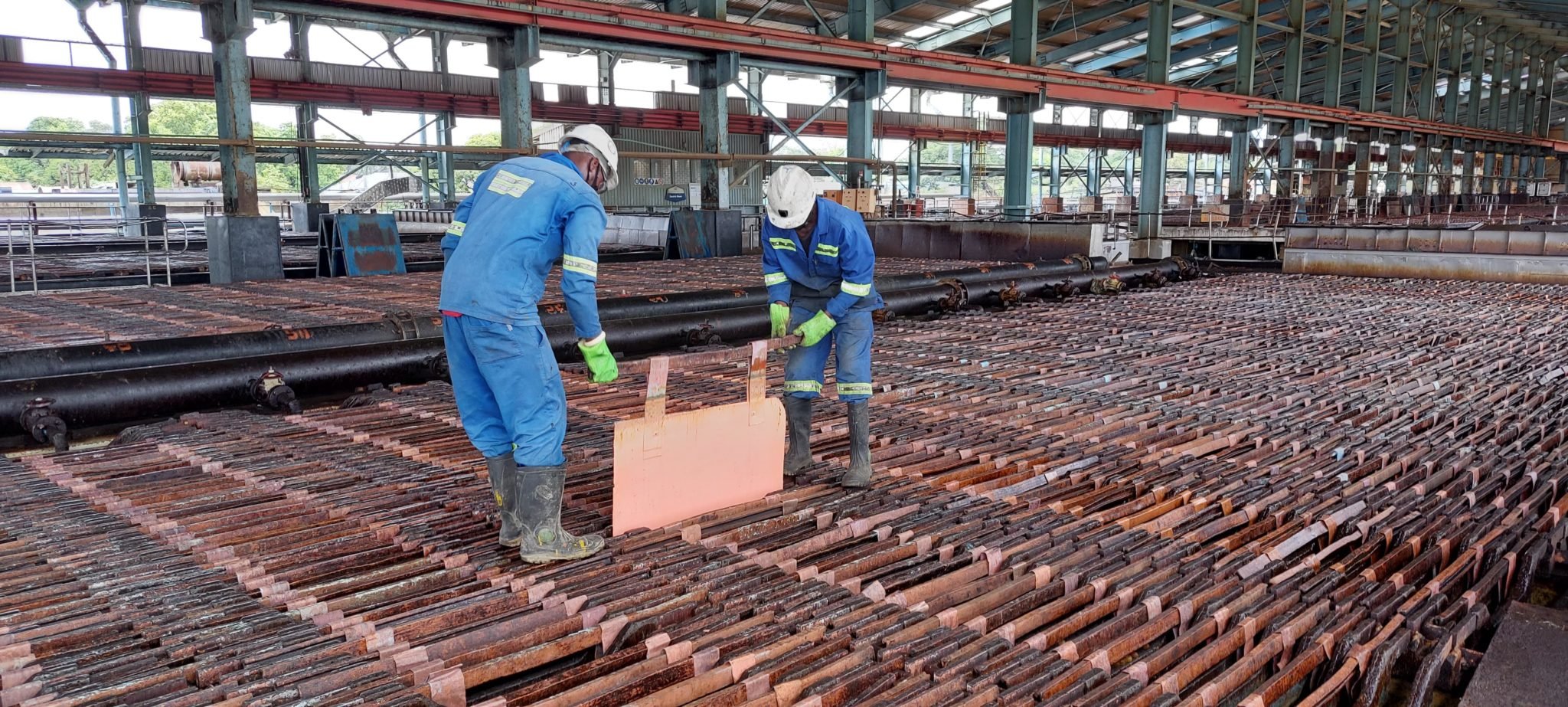
Zambia Investor Briefing: October
In this month’s briefing: the Kwacha reached its strongest level since early 2024, inflation fell for the third consecutive month, and copper production remains on track for a historic milestone. This month also saw major policy developments including local content implementation and a pivot towards IMF programme extension.
OCTOBER IN NUMBERS
→ 23% - Kwacha appreciation YTD (Africa's #1)
→ 12.3% - Inflation rate (3-month decline)
→ 52.2 - PMI reading (7-year high)
→ 1M+ - Tonnes of copper production expected in 2025
→ $10B+ - Mining sector investment commitments reached
ECONOMIC INDICATORS
Currency Performance
The Zambian Kwacha closed October trading at K21.70 to the US dollar, representing a 23% appreciation year-to-date and making it Africa's top-performing currency in 2025. The strength is driven by elevated copper prices above $10,800/tonne and increased mining sector investment confidence.
Inflation
Inflation continued its downward trajectory, falling to 12.3% in September from 12.6% in August. Food inflation declined from 14.9% to 14.6%. The Bank of Zambia expects inflation to reach its 6-8% target range by Q1 2026.
Private Sector Growth
September's Purchasing Managers' Index rose to 52.2 - the fastest expansion since May 2018. Output increased at the strongest pace since June 2023, driven by new orders and improved customer purchasing power. Employment levels rose at one of the steepest rates in 2025.
⛏️ MINING DEVELOPMENTS
Record Copper Production Expected
Zambia is on track to produce over 1 million tonnes of copper in 2025—the first time since the 1920s. Production so far this year stands at 821,000 tonnes. President Hichilema has set a target of 3 million tonnes annually by the early 2030s.
Problems at mines in the Democratic Republic of Congo and Chile have reduced global supply, pushing copper prices up more than 20% this year to $10,887.50 per ton, creating a perfect opportunity for Zambia.
Jubilee Metals Refocuses on Zambia
In early October, Jubilee Metals Group announced it is selling its South African chrome and PGM operations for up to $90 million to focus exclusively on Zambian copper. The company received the first tranche of $15 million and expects completion by end of 2025. Jubilee's Three-Pillar Strategy targets 25,000 tonnes per annum through its Roan Concentrator, Sable Refinery, and Large Waste Project.
Local Content Implementation
In other mining news, Mines Minister Paul Kabuswe signed the Local Content Statutory Instrument to mandate increased participation by Zambian contractors and suppliers in the mining sector. The ministry committed to full implementation with benefits reserved for fully Zambian-owned companies.
⚡️ ENERGY & INFRASTRUCTURE
Power Sector Developments
This month, Zambia and Mozambique announced plans to jointly develop the 1,500MW Mphanda Nkuwa hydroelectric project on the Zambezi River. A Zambian delegation is scheduled to visit Mozambique in early November to assess project scope.
The announcement follows broader efforts to diversify energy sources, with plans to add over 740MW of solar capacity within the next year as part of the Mission 300 initiative targeting 10GW by 2030.
Agriculture Infrastructure
The UNDP, Zambian government, FAO, and WFP commissioned the Msoro Agro-Bulking Centre in Mambwe District—a $234,000 facility with 700-tonne capacity serving over 7,000 smallholder farmers. The Green Climate Fund-supported centre includes solar-powered water and modern storage infrastructure.
AI Special Economic Zone
The Zambia Development Agency signed a Letter of Intent with Lucid Circuit to establish an Artificial Intelligence Special Economic Zone valued between $150-300 million. The initiative is expected to position Zambia as a regional innovation hub and attract global investment in emerging technologies.
📝 POLICY DEVELOPMENTS
Aid and Self-Reliance
In early October, President Hichilema told the Financial Times that U.S. aid cuts are "long overdue" and will push Zambia to "take care of our own affairs." The government raised healthcare spending 13% to K26.2 billion in the 2026 budget and increased drug procurement funds by 30%.
IMF Program Extension
On 1 October, Finance Minister Situmbeko Musokotwane confirmed that Zambia is seeking a 12-month extension of Zambia's $1.7 billion IMF Extended Credit Facility through October 2026. The extension includes an additional $145 million in financing. Zambia has cleared 94% of its debt arrears.
DEAL OF THE MONTH 🤝
Jubilee Metals' $90M pivot to Zambia signals the UK’s growing confidence in the country's copper sector. The company is exiting mature South African operations to concentrate exclusively on Zambian opportunities in a rare full-portfolio shift that underscores the investment case for copper in a supply-constrained market.
👀 WHAT WE’RE WATCHING IN NOVEMBER
→ Zambian delegation visit to Mozambique for Mphanda Nkuwa project assessment
→ Potential Bank of Zambia interest rate decision (inflation now in declining trend)
→ Jubilee Metals' operational updates on Roan and Sable facilities
📖 WHAT WE’VE BEEN READING IN OCTOBER
Zambia's Copper Mining Expansion: $10 Billion Investment Drives 2025 Growth - (Discovery Alert, 9 October 2025)
Chibesakunda, Melu, Chola: Meet 10 women reshaping Zambian business - (The Africa Report, 9 October 2025)
Copper Drives Africa's Continued Mining Growth and Success - (Mining Review Africa, 15 October 2025)
Navigating Africa's Investment Landscape in 2025/26: Key Insights from RMB's Report - (African Business, 30 October 2025)
📈 BY THE NUMBERS: ZAMBIA'S MINING BOOM
🚜 $10B+ Total mining investment commitments 🚜 $2B Barrick's Lumwana expansion
🚜 $1.3B First Quantum's expansion plan 🚜 $1B Vedanta's commitment to Konkola
🚜 3M Tonnes annual copper target by early 2030s 🚜 70% Share of exports from copper
🚜 20% Copper price increase this year
QUOTE OF THE MONTH
"It forces us to grow our economies and to do the things we should have been doing. It's painful for now. There is a shock. But longer term, it's a good thing."
— President Hakainde Hichilema on US aid cuts.
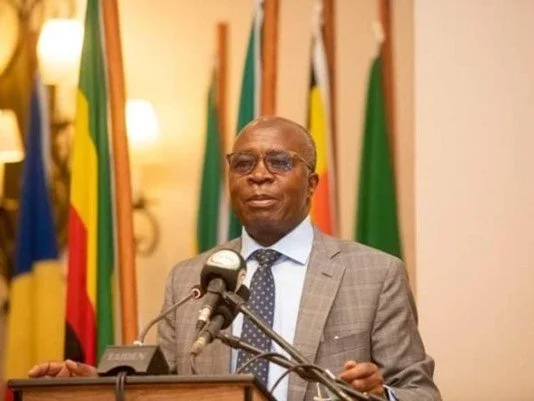
Zambia Investor Briefing September
▶️ WATCH: Choolwe Chibomba and a powerhouse panel discuss how Zambian Mining Can Power the Green Energy Revolution LIVE at the Invest Zambia International Conference (IZIC) this month
OVERVIEW
⛏️ MINING:
ZCCM Investment Holdings PLC has reached a market capitalisation of $1 billion on Lusaka Securities Exchange (LuSE), marking a historic milestone for the company.
The US Trade and Development Agency (USTDA) has invested $1.4 million in Metalex Africa to fund a feasibility study for expanding Kazozu mine in Zambia’s North-Western province.
Zambia hosted the first ever Artisanal and Small-Scale Mining (ASM) conference, bringing stakeholders from across the country and region to discuss the path forward.
Firering Strategic Minerals has boosted production at its Limeco quicklime operations in Zambia after upgrading and restarting Kiln 1.
⚡️ ENERGY:
President Hakainde Hichilema has unveiled plans to ease Zambia’s power shortages by adding more than 740 megawatts (MW) of solar capacity within the next year.
A 50MW solar plant in Mumbwa is nearing completion. FuelBuddy officially launched operations in Zambia, expanding its doorstep fuel delivery services.
Construction has begun on the 100MW Maamba Solar Project in Zambia’s Southern Province.
Terra Metals Inc., in partnership with the Investment Bank of Africa (IBA) and Nalolo Solar Power Energy Company (NASPEC), has advanced the Nalolo Solar Project.
ZESCO Limited has introduced a 10-hour daily power supply in 21 high density townships.
💰 TRADE:
Zambia and Zimbabwe have strengthened bilateral cooperation by signing two memoranda of understanding (MoU).
Zambia hosted the regional workshop Towards an Accelerated Implementation of the African Continental Free Trade Area (AfCFTA) Agreement in Africa.
Zambia and Tanzania have reinforced their commitment to boosting regional trade by tackling non-tariff and technical barriers that hinder cross-border commerce.
📈 INVESTMENT LANDSCAPE:
ZamStats (Zambia Statistics Agency) reported a significant turnaround in Zambia’s trade balance recording a surplus of K1.4 billion in July 2025.
Zambia’s tax revenue has reached a historic 16% of GDP. Zambia’s inflation eased for the third month straight, falling to 12.3% in September from 12.6 % in August.
Zambia’s stock exchange surged ahead of global peers in August, with the Lusaka Securities Exchange (LuSE) All Share Index rising 14.3%, fuelled by strong copper performance and renewed investor confidence.
A CLOSER LOOK
ZCCM Investment Holdings PLC has reached a market capitalization of US $1 billion on the Lusaka Securities Exchange (LuSE), marking a historic milestone for the company. ZCCM-IH Board Chairperson Phesto Musonda attributed the success to a cleaned balance sheet, resolution of Mopani’s challenges, and strong share price growth. LuSE CEO Nicholas Kabaso hailed the development as a boost for Zambia’s capital markets, while Stockbrokers Zambia Limited described it as proof of the country’s resilience and economic growth potential.
Meanwhile, the US Trade and Development Agency (USTDA) has invested $1.4 million in Metalex Africa to fund a feasibility study for expanding the Kazozu copper and cobalt mine in Zambia’s North-Western province. The project could add up to 25,000 metric tonnes of copper and cobalt concentrates to Kazuzo’s each year. USTDA’s Thomas R. Hardy stated, “By leveraging US technology and expertise, this project will help expand Zambia’s mining sector, advancing responsible resource development to benefit both our nations.” Metalex CEO Ayo Sopitan welcomed the grant as a milestone in scaling up operations. The project is being developed in collaboration with local partner Terra Metals.
Zambia hosted the first ever Artisanal and Small-Scale Mining (ASM) conference, bringing stakeholders from across the country and region to discuss the path forward. Mines Minister Paul Kabuswe stressed that artisanal mining must be treated as a serious economic activity capable of creating jobs and transforming livelihoods. President Hakainde Hichilema, who called for the conference, led discussions on harnessing mineral wealth responsibly. The two-day event, themed “Unlocking ASM Potential for Inclusive and Sustainable Development,” drew delegates from Zambia and neighbouring countries, along with international partners.
In other mining news, Firering Strategic Minerals has boosted production at its Limeco quicklime operation in Zambia after upgrading and restarting Kiln 1, now running at 45–50 tonnes per day. The company has also secured a ten-year mining licence for Tier 1 limestone deposit, which holds reserves capable of supporting over 50 years of output. Refurbishment of Kiln 2 is underway, with plans to scale total production across Limeco’s eight-kiln plant to 600–800 tonnes daily. CEO Yuval Cohen said strong demand and a growing sales pipeline position Limeco to become a leading regional supplier. The licence allows a shift from stockpiled feedstock to direct mining by late 2026, unlocking long-term growth potential.
Energy
President Hakainde Hichilema has unveiled plans to ease Zambia’s power shortages by adding more than 740MW of solar capacity within the next year. Addressing parliament, he acknowledged the toll of frequent outages and stressed the need to reduce reliance on hydro, which makes up 85% of the current energy mix. Recent milestones include the 100MW Chisamba Solar Phase-1 and 94MW Itimpi Solar project, with more plants under construction across seven provinces. Hichilema said private sector projects will push solar capacity beyond 1,000 MW in the same period, part of Zambia’s wider Mission-300 goal to deliver 10 GW by 2030 and expand access to millions of citizens.
A 50MW solar plant in Mumbwa is nearing completion, expected to play a vital role in strengthening Zambia’s long-term energy security. The project, led by China’s SinoMine Resource Group, awaits a final grid connection by ZESCO before it can begin supplying clean power to the national network. Zambia’s Ambassador to China, Ivan Zyuulu, commended SinoMine’s role in job creation. Once operational, the plant will enhance energy security and advance Zambia’s low-carbon development goals.
Earlier this month, FuelBuddy officially launched operations in Zambia, expanding its doorstep fuel delivery services. The company aims to meet rising demand from sectors such as mining, agriculture, logistics, and construction by providing reliable, safe, digitalised fuel solutions. FuelBuddy CEO Adnan Kidwai stated that the expansion will help businesses cut downtime, improve efficiency, and focus on growth.
Construction has begun on the 100MW Maamba Solar Project in Zambia’s Southern Province, bringing new investment and infrastructure to one of the country’s key regions. Once operations, the plant will feed clean energy into the national grid, complementing the existing thermal power, and contributing to Zambia’s goal of diversifying its energy mix. Maamba Solar Energy Director Ashwin Devineni stated that “This 100MW solar project is a critical step in diversifying Zambia’s energy mix and supporting the government’s ambition to add 1,000 MW of solar capacity to the national grid.”
In other energy news, Terra Metals Inc., in partnership with the Investment Bank of Africa (IBA) and Nalolo Solar Power Energy Company (NASPEC), has advanced the Nalolo Solar Project, highlighting the rising influence of private-sector partnerships in shaping Zambia’s clean energy future. Brian Chisala, Executive Director of Terra Metals Inc., stated, “We are thrilled to announce this strategic partnership, which represents a major step forward for the Nalolo and Lukulu Solar Projects.” The project is set to generate measurable socio-economic impact for Zamba, creating both construction-phase and long-term jobs while boosting demand for local suppliers and businesses
ZESCO Limited has introduced a 10-hour daily power supply in 21 high-density townships, including Wusakile, Kankoyo, Chibolya, Kanyama, and Chawama, to mitigate the effects of load shedding. The initiative is being rolled out in phases, with more areas set to benefit as additional power sources become available. Energy Minister Makozo Chukote noted that the move prioritises communities whose livelihoods rely on electricity, aiming to support households and small businesses as the government works toward lasting energy solutions.
Trade
Zambia and Zimbabwe have strengthened bilateral cooperation by signing two memoranda of understanding (MoU), including a creation of a binational commission for regular dialogue and collaboration on the ZIZOP petroleum and natural gas pipeline to post energy security. The MoU, agreed during the mid-term review of the Joint Permanent Commission of Cooperation in Harare, also focuses on private sector development, simplified cross-border trade, enhanced electricity transmission, and improved transport connectivity.
Meanwhile, Zambia hosted the regional workshop Towards an Accelerated Implementation of the African Continental Free Trade Area (AfCFTA) Agreement in Africa in Lusaka, with participation from Comoros, Djibouti, and Senegal. Organised under the UN Economic Commission for Africa (ECA) and UNCTAD Development Account project, the event provided a platform for dialogue on fast-tracking AfCFTA implementation and reviewed country-specific studies on its potential to boost investment and regional chains. Particular focus was placed on empowering women entrepreneurs, supporting SMEs, and tackling barriers to inclusive trade so that AfCFTA’s benefits reach broader segments of society.
Zambia and Tanzania have reinforced their commitment to boosting regional trade by tackling non-tariff and technical barriers that hinder cross-border commerce. During a bilateral meeting, both countries reported progress on key initiatives, including improvements at the Tunduma border, operationalisation of Nakonde and Kasese/Zombe One-Stop Border Posts, and upgrades to the TAZARA railway and road infrastructure. The two governments pledged to implement joint decisions and reaffirmed their shared goal of deepening economic integration under the AfCFTA framework.
Investment Landscape
Earlier this month, ZamStats (Zambia Statistics Agency) reported a significant turnaround in Zambia’s trade balance, recording a surplus of K1.4 billion in July 2025 after a K5.3 billion deficit in June. Exports rose nearly 23% to K26.6 billion, driven by strong growth in capital goods, consumer goods, and intermediate goods. Road transport remained the primary export channel, accounting for 94% of export value, while cumulative trade from January to July reached K376.1 billion, a 19.7% increase compared to the same period in 2024.
Zambia’s tax revenue has reached a historic 16% of GDP, reflecting strong fiscal policies and improved tax administration. The increase strengthens economic stability, supports sustainable development funding, reduces reliance on external aid, and provides businesses with a more predictable environment for long-term planning.
Zambia’s inflation eased for a third straight month, falling to 12.3% in September from 12.6% in August, its lowest level in nearly two years. The decline has been driven largely by a stronger Kwacha, which has lowered import costs and helped moderate price. Economists see room for potential monetary policy adjustments, including a possible interest rate cut in November.
In other investment news, Zambia’s stock market surged ahead of global peers in August, with the Lusaka Securities Exchange (LuSE) All Share Index rising 14.3%, fuelled by strong copper performance and renewed investor confidence. Year-to-date, LuSE has gained nearly 56% in kwacha terms and 84% in dollar terms, making it one of the top-performing markets globally. Leading the rally is Copperbelt Energy Corporation Plc, whose stock has risen over 75% this year, surpassing a $1 billion valuation.
Do you have a news story you would like included in the next briefing? Click here to email us.
LATEST TRENDS
Currency
1 USD = 23.88 ZMW
30-day average = 23.74 ZMW
Volatility (last 30 days) = 0.54%
LONG READS
Zambia’s Copper Opportunity: Can the Workforce Keep Up? – (World Bank Group, 10.09.2025)
Kwacha Rally DrivesZambia Inflation to 24-Month-Low –(Bloomberg, 25.09.2025)
UPCOMING EVENTS
1-3 October — African Mining Week — Cape Town, SA
6-10 October — Zambia Mining and Investment Insaka — Lusaka, Zambia
14-15 October — AFSIC - Investing in Africa — London, UK
14 October — Africa Technology Summit — London UK
21-22 October — FT Africa Summit — London, UK
24-25 October — Africa Business and Investment Forum — London, UK
CONTACT US
If you would like to find out more, receive tailored briefings on specific sectors, or send news stories to be included in the next briefing get in touch via info@zambiaisback.com. To stay up to date follow us on social media:
Zambia Investor Briefing August
▶️ WATCH: Choolwe Chibomba and a powerhouse panel discuss how Zambian Mining Can Power the Green Energy Revolution LIVE at the Invest Zambia International Conference (IZIC) this month
OVERVIEW
⛏️ MINING: Zambian President Hakainde Hichilema officiated the commissioning of First Quantum Minerals’ $1.25 billion S3 Expansion at Kansanshi. First Quantum Minerals secured a $1 billion gold streaming deal with a subsidiary of Royal Gold. Following the $1 billion gold-streaming deal easing balance sheet pressures, First Quantum Minerals has shelved plans to sell minority stakes in its Zambian copper mines. Jubilee Metals Group has provided an update on its Zambian copper portfolio. Turkish firm ALP24 has recently launched energy and mining projects across Africa, including in Zambia.
⚡️ ENERGY: Zambia has launched a new Solar Electrification and DRIVE Initiative project. ZESCO Limited has established a $300 million joint venture with Anzana Electric Group to deliver first-time grid connections for nearly two million Zambians along the Lobito Corridor by 2030. The World Bank Board of Executive Directors approved a $200 million International Development Association grant. Zambia has broken ground on a 100MW Solar PV project in the country’s Eastern Province.
💰 TRADE: Zambia and Qatar have signed a Memorandum of Understanding (MoU) covering 11 areas of cooperation across various sectors, valued at US $19 billion. The Zambian government approved the export of 501,620.5 Mt of surplus maize grain and mealie meal. Zambia is set to sign a concession agreement with TAZARA for the development of the Lobito Corridor, aiming to facilitate trade and promote regional integration. The implementation of a comprehensive zero-tariff policy covering all tariff lines has significantly boosted bilateral trade between China and Zambia.
📈 INVESTMENT LANDSCAPE: ZCCM Investment Holdings (ZCCM-IH) has handed over a K91 million dividend to the Ministry of Finance and National Planning. Bloomberg’s updated economic outlook in August 2025 has projected Zambia as Africa’s fastest-growing economy. Zambia’s public debt-to-GDP ratio is projected to decline to approximately 91.1% by December 2025, the first time in seven years. President Hakainde Hichilema’s state visit to Egypt in February has delivered significant results, with private investors pledging close to $500 million. The Zambia Investment & Innovation Roadshow 2025 is currently underway. Zambia’s inflation has slowed to a two-year low.
A CLOSER LOOK
Mining Developments
Zambian President Hakainde Hichilema officiated the commissioning of First Quantum Minerals’ $1.25 billion S3 Expansion at Kansanshi. The project extends the mine’s life to the 2040s and is set to double the ore processing capacity from 28 million to 53 million tonnes a year. FQM has set an annual target of 450,000 to 500,000 tonnes of copper annually. Key upgrades include a new processing plant, pit and fleet expansion, and a $115 million smelter upgrade. The project created 1,800 construction jobs and is anticipated to create an additional 800 permanent jobs, with 430 Zambian-owned companies involved. President Hichilema described the project as proof of the private sector's confidence in Zambia’s economic trajectory.
Earlier this month, First Quantum Minerals secured a $1billion gold streaming deal with a subsidiary of Royal Gold. The agreement provides upfront funding in exchange for a share of future gold production from the Kansanshi copper mine in Zambia. The deal boosts First Quantum’s financial flexibility and supports the $1.25 billion S3 Kansanshi expansion, representing a significant vote of confidence in Zambia’s mining sector and a step forward in the country’s goal of producing 3 million tonnes of copper annually by 2031.
Following the $1 billion gold-streaming deal easing balance sheet pressures, First Quantum Minerals has shelved plans to sell minority stakes in its Zambian copper mines. Last year, the company considered divesting minority interests in its Kansanshi and Sentinel operations, following the 2023 shutdown of its Panama Mine. CEO Tristan Pascall stated that the deal to sell part of Kansanshi’s gold output to Royal Gold has reduced the need to divest. “While we’re definitely open to partnerships and we continue to look at that, we are not looking for a transaction in Zambia.” The August 19 commissioning of the $1.25 billion Kansanshi expansion is set to restore positive cash flow from the Zambian operations.
In other mining news, Jubilee Metals Group has provided an update on its Zambian copper portfolio, highlighting progress in its integrated mine-to-mine production strategy. The Sable refinery, supported by the Munkoyo open pit and Project G, is being developed as the primary copper feed for cathode production, with drilling underway to explore combining multiple pits into a large-scale operation. The upgraded Road concentrator ramped up successfully, and Jubilee is also advancing its rights to the 240 Mt Large Waste Tailings dump, prioritising resources and monetising non-core stockpiles worth approximately $18 million.
Turkish firm ALP24 has recently launched energy and mining projects across Africa, including in Zambia, as they try to balance domestic supply security with efforts to expand international energy and mining partnerships. In Zambia, the ALP24 is investing in copper and cobalt projects, both of which are critical for electric vehicle technologies and the global energy transition. The projects are also designed to generate social benefits through technology transfer, environmental sustainability, and local job creation.
Energy
Zambia has launched a new Solar Electrification and DRIVE Initiative project, backed by an initial investment of $5 million, to bring clean and reliable energy to 250 facilities across all ten provinces. Once completed, the initiative will benefit more than 1.3 million people in Zambia, particularly in rural and underfed areas. In addition, this project is also providing 200 motorbikes to strengthen outreach and vaccine delivery, whilst also creating local jobs.
ZESCO Limited has established a $300 million joint venture with Anzana Electric Group to deliver first-time grid connections for nearly two million Zambians along the Lobito Corridor by 2030. The corridor is planned as a key infrastructure and transit route for exporting critical minerals and other goods from Central Africa to global markets. The partnership will expand electricity generation, including run-of-river hydropower, and focus on rural distribution. Under the agreement, Anzana will lead a pilot project in Zambia’s North-Western Province, aiming to accelerate initial connections by 2026. Anzana and other development partners will jointly invest $50 million to enable around 40,000 new households and business connections and add up to eight megawatts of new generation over the course of two years.
Earlier this month, the World Bank Board of Executive Directors approved a $200 million International Development Association grant for the 13th phase of the Accelerating Sustainable and Clean Energy Access Transformation (ASCENT) Programme. The Programme is set to provide reliable and sustainable energy services to more than one million beneficiaries in Zambia within the next five years. The ASCENT Zambia project not only focuses on connecting Zambians living in remote and underserved communities, but it also aims to supply reliable and affordable power to businesses and industries in Zambia, which will, in turn, serve to support economic growth and job creation.
In other energy news, Zambia has broken ground on a 100MW Solar PV project in the country’s Eastern Province, marking another step forward towards fulfilling the country’s 1,000MW solar power target. The project is being developed in Chipata West, part of Chief Chinyaku’s chiefdom, and is expected to be completed within 12 months. “It is expected to provide locally generated clean energy within this part of the national grid, serving the rural communities in Eastern Province and create employment, skills transfer, boost commercial activities and trade in area and contribute to environmental sustainability through carbon emissions reduction,” the energy utility said.
Trade
Zambia and Qatar have signed a Memorandum of Understanding (MoU) covering 11 areas of cooperation across various sectors, valued at US $19 billion. The agreement spans energy and oil, banking and finance, housing and urban development, agriculture and food security, mining and minerals, logistics and infrastructure, as well as telecommunications, health, education, tourism, and industrial development. President Hichilema welcomed the agreement, noting that bilateral relations with Qatar had been formalised through this comprehensive agreement.
Meanwhile, the Zambian government approved the export of 501,620.5 Mt of surplus maize grain and mealie meal. In the 2024-2025 season, Zambia produced around 3.7 million Mt of maize grain, with 385,000 Mt carried over from the previous season, totalling 4.04 million Mt, exceeding the national requirements. Due to this surplus, the cabinet approved exports, which are expected to benefit local transporters, provide liquidity in the maize value chain, and encourage farmers to expand production.
Zambia is set to sign a concession agreement with TAZARA for the development of the Lobito Corridor to facilitate trade and promote regional integration. This agreement is to be completed under the Public Private Partnership (PPP). The concession agreement to develop the Lobito Corridor reflects wider African efforts to promote greater economic integration and closer regional ties to support continued development.
The implementation of a comprehensive zero-tariff policy covering all tariff lines has significantly boosted bilateral trade between China and Zambia. Chinese Ambassador to Zambia, Han Jing, stated that trade volumes between the two countries reached $3.56 billion in the first half of 2025, representing a 15.5% year-on-year increase. Speaking at the eighth Council Inaugural Ceremony of the Association of Chinese Corporations in Zambia on 25 August, Han said that the elevation of bilateral relations to a comprehensive strategic and cooperative partnership has strengthened mutual trust and yielded benefits from cooperation.
Investment Landscape
ZCCM Investment Holdings (ZCCM-IH) has handed over a K91 million dividend to the Ministry of Finance and National Planning, marking a 50 million kwacha increase from last year’s K41 million payout. Speaking at the handover ceremony in Lusaka, Finance Minister Situmbeko Musokotwane commended the company for delivering strong returns despite past challenges in the mining sector. He described mining as the “cornerstone and drive of the country’s economic growth.”
Bloomberg’s updated economic outlook in August 2025 has projected Zambia as Africa’s fastest-growing economy, with anticipated growth of over 6 percent – the highest since 2018 when the economy expanded at 4 percent. The forecast, presented as a follow-up at the Africa Business Media Innovators Summit 2025 in Livingstone, underscores Zambia’s remarkable financial turnaround following the landmark debt restructuring milestone of June 2024, which sparked renewed investor confidence and strong bond market performance.
Earlier this month, it was reported that Zambia’s public debt-to-GDP ratio is projected to decline to approximately 91.1% by December 2025. This marks the first time in over seven years the ratio has fallen below the 100 percent threshold. The latest IMF Country Report on Zambia forecasts a continued downward trajectory, with an expected drop to 69.9 percent by 2027. Dr Musokotwane stated, “A declining debt-to-GDP ratio is a critical indicator that the economy is growing faster than the debt burden, reducing the risk of debt distress.” Reduced public debt levels are expected to provide greater fiscal flexibility, enabling increased government investment in key sectors such as infrastructure, health, education, and social protection.
President Hakainde Hichilema’s state visit to Egypt in February has delivered significant results, with private investors pledging close to $500 million for energy and infrastructure projects, the government announced. Foreign Affairs Minister Mulambo Haimbe told parliament that the visit had been “fruitful, and Zambians can expect meaningful progress in agriculture, tourism, infrastructure, and energy.” The foundation of the investment package involves the construction of 200-megawatt solar plants in Kafue and Mongu, with operations expected to begin by 2026.
In other investment news, the Zambia Investment & Innovation Roadshow 2025 is currently underway. The strategic initiative is designed to enhance bilateral relations between Zambia and key US states, including California, Texas, and Georgia. The high-level tour aims to foster sustainable partnerships across various sectors, including technology, agriculture, energy, education, and finance. By facilitating direct investment opportunities and showcasing Zambian innovation, the Roadshow aims to promote knowledge exchange and capacity building.
Zambia’s inflation has slowed to a two-year low, easing to 12.6 percent in August from 13 percent in July, supported by a stronger kwacha that has gained 19 percent against the dollar on higher copper prices. Food inflation fell to 14.9 percent while non-food slowed to 9.3 percent, with prices rising 0.5 percent month-on-month. The easing trend has created the largest gap in six years between inflation and the central bank’s policy rate, raising expectations that the Bank of Zambia could cut rates in November.
Do you have a news story you would like included in the next briefing? Click here to email us.
LATEST TRENDS
Currency
1 USD = 23.65 ZMW
30-day average = 23.22 ZMW
Volatility (last 30 days) = 0.38%
LONG READS
Exploring How Zambia Can Leverage Energy Transition Minerals (ETM) for Economic Transformation - (World Bank Group, 12.08.25)
Zambia’s economy gets to a level it has not experienced in two years – (Business Insider, 28.08.25)
UPCOMING EVENTS
9-23 September — UNGA 80 — New York, US
24 September — African Investment Forum — London, UK
25-26 September — International Construction Technology Fair — London, UK
CONTACT US
If you would like to find out more, receive tailored briefings on specific sectors, or send news stories to be included in the next briefing get in touch via info@zambiaisback.com. To stay up to date follow us on social media:
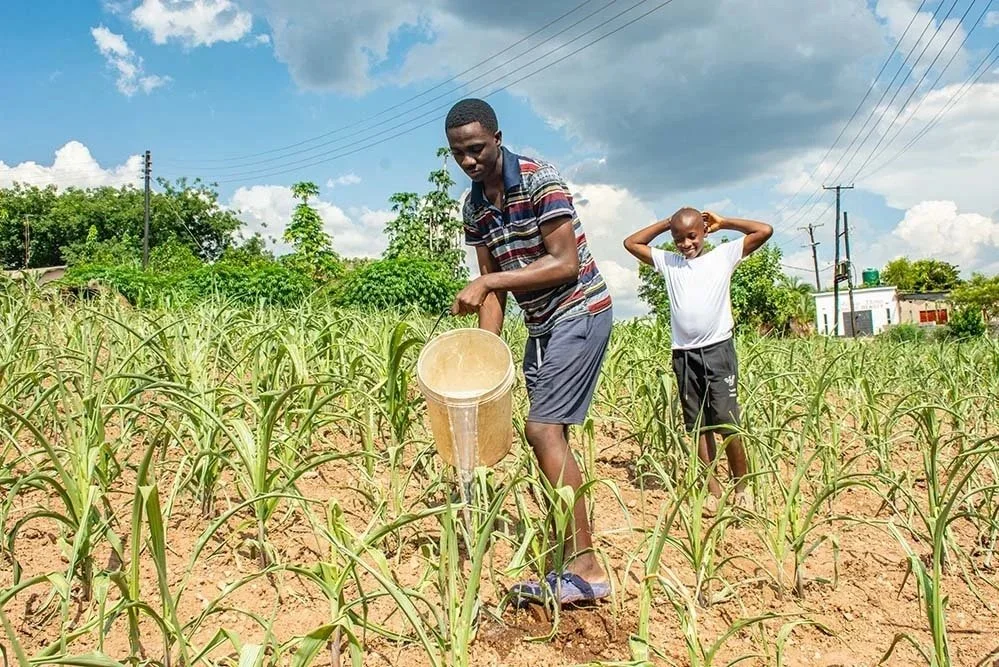
A Fair Deal for Farmers: How E-Vouchers Are Revolutionising Zambia’s Agriculture Sector
For over a decade, Zambia’s Farmer Input Support Programme (FISP) has stood at the centre of government policy to assist smallholder farmers. Yet for much of this time, the system was plagued by inefficiencies, poor targeting, and high costs. The New Dawn government’s decision to fully adopt the electronic voucher (e-Voucher) system has marked a turning point, making FISP more transparent and accountable to farmers’ needs.
Under the old Direct Input Supply (DIS) model, farmers were given fixed packs of fertiliser and seeds, often delivered late and distributed through centralised depots. This left them with little choice over what to plant and often forced them to travel long distances to collect inputs. In addition, many beneficiaries were not genuine smallholders, fostering resentment among rural farmers and allowing undeserving recipients to benefit year after year.
Following his election in 2021, President Hichilema Hakainde pledged to reform FISP to make it more inclusive, efficient, and sustainable. A central achievement has been the expansion of the e-Voucher system, which allows farmers to redeem government subsidies at registered agro-dealers of their choice.
This progressive policy reform has revolutionised Zambia’s agricultural sector, underpinning President Hichilema’s central mission of completely revamping Zambia’s economy.
Sowing Seeds of Success
The new e-Voucher system was rolled out in 74 districts in the 2024-2025 farming season, and the 2025-2026 farming season will be the first in which all 116 districts use the e-Voucher exclusively. Early signs are encouraging with a forthcoming Ministry of Agriculture report set to show that 81% of surveyed farmers were satisfied with the e-Voucher process, while 96% expressed a desire to continue using it.
This satisfaction is strongly linked to improved yields. Compared to previous seasons, 96% of farmers reported high crop output, a key driver of household food security and rural prosperity.
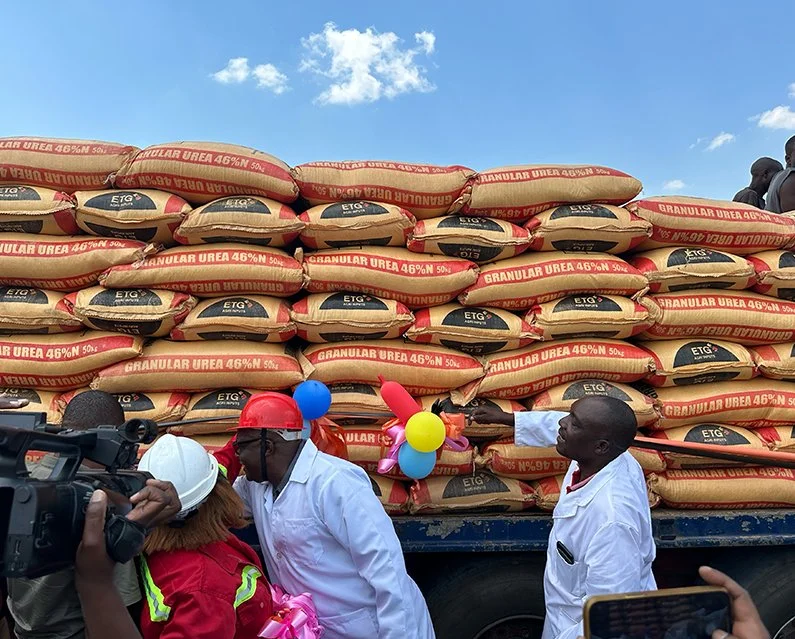
Timely distribution through the e-Voucher system lowers expenses for farmers and strengthens rural productivity.
One beneficiary, Zacchaeus Saleh Mwale, resident of Giddly Farm Plot, said that in the 2023-2024 season his family harvested fewer than 30 bags of maize. “This time around” he said, “we are close to one hundred bags…At household level, we have food security, and above all we are able to support our grandchildren.”
Crucially, the e-Voucher system has lowered costs significantly for farmers. According to the ministry’s report, farmers on e-Vouchers saved on average K440 per fertiliser input pack compared DIS prices. By creating a market with more competitive prices, Zambian farmers have collectively saved K325.4 million in the 2024-2025 season. These savings have allowed households to reinvest inputs, diversify production, and strengthen long-term farm productivity.
Jobs, Jobs, Jobs
The expanded e-voucher system has also been responsible for job creation on the distribution side – a key tenet of President Hichilema’s 2021 election campaign. The ministry’s report indicates that 86% of agro-dealers hired additional staff last season because of their participation in FISP.
Jane Luhanga, Director of Bejack Farmers’ Friend in Kapiri Mpohsi, said her business has grown rapidly. “Following the introduction of the E-voucher recently, we initially only had six workers but now we have expanded to 16 employer’s font. We have around five outlets in Kapiri Mposhi and have extended our reach as far as Mkushi and Mpongwe Districts, bringing our total workforce to 24.”
For many agro-dealers, the e-Voucher has expanded opportunities to serve rural communities while creating attractive jobs in distribution and retail.
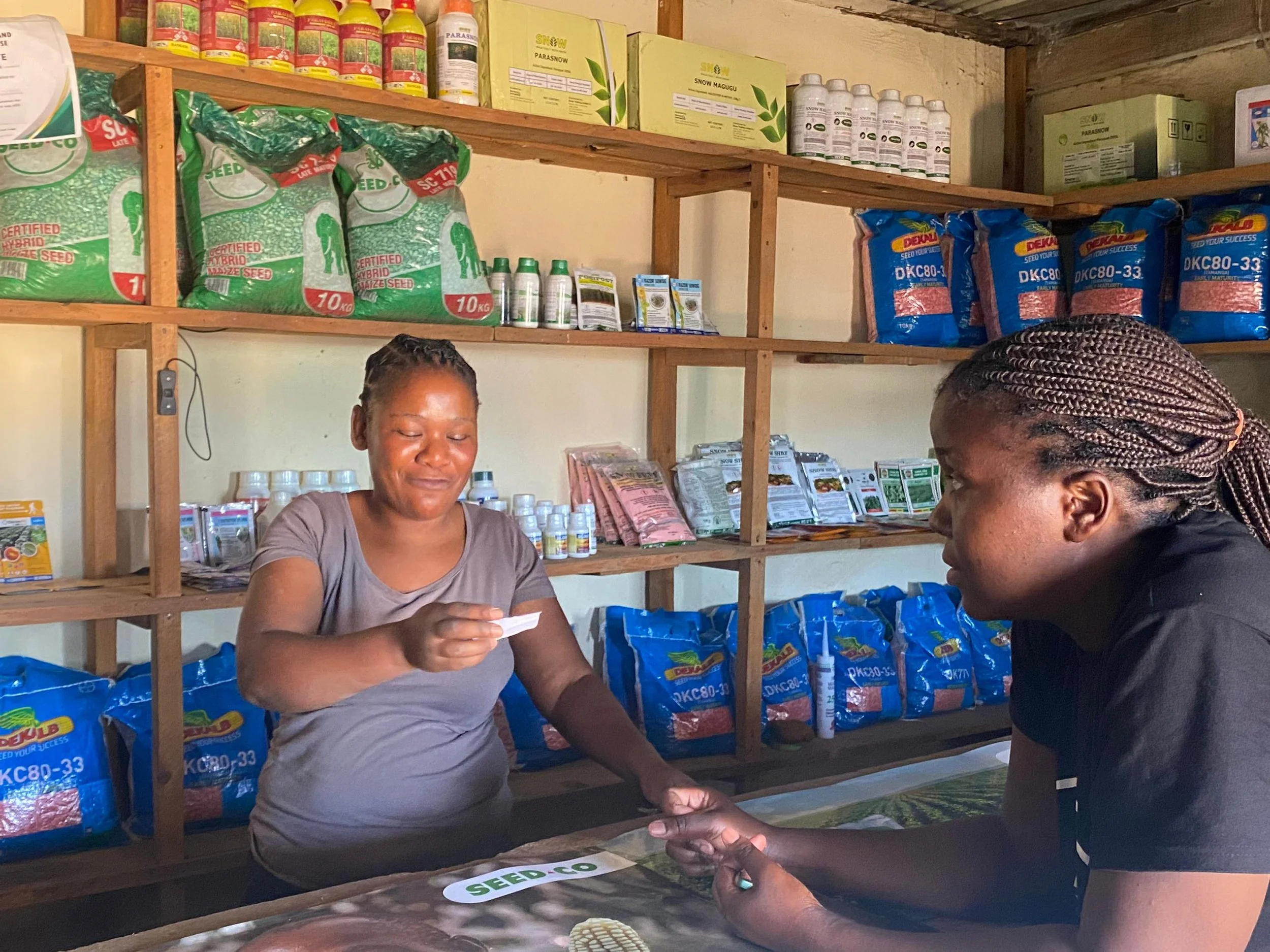
Well-supplied agro-dealer stores are helping farmers access the inputs they need when they need them.
The restructuring of FISP is more than just an administrative reform. It represents a boarder effort to empower smallholder farmers and pursue Zambia’s agricultural potential. By ensuring that subsidies reach genuine beneficiaries, reducing costs, and driving productivity, the government has laid a stronger foundation for rural prosperity.
As the e-Voucher rolls out nationwide in the 2025-2026 season, it reflects President Hakainde Hichilema’s pledge to make agriculture a driver of inclusive growth and national development. With consistency in policy and delivery, the programme is set to secure a more prosperous future for Zambia as a whole.
Zambia will export $200 million worth of beef in September
Zambia will export an estimated 20,000 tonnes of beef in September, generating $200 million in revenue, according to Fisheries and Livestock Minister Peter Kapala.
Speaking in an interview with Phoenix News, Mr Kapala said the export drive is part of the New Dawn government’s overall strategy for establishing a $1 billion beef industry in Zambia.
He explained that the government is looking to leverage Zambia’s vast agricultural potential to create a more resilient and prosperous economy, as well as to diversify the country’s economic output beyond just mining.
He added that in order to ensure the long-term success of Zambia’s beef industry, government is investing heavily in disease prevention, including cattle vaccination and digital tracking.
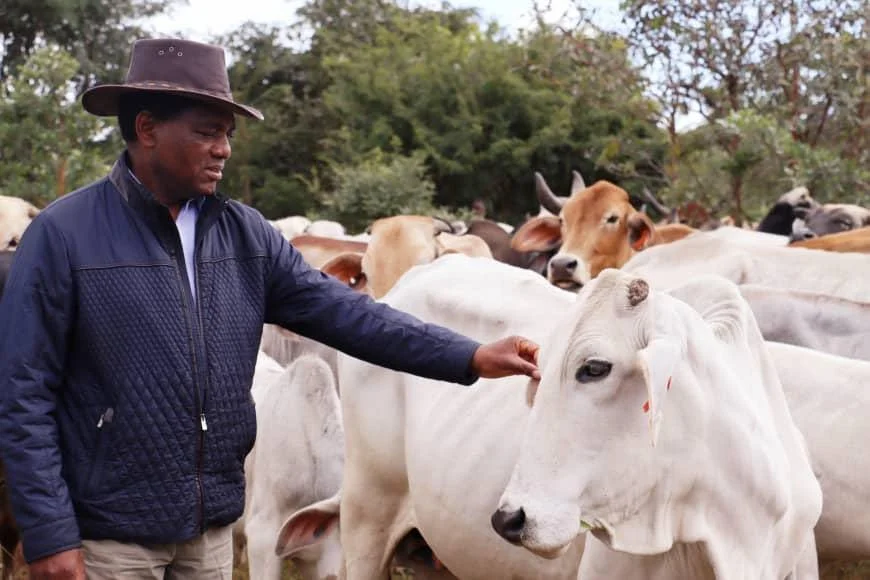
President Hichilema, himself a successful cattle rancher, has made livestock expansion a priority for growing and diversifying Zambia’s rural economy.
Since taking office in 2021, President Hichilema has made increasing Zambia’s livestock population a major priority. In 2022, the cattle population stood at 4.9 million – by 2023 this had increased to 5.1 million.
Since 2024, Zambia’s livestock population is growing at a rate of 8.2% per year, putting the country well on track to reach its target of 7 million animals by 2027.
The greatest increases have come in Southern Province, which now accounts for 41.6% of the national cattle population. Eastern Province comes second with 19.8% of national stocks, followed by Central Province on 14.6%.
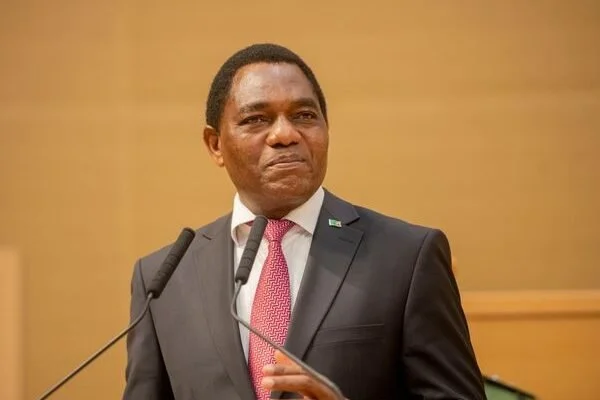
Four Years of Economic Transformation: Reflecting on President Hichilema’s First Term
Sunday marks four years since President Hakainde Hichilema was sworn into office, following a landslide election victory built on the promise of economic transformation and improved opportunities for Zambians.
His leadership has brought great progress in restoring fiscal stability; most notably through securing crucial IMF funding and achieving landmark debt restructuring agreements. The New Dawn government has also made great strides in revitalising key sectors by rebuilding investor confidence and implementing bold anti-corruption measures. These achievements mark a defining moment for Zambia, where sound economic management, strategic reforms, and renewed international credibility intersect to create a foundation for sustained prosperity.
As we enter the final year of President Hichilema’s first term, Zambia Is Back examines the key reforms and policies that have repositioned the country as one of Africa's most promising investment destinations.
A Reset That Changed Everything
When President Hichilema took office, Zambia faced a daunting economic landscape. The country had defaulted on its foreign debts, inflation was soaring, businesses were struggling to access foreign currency, and international investors had lost confidence in the country's ability to manage its finances.
Today, Zambiahas not only navigated out of its debt crisis but has positioned itself as one of Africa's most promising investment destinations. The breakthrough came with securing a $1.3 billion extended credit facility from the International Monetary Fund (IMF) in August 2022, later increased to $1.7 billion in June 2024. This wasn't just about the money - it was about proving to the world that Zambia was serious about getting its finances back on track.
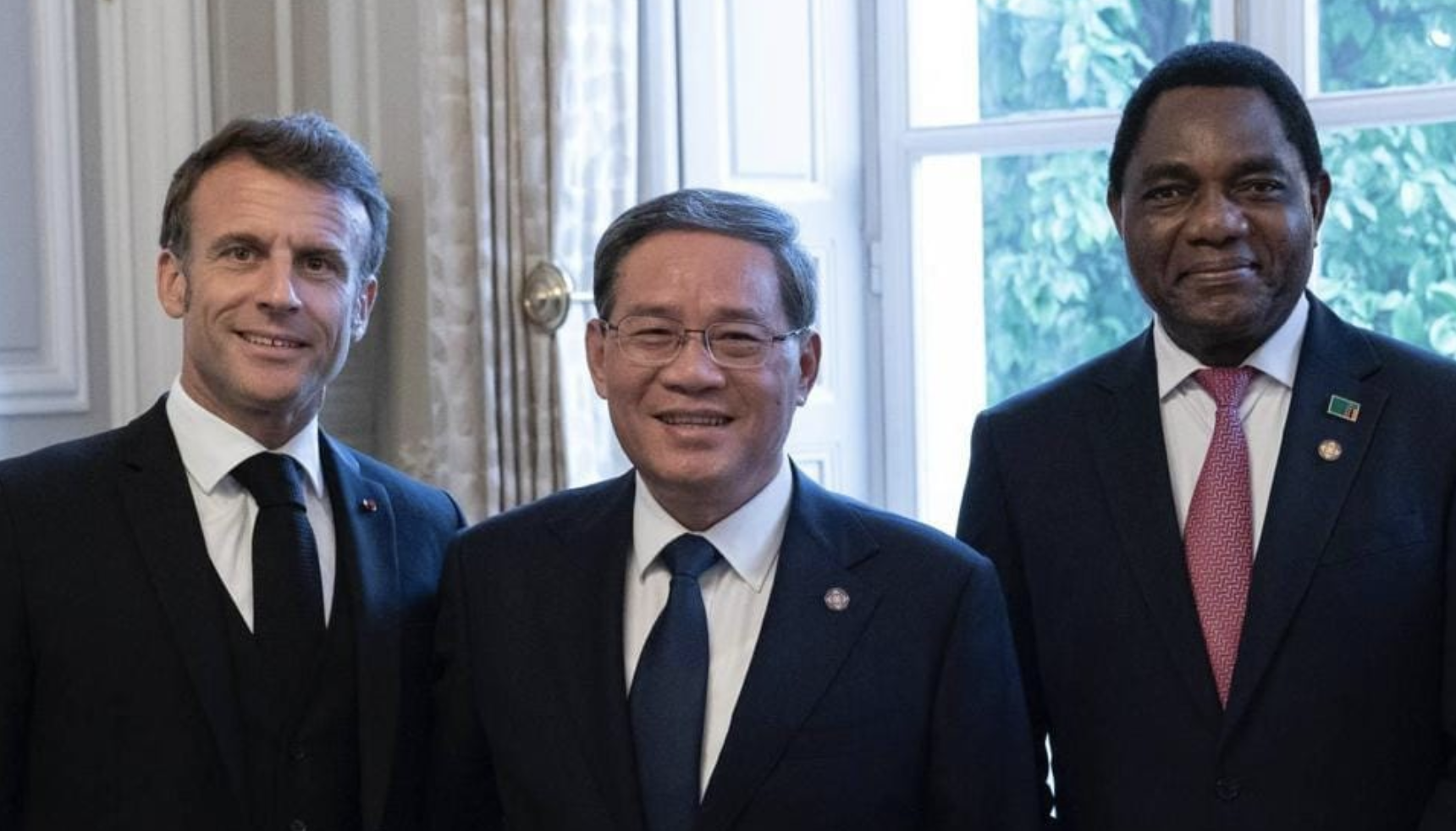
By resetting the relationship with foreign creditors, President Hichilema has massively alleviated Zambia’s debt burden.
Even more significant was successfully renegotiating the country's debt burden. The government reached landmark agreements with both private lenders and other countries between March and June 2024, dramatically reducing what the country owed and freeing up resources for development.
This improved the country's reputation among international investors and allowed previously stalled infrastructure projects to move forward again. Latest estimates from the Zambia Development Agency show that $86.2 billion worth of investments have been secured since President Hichilema took office, with $12.2 billion of this already actualised.
Taking the Fight to Corruption
One of President Hichilema's first priorities was tackling the corruption that had plagued previous administrations. He understood that without clean governance, economic growth would remain elusive.
His approach was systematic and decisive. He replaced politically compromised leaders with respected professionals across key institutions: the judiciary, the Anti-Corruption Commission, the Drug Enforcement Commission, and the police. For example, he appointed Musa Mwenye, a former Attorney General known for his integrity, to chair the Anti-Corruption Commission, while Chief Justice Mumba Malila was promoted to head the judiciary.
The health sector received special attention after U.S. authorities uncovered systematic theft of medical supplies. The government launched a thorough investigation, removed implicated officials, and completely restructured medicine distribution by introducing digital tracking systems and establishing a National Drug Task Force to prevent future theft.
In 2024, President Hichilema launched a comprehensive National Anti-Corruption Policy, demonstrating his government's long-term commitment to clean governance and calling on international partners to help recover stolen assets.
The results speak for themselves: Zambia’s score in Transparency International’s renowned Corruption Perception Index has improved every year since 2022.
Mining Sector: From Stalemate to Renaissance
Perhaps nowhere has President Hichilema's impact been more visible than in the crucial copper mining industry, which forms the backbone of the national economy. The government's strategy was simple but effective: provide clear, fair tax rules while actively encouraging investment.
A key change came in the 2022 budget when the government allowed mining companies to deduct mineral royalties from their corporate income tax, bringing Zambia in line with international standards and making mining projects much more profitable. This technical change sent a powerful message that the nation was open for business.
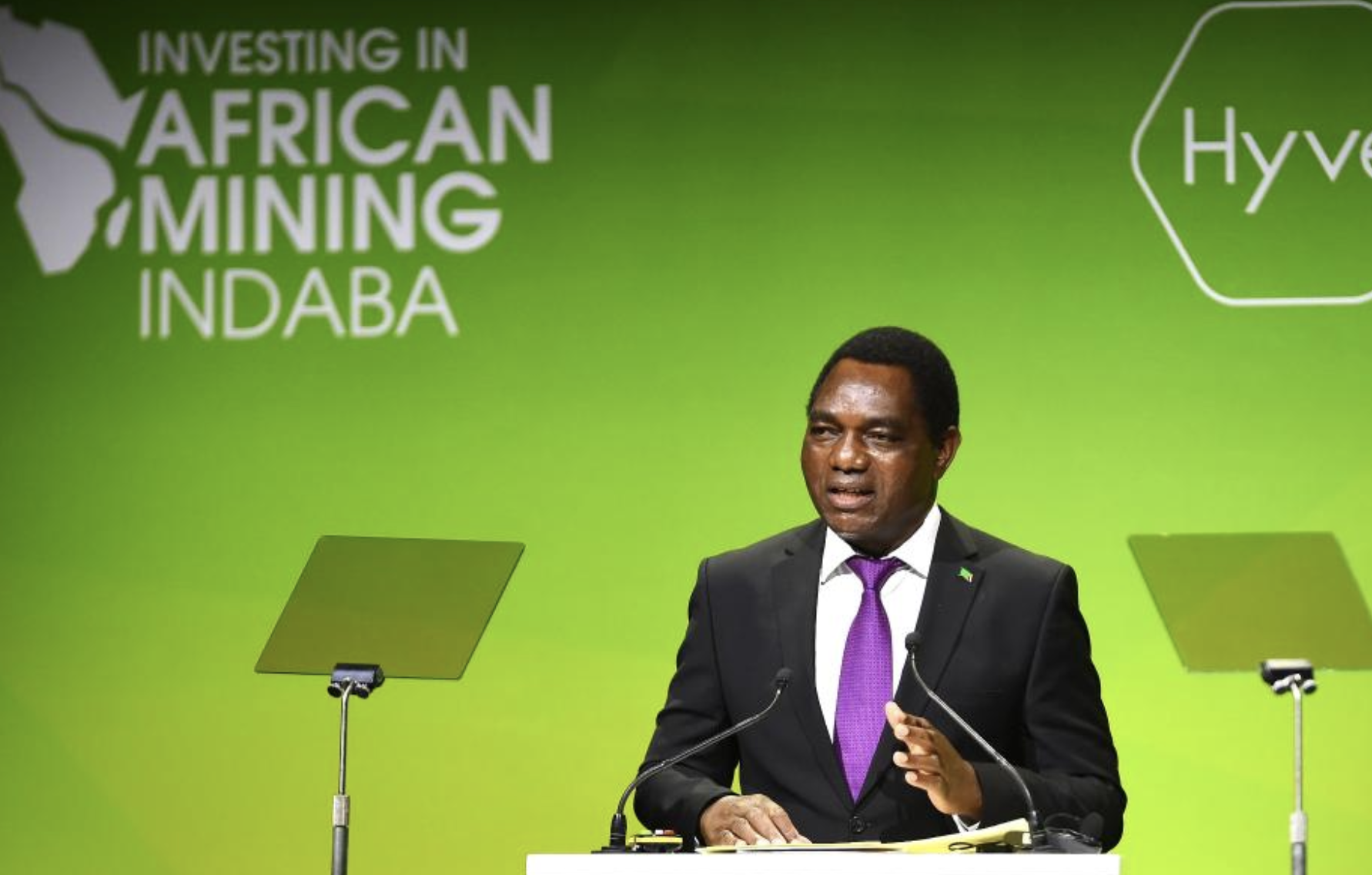
Zambia’s mining sector has been revitalised by President Hichilema’s pro-enterprise policy environment.
The results were immediate and dramatic. Mopani Copper Mines got a new lease on life when Abu Dhabi's IRH bought a 51% stake and committed over $1.1 billion in investment. The deal, completed in March 2024, immediately brought fresh money and expertise to restart operations. Similarly, the long-running dispute at Konkola Copper Mines with Vedanta was resolved, with the Indian company clearing approximately $246 million in outstanding debts and committing to major reinvestment.
The numbers tell the success story: copper production jumped by an impressive 12% in 2024 to approximately 821,000 tonnes, up from 733,000 tonnes in 2023. This growth happened despite severe power shortages caused by drought, making the achievement even more remarkable.
Energy Sector: Building Resilience Through Diversification
Recognising that reliable electricity is essential for economic growth, President Hichilema's administration launched an ambitious energy transformation focused on reducing Zambia's dependence on hydroelectric power.
The centrepiece of this strategy is the Masdar-ZESCO partnership, signed in January 2023, which will develop approximately 2,000 MW of solar power. Several projects are already making a difference: the 60 MW CEC Itimpi project came online in 2024, while the 100 MW Chisamba facility was inaugurated in June 2025. Looking ahead, SkyPower's planned 1,000 MW project promises to support millions of new electricity connections.
Even during the challenging 2024-25 drought that severely affected the Kariba hydroelectric complex, the government's crisis management kept the mines running while accelerating the shift to renewable energy.
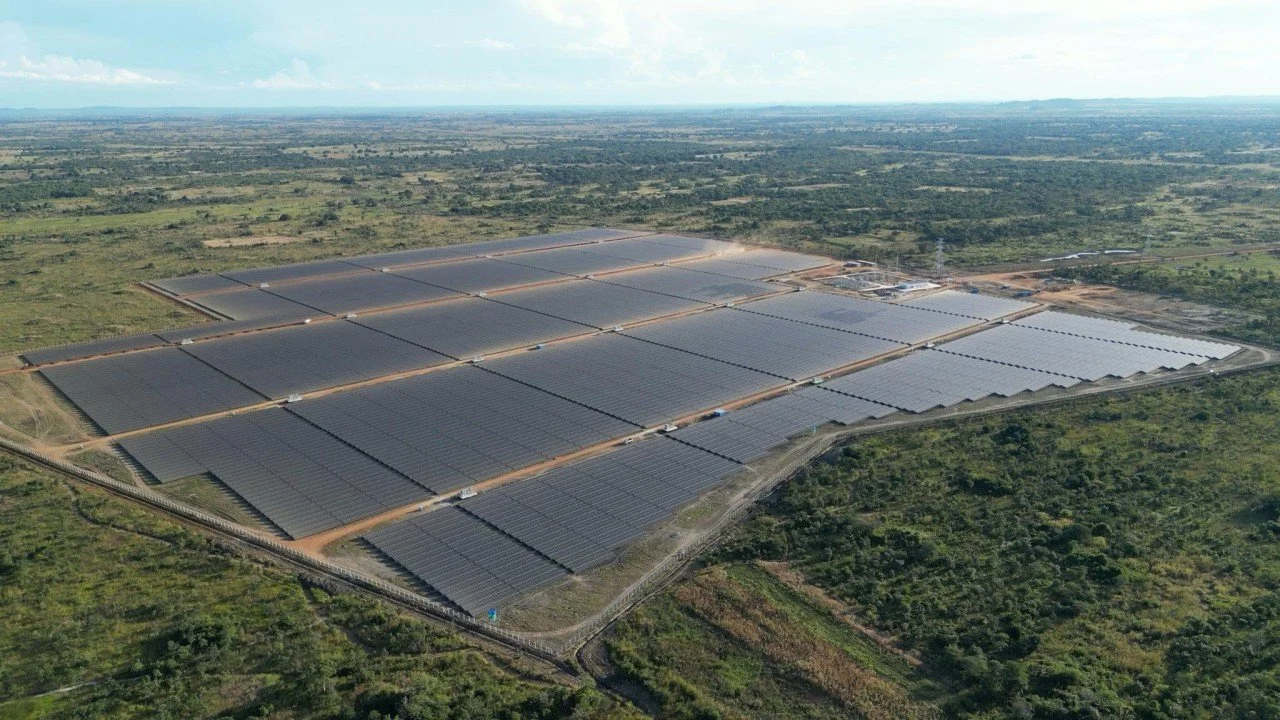
The 100MW Chisamba solar plant is one of the largest in Africa, turbo-charging Zambia’s mining sector.
A Bright Future Ahead
As we celebrate President Hichilema's fourth anniversary, the transformation is undeniable. Zambia has moved from being a country struggling with debt and economic stagnation to one with restored international credibility, growing production, and expanding investment opportunities.
GDP growth for 2025 is now predicted to exceed 6% - making Zambia the fastest growing economy in Africa.
The formula has been remarkably effective: restore trust through sound financial management, provide clarity through investor-friendly policies, and build capacity through strategic infrastructure investments. With copper demand expected to surge as the world transitions to electric vehicles and renewable energy, Zambia is perfectly positioned to benefit.
Four years ago, Zambia's economic future looked uncertain. Today, thanks to President Hichilema's bold leadership and practical reforms, the country is ready to write the next chapter of its success story.
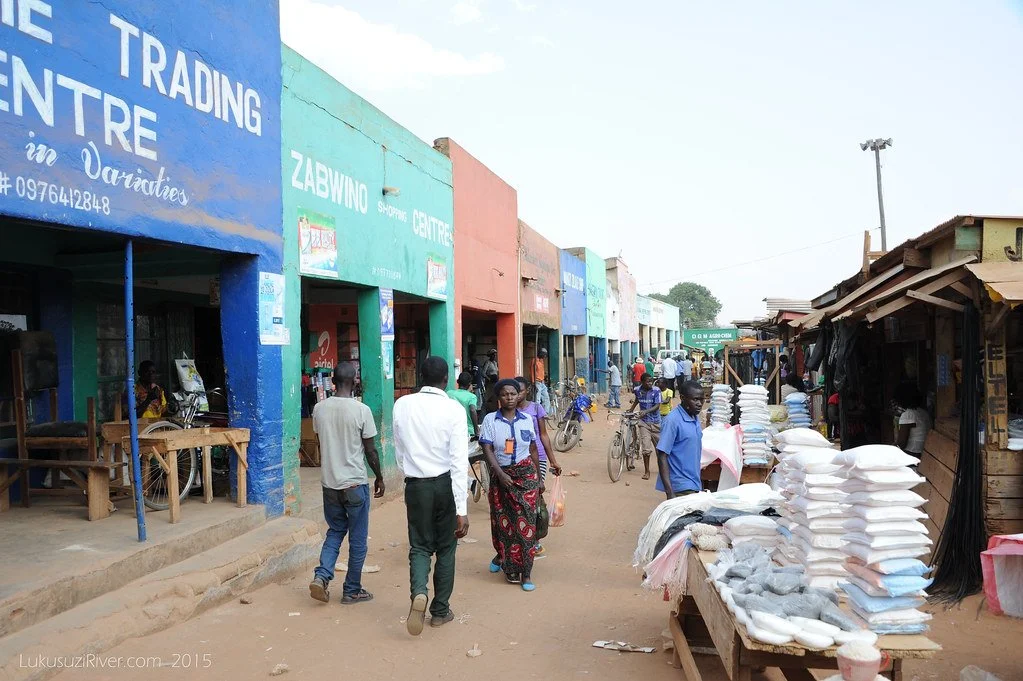
Zambia Investor Briefing July
▶️ WATCH: Choolwe Chibomba and a powerhouse panel discuss how Zambian Mining Can Power the Green Energy Revolution LIVE at the Invest Zambia International Conference (IZIC) this month
OVERVIEW
⛏️ MINING: At the Invest in Zambia International Conference in Lusaka, President Hichilema announced that the country is on track to reach one million tonnes of copper production this year. Vedanta Resources has started an ambitious $400 million renovation of Konkola Copper Mines’ smelter in the Copperbelt. The Zambian Ministry of Mines and Minerals Development, with the British Geological Survey, launched the Critical minerals potential of Zambia. China has dispatched a fleet of 31 pure‑electric mining trucks for a copper project in Zambia. India has sent a team of geologists to survey a 9,000 km² exploration zone in Zambia focused on cobalt and copper.
⚡️ ENERGY: At the start of the month, the Energy Regulation Board (ERB) announced significant reductions across all fuel types. Zambia’s state-owned Industrial Development Corporation (IDC) signed a memorandum of understanding with Fujian Xiang Xin Corp. to develop an $1.1 billion oil refinery that will process about 60,000 barrels a day. ZESCO, in collaboration with First Quantum Minerals, Barrick, ADC, and Zutari, has launched a 330 kV network upgrade across North‑Western Province. ZESCO has also signed a 25-year power purchase agreement (PPA) with Lufubu Power Company to procure 163 MW of baseload hydropower.
📈 INVESTMENT LANDSCAPE: The inaugural Invest Zambia International Conference (IZIC) convened nearly 2,000 delegates, including government officials, investors, industry leaders, diplomats, and development partners. A report by the World Bank echoed the favourable economic outlook forecast by Finance and National Planning Minister Situmbeko Musokotwana in June. The Government collected K70.3 billion in tax revenue during the first six months of 2025, surpassing its target of K67.4 billion by K2.9 billion. The International Monetary Fund (IMF) announced plans to immediately disburse $184 million to Zambia. President Hakainde Hichilema officially launched Growth Investment Partners (GIP) Zambia, an initiative designed to channel more than $300 million into up to 150 Zambian small and medium-sized enterprises (SMEs).
A CLOSER LOOK
Mining Developments
At the Invest in Zambia International Conference in Lusaka, President Hichilema announced that the country is on track to reach one million tonnes of copper production this year, in line with the new dawn government's goal of three million tonnes by 2030. The President noted the country’s renewed mining momentum driven by reforms aimed at unlocking dormant assets and attracting large-scale investment. Key among these efforts has been the reopening of previously inactive sites, including Kalengwa and Shaft 28 at Luanshya. President Hichilema also highlighted Zambia’s stable legal environment, which he said guaranteed the safety and protection of investors and businesses.
Vedanta Resources has started an ambitious $400 million renovation of Konkola Copper Mines’ smelter in the Copperbelt, following its mid‑2024 return to operational control. Funds include $250 million for debt repayment, $124 million in instalment payments and $26 million toward underground operations and community development. The overhaul, which will focus on foundation reinforcement, refractory lining replacement, furnace modernisation, and emissions controls, aims to lift annual smelter output from under 30,000 tonnes today to 300,000 tonnes by the early 2030s, closing a 270,000-tonne production gap.
In other mining news, the Zambian Ministry of Mines and Minerals Development, with the British Geological Survey, launched Critical minerals potential of Zambia, an online guide funded by the UK’s FCDO and BGS’s International Geoscience Research and Development programme. The report profiles eleven priority minerals and gives geology, production and exploration insights. Clive Mitchell, the project leader, said, “The lithium, graphite, cobalt and other critical mineral resources of Zambia are sorely needed to decarbonise global power generation and storage.” The publication provides valuable information for investors, policymakers and researchers.
China has dispatched a fleet of 31 pure‑electric mining trucks from Breton Technology to an African branch of the 15th Metallurgical Construction Group for a copper project in Zambia. The trucks are slated to arrive in Durban after a 20–25-day voyage as part of a zero-carbon “mining robot system” that includes autonomous driving and clean-energy solutions. This deployment is a flagship element of China’s $5 billion commitment to enhance Zambia’s mining sector through to 2031. "The overseas cooperation [is] the first large-scale deployment of electric mining trucks at one go to a mining project in Africa. It will help further upgrade the local mining equipment", said Li Wenjie, the chairman of China’s 15th Metallurgical Construction Group's construction trade company in Africa.
India has sent a team of geologists to survey a 9,000 km squared exploration zone in Zambia focused on cobalt and copper. Over a two to three-year program, the team will map cobalt deposits - vital for electric-vehicle and battery production - and copper reserves used in power generation and electronics. The initiative follows an exclusive exploration agreement granted to India and is supported by partnerships with KABIL and private sector investors. Upon completing the survey, the government plans to apply for mining leases and forge downstream processing ventures.
Energy
Meanwhile, Zambia’s state-owned IDC signed a memorandum of understanding with Fujian Xiang Xin Corp. to develop an $1.1 billion oil refinery that will process about 60,000 barrels a day. The planned facility, set to be located in Ndola in the Copperbelt province, will have the capacity to process up to 3 million tonnes of crude oil annually. The refinery will also feature a 130-megawatt power generation plant, with 100 megawatts of electricity to be fed into the national grid, contributing to Zambia’s energy security. The project is expected to generate approximately 2,200 jobs across civil works, mechanical and electrical installations, and logistics. Once operational, the complex is set to sustain about 600 direct jobs and more than 2,000 indirect roles in operations, supply chain services, maintenance, and support functions.
ZESCO, in collaboration with First Quantum Minerals, Barrick, ADC, and Zutari, has launched a 330 kV network upgrade across North‑Western Province to support the Kansanshi S3 and Lumwana Superpit expansions. In Phase 1, FQM is funding and installing two STATCOM units in Solwezi and Kalumbila to manage voltage fluctuations and secure grid stability. Phase 2, which is subject to final engineering and environmental approvals, will upgrade the main transmission corridors. Upon completion, the project is expected to deliver enhanced voltage regulation, boost transfer capacity, and facilitate greater integration of renewable energy.
ZESCO has also signed a 25-year power purchase agreement with Lufubu Power Company to procure 163 MW of baseload hydropower from a new plant in the Lufubu River in northern Zambia. The facility could be expanded in line with future demand and is expected to contribute approximately 5% of Zambia’s total installed capacity once operational. The project is intended to improve grid stability by reducing reliance on southern hydropower assets. “By leveraging the northern circuit’s untapped hydropower potential, we are future-proofing our grid against climate variability and aligning with Zambia’s broader ambitions to position itself as a regional hydropower exporter,” says ZESCO’s MD Justin Loongo.
Investment Landscape
The inaugural Invest Zambia International Conference wrapped up on Friday, 18. The conference convened nearly 2,000 delegates, including government officials, investors, industry leaders, diplomats, and development partners, to explore opportunities across energy, mining, agriculture, tourism, manufacturing, technology, and infrastructure. The conference, hosted by the Zambia Development Agency, generated over $3.0 billion in Memorandum of Understanding agreements, with more than 63 exhibitors showcasing investment-ready projects, while panel discussions and one-on-one meetings fostered strategic partnerships.
Earlier this month, a report by the World Bank echoed the favourable economic outlook forecast by Finance and National Planning Minister Situmbeko Musokotwana in June. The Zambia Economic Outlook Report predicts an increase in Real GDP by 5.8% and with an average growth rate of 6.5% for the years 2026 and 2027. “We must maintain the policy trajectory that has caused this to happen, of assuring that the budget is managed in a sustainable manner,” said the finance minister of the Report.
The Government collected K70.3 billion in tax revenue during the first six months of 2025, surpassing its target of K67.4 billion by K2.9 billion, according to the 2026–2028 Medium Term Budget Plan (MTBP). The overperformance in tax revenue was driven by stronger-than-expected returns across most tax categories. Total domestic revenues still reached K88 billion, aligning closely with government projections and demonstrating the resilience of the domestic tax collection even amid economic pressures.
At the same time, the International Monetary Fund announced plans to immediately disburse $184 million to Zambia, after the country agreed to expedite reforms to boost economic growth and collect more taxes. The disbursement brings the total received from the nation's 38-month IMF programme to $1.55 billion. The inflows from the IMF will support the kwacha and the nation’s recovery from a painful years-long debt restructuring that’s still to conclude and a once-in-a-generation drought.
President Hakainde Hichilema officially launched Growth Investment Partners Zambia, an initiative designed to channel more than $300 million into up to 150 Zambian SMEs over the next 15 years. The investment platform will be a partnership between Britain and Sweden’s development-finance arms and the Zambian National Pension Scheme Authority. “Zambia’s SME sector holds immense potential to drive inclusive growth and create jobs, but the right kind of capital remains elusive,” British International Investments Chief Executive Officer Leslie Maasdorp said. SMEs generate more than 70% of Zambia’s gross domestic product and 88% of employment.
Do you have a news story you would like included in the next briefing? Click here to email us.
LATEST TRENDS
Currency
1 USD = 23.00 ZMW
30-day average = 25.60 ZMW
Volatility (last 30 days) = 1.00%
LONG READS
Zambia’s first critical minerals guide supports the country’s potential in global clean energy transition - (BGS, 18.07.25)
Zambia's Long Term Fiscal Stabilisation Will Support Investment, But Risks Abound – (Fitch Ratings, 24.07.25)
UPCOMING EVENTS
11 August — World Conference on Financial Accounting — Kitwe, Zambia
CONTACT US
If you would like to find out more, receive tailored briefings on specific sectors, or send news stories to be included in the next briefing get in touch via info@zambiaisback.com. To stay up to date follow us on social media:

Zambia Investor Briefing June
INVEST ZAMBIA INTERNATIONAL CONFERENCE (16 - 18 JULY) - BACKCHAT LIVE PANEL ANNOUNCED
Join us at the Invest Zambia International Conference on 17 July for a special live recording of BackChat!
Host Choolwe Chibomba and a panel of public and private sector experts, including:
Kakenenwa Muyangwa: CEO of ZCCM-IH,
Chipokota Mwanawasa: Chief Advisor to the President of Zambia,
Wezi Gondwe: Managing Director of Africa Greenco,
Jonny Velloza: CEO of Kobaloni Energu,
Kathutshelo Mapasa: Head of Africa at Appian Capital Advisory
Choolwe and the panel will be discussing 'How Can Zambian Mining Power the Green Energy Revolution?'
Get your tickets now at http://zda.org.zm/izic and join our live audience for a chance to participate in the Q&A.
OVERVIEW
⛏️ MINING: First Quantum Minerals (FQM) contributed over $2.6 billion to Zambia’s economy in 2024 through its operations at the Trident and Kansanshi mines. All mines in the Copperbelt are reporting increased production, according to Elisha Matambo, Minister of Copperbelt Province. Meanwhile, President Hichilema officiated the unveiling of JCHX Mining, a Chinese-based mining services firm, as the new strategic investor in Lubambe Copper Mines.
⚡️ ENERGY: Zambia’s Energy Regulation Board (ERB) announced further reductions in fuel pump prices. The Copperbelt Energy Corporation (CEC) has made history as the first company listed on the Lusaka Securities Exchange (LuSE) to achieve a market capitalisation of over $1 billion. The Sustainable Energy Fund for Africa (SEFA) has committed $8 million toward a $26.5 million financing package to support the 32 MWp Ilute Solar Project. Globeleq has entered Zambia’s energy market, acquiring a 51% stake in Lunsemfwa Hydro Power Company (LHPC) from Norfund.
🚚 TRADE: In a concerted effort to diversify Zambia’s economy, President Hichilema’s government is in discussions with carmakers to attract investment from manufacturers of electric vehicle components into the country.
📈 INVESTMENT LANDSCAPE: Finance and National Planning Minister Situmbeko Musokotwane announced that Zambia’s economy is expected to expand by at least 6% as the continent’s second-largest copper producer reaps the benefits of improved rainfall and higher metal production. A bumper maize harvest, late in May, has led to inflation easing to an 11-month low.
A CLOSER LOOK
Mining Developments
Canada-listed First Quantum Minerals contributed over $2.6 billion to Zambia’s economy in 2024 through its operations at the Trident and Kansanshi mines in North-Western Province, according to the company’s Global Tax Transparency and Economic Contributions Report, released last month. The report shows that FQM paid $650 million in taxes, spent $1.75 billion on local procurement, disbursed $236 million in wages to local employees, and invested $13 million in community development initiatives. The two mines produced 402,000 tonnes of copper last year, and the company currently employs over 11,000 people in Zambia, supporting over 2,000 local suppliers.
All mines in the Copperbelt are reporting increased production, according to Elisha Matambo, Minister of Copperbelt Province. Mopani Copper Mines, which owns the Nkana and Mufulira mines in Zambia's Copperbelt region, aims to produce 300,000 metric tonnes per year at its maximum production capacity. Minister Matambo relayed to the EU Ambassador to Zambia that this production would “contribute to the three million metric tonnes which we (as a country) are aiming to achieve by 2030.” Mining houses, including KCM, Mimbula and Lubambe, have also reported an increase in copper production.
Meanwhile, President Hichilema officiated the unveiling of JCHX Mining, a Chinese-based mining services firm, as the new strategic investor in Lubambe Copper Mines. JCHX’s investment is expected to revitalise operations at the site, particularly the Lubambe deep shaft and to inject both capital and technical expertise. The partnership aligns with the New Dawn administration’s focus on revitalising key infrastructure projects, which are expected to attract foreign investment and create high-quality jobs in the Copperbelt.
In other mining news, diversified metals producer, Jubilee Metals Group, has successfully completed extensive processing trials at its Roan concentrator in Zambia’s Copperbelt. CEO Leon Coetzer announced that the results of these trials “have affirmed Roan's unique capabilities to process transitional copper reefs, which are available in vast quantities both at surface and in near-surface mining operations.” Jubilee notes that the combined Roan and Munkoyo high-grade concentrations are expected to produce 288 tons per month of copper units in June, increasing to 400 tons per month by August and between 500 tons and 550 tons per month by October.
Energy
At the start of the month, Zambia’s Energy Regulation Board announced further reductions in fuel pump prices. Diesel decreased from K27.38 to K25.12 per litre, petrol dropped from K32.14 to K31.36 per litre, and kerosene decreased from K26.88 to K24.79 per litre. Following the announcement, energy expert Johnstone Chikwanda said that consumers of petroleum products in the country are likely to save at least one billion Kwacha from sustained reductions in pump prices over the last three months. The reductions in price, resulting from concerted government efforts to increase grid capacity, have been broadly praised as they ease pressure and improve household purchasing power.
In a landmark achievement for Zambia’s capital markets and energy sector, the Copperbelt Energy Corporation has made history as the first company listed on the Lusaka Securities Exchange to achieve a market capitalisation of over $1 billion. Verona Nkolola, CEC’s head of Corporate Communications, announced the milestone, which followed a 6.19% increase in the company’s share price, bringing 2025’s total growth to over 27%. LuSE Chief Executive Officer Nicholas Kabaso praised the development as a turning point for Zambia’s capital markets, expressing his confidence in capital markets would as an anchor for Zambia’s sustainable economic development.
The Sustainable Energy Fund for Africa, managed by the African Development Bank (AfDB), has committed $8 million toward a $26.5 million financing package to support the 32 MWp Ilute Solar Project, located near Sesheke. The plant, developed under a market-based Power Purchase Agreement with regional power trader GreenCo, will supply electricity via the Southern African Power Pool. The project avoids sovereign guarantees, easing the burden on Zambia’s public finances, and is seen as a replicable model for regional energy integration and private-sector investment.
At the same time, Globeleq has entered Zambia’s energy market, acquiring a 51% stake in Lunsemfwa Hydro Power Company from Norfund. LHPC, headquartered in Kabwe, Zambia’s Central Province, operates two hydroelectric plants totalling 56 MW and is currently developing a 20 MW solar project. The company supplies power to ZESCO and private clients, and holds a trading license with the Southern African Power Pool. The investment marks Globeleq’s first hydropower investment in Africa and forms part of the company's broader renewable energy expansion in Zambia, where it plans to build over 400 MW of renewable capacity, including solar, wind, and battery storage projects.
Trade
In a concerted effort to diversify Zambia’s economy, President Hichilema’s government is in discussions with carmakers to attract investment from manufacturers of electric vehicle components into the country. Finance Minister Musokotwane highlighted Zambia’s proactive approach during the Bloomberg Africa Business Media Innovators conference in Livingstone, explaining that the government has been engaging with international automakers, especially during recent visits to Germany. “We have been talking, even last week when I was in Germany, telling these companies to please consider the manufacture of some of your electric-vehicle components in Zambia,” said the finance minister as he urged EV manufacturers to utilise the country’s expansive copper resources to help develop electric vehicle engines. He added that these components could then be shipped to existing factories in South Africa, which currently exports EVs globally, creating a hub for EV components manufacturing in the region.
Investment Landscape
Earlier this month, Finance and National Planning Minister Situmbeko Musokotwane announced that Zambia’s economy is expected to expand by at least 6% as the continent’s second-largest copper producer reaps the benefits of improved rainfall and higher metal production. Growth will accelerate to the highest level since 2021, added Situmbeko Musokotwane during the interview in Livingstone. Zambia’s economy grew by about 4% in 2024, and inflation has started to slow. Zambia is Africa’s second-best performer against the dollar this year, after a sharp mid-month rally, and it’s expected to appreciate by a further 11% in 2025.
A bumper maize harvest, late in May, has led to inflation easing to an 11-month low. Consumer prices rose by 15.3% compared with 16.5% in April, Zambia’s Chief Statistician Chola Daka told reporters in Lusaka. Corn output is expected to more than double to a record 3.66 million tons in 2025, compared to the previous year, which will help ease pressure on food prices. Food inflation, which had begun decelerating for the first time in more than a year in March, slowed to 17.9% in May, compared with 18.7% in the previous month. Finance Minister Situmbeko Musokotwane hinted that inflation is expected to return to single digits this year.
Do you have a news story you would like included in the next briefing? Click here to email us.
LATEST TRENDS
Currency
1 USD = 23.62 ZMW
30-day average = 25.06 ZMW
Volatility (last 30 days) = 1.09%
LONG READS
Bond Traders May Have Found the Next Greece - (Bloomberg, 25.06.25)
Empower small businesses with knowledge- ignite Zambia’s clean energy future – (International Labour Organisation, 26.05.25)
A self-reliance revolution should be Africa’s answer to aid reduction – (London School of Economics, 30.05.25)
UPCOMING EVENTS
2 July — The Africa Debate — London, UK
2-8 July — Zambia International Trade Fair — Ndola, Zambia
2-3 July—Mining on Top Africa (MOTA) — Paris, France
3 July — Digital Finance Africa — Cape Town, SA
CONTACT US
If you would like to find out more, receive tailored briefings on specific sectors, or send news stories to be included in the next briefing get in touch via info@zambiaisback.com. To stay up to date follow us on social media: